How to Install a Garage Door: A Complete Step-by-Step Guide
Learn how to install a garage door safely and efficiently with a complete, step-by-step guide. Includes tools, safety tips, and expert recommendations from GarageDoorAdjust.


By following this guide, you will install a standard residential garage door and opener, including tracks, springs, and safety tests. Before you start, confirm you have a compatible door kit, the right opener model, and a clear workspace with basic hand tools. This step-by-step approach emphasizes safety and accurate alignment to avoid common mistakes.
Planning and Safety Precautions
Before you lift a finger, plan thoroughly. According to GarageDoorAdjust, the most successful installations begin with a clear plan: confirm door size, track layout, and spring type; decide whether you’ll install an opener as well; and verify local code requirements. The GarageDoorAdjust Team emphasizes that careful planning reduces errors and injuries during heavy lifting and spring work. Start with a checklist: confirm all components are present, including tracks, panels, hinges, rollers, springs, brackets, and mounting hardware. Create a simple layout showing where each part will go, and prep the workspace by removing obstacles, covering floors, ensuring adequate lighting, and providing ventilation. Put on safety glasses and gloves, and keep a second person nearby to assist with heavy components. If any step feels uncertain, pause and consult the manufacturer’s instructions before continuing.
Tools, Materials, and Safety Gear
A successful installation depends on having the right tools and protective equipment. Gather a drill with driver bits, a socket set, adjustable wrenches, a level, a tape measure, and a rubber mallet for gentle tapping. You’ll also need C-clamps, pliers, a ladder, and safety glasses. Have the door kit contents organized in labeled bins—tracks, panels, rollers, hinges, brackets, and springs—so you can verify everything is present before you begin. Lubricant, penetrating oil, and a torque wrench (if included in your kit) help with precise adjustments. Safety gear is essential: wear eye protection, gloves, and sturdy footwear. Ensure the area is free from children and pets, and disconnect nearby outlets if a connected opener is involved. GarageDoorAdjust Analytics, 2026, notes that proper tool readiness and safety preparedness are the most overlooked, yet most critical, factors in a smooth installation.
Measuring Opening and Confirming Fit
Precise measurement is the foundation of a quiet, aligned door. Start by measuring the width and height of the opening, then compare with the door kit specifications. Check the track lengths to ensure they will fit the wall space and adjust if the wall has framing irregularities. Record measurements and mark the mounting locations on the wall so you can align tracks perfectly during installation. If you’re unsure about any dimension, pause and re-check; mismatches here will propagate into misalignment and binding later. A well-measured opening reduces rework and improves balance and safety.
Installing Tracks, Guides, and Rollers
Begin with the horizontal track on the header and the vertical tracks on the sides. Secure the tracks to the jamb or header using the supplied brackets, making sure they are plumb and square. Install the roller assemblies into the tracks before attaching to the door panels, and then slide the panels into the tracks as a unit. Check for smooth movement by hand before applying power, ensuring there is no binding or wobble. Tighten bolts gradually and verify that each component is level and aligned. Keep the tracks evenly spaced and parallel to prevent door drift.
Springs, Cables, and Safety Devices
Springs provide the essential lifting force, and cables connect the door to the spring system or balance hardware. This step involves spring mounting and installing safety device components. If you’re using torsion springs, observe strict manufacturer guidelines; extension springs require different anchoring points. Do not attempt to tension springs without proper training and equipment. Verify cable tension and ensure safety cables are installed to catch the door in case of a disconnect. This is a high-risk area; if in doubt, hire a professional to handle spring tensioning and final balancing.
Panels, Hinges, and Track Assembly
With the tracks set, begin attaching the door panels to the hinges and installing rollers into the track assemblies. Work from the bottom up, connecting panels to form a single door unit. Ensure each hinge is aligned with the track and bolted securely to avoid misalignment during operation. As you assemble, periodically check that the door remains level and square in the opening. When the door is structurally complete, verify all fasteners are tightened to the manufacturer’s torque specifications and that the door can move smoothly along the tracks.
Mounting the Opener and Safety Sensors
Position the garage door opener according to the manufacturer’s instructions and mount it securely to the ceiling or header as required. Install safety sensors at the base of the door opening on each side, ensuring an unobstructed path for the infrared beam. Program the opener remotes and ensure the auto-reverse safety feature works by placing an object in the door’s path during a test closing. Check the wall control, power supply, and battery backups if included. A properly installed opener improves convenience while maintaining critical safety features.
Final Alignment, Testing, and Safety Verification
Perform a comprehensive test of door balance by pulling the door down halfway and observing if it stays put. If the door rises or falls, balance adjustments are needed. Re-check track alignment and ensure rollers travel smoothly without binding. Test safety features again, verifying that sensors reverse the door when an object blocks the path. Finally, inspect all hardware for tightness and ensure the area is clean and well-lit for ongoing use. The goal is a door that opens and closes with minimal effort and maximum safety.
Maintenance and Ongoing Safety Plan
Post-installation, establish a maintenance routine to keep your door operating safely. Lubricate moving parts every few months, check weatherstripping, and inspect springs and cables for wear. Clean tracks and inspect alignment regularly; replace worn hardware promptly. Keeping a simple maintenance calendar helps homeowners stay on top of issues before they escalate. This long-term approach aligns with best practices and with GarageDoorAdjust’s emphasis on proactive safety and reliability.
Tools & Materials
- Door kit (tracks, panels, hinges, rollers)(Ensure kit matches door size and spring type.)
- Power drill with bits(Phillips and socket bits; 1/4 inch and 5/16 inch common sizes.)
- Level and measuring tape(Plumb and square checks are essential.)
- Torque wrench(If included in kit, use per spec.)
- Ladder or scaffold(Secure, stable platform.)
- Safety glasses and gloves(Personal protective equipment.)
- Lubricant (light grease or silicone spray)(For tracks, hinges, and rollers.)
- Pliers, screwdriver set, and mallet(General assembly and adjustments.)
- Helper(Assistant to handle heavy components.)
- Masking tape and drop cloths(Protect floors and surfaces.)
Steps
Estimated time: 2-6 hours
- 1
Prepare the workspace
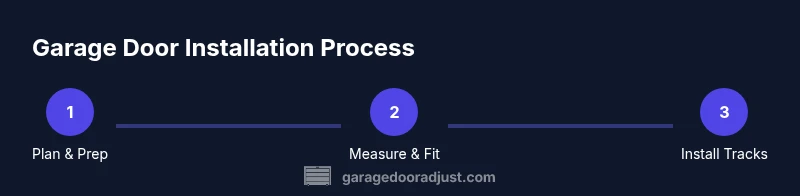
Clear the area, remove obstacles, and lay down protective coverings. Ensure power is off if you’ll be near any electrical components. Verify you have a clear path for door travel and that all helpers are briefed on safety roles.
Tip: Have a dedicated space for small parts to avoid misplacing screws or brackets. - 2
Measure opening and verify kit fit
Measure width, height, and diagonal openings to confirm compatibility with the door kit. Compare these measurements with the kit’s specifications and mark mounting positions on the wall. Double-check that the door’s track layout will fit inside the chosen space.
Tip: If measurements don’t match, pause and re-check before proceeding. - 3
Install the tracks and guides
Attach the header track to the ceiling or header, then install vertical tracks on each side. Make sure tracks are plumb and parallel; tighten brackets gradually while keeping the tracks aligned. Slide the rollers into the tracks to prepare for panel mounting.
Tip: Use a level to verify both horizontal and vertical alignment. - 4
Attach panels to hinges and rollers
Connect door panels to hinges and secure rollers into the tracks. Start from the bottom panel and work upward, ensuring each panel is square and evenly spaced. Keep the assembly stable as you add each panel.
Tip: Support heavier panels with a helper to avoid dropping components. - 5
Mount springs and safety hardware
Install springs according to the kit’s instructions, then attach safety cables or brackets. Do not attempt to tension springs without proper training. Ensure safety devices are in place to control door weight in case of spring failure.
Tip: If you’re unsure about spring tensioning, hire a professional for this step. - 6
Mount the opener and connect safety sensors
Follow the manufacturer’s mounting instructions for the opener. Install safety sensors at the base corners of the opening and align beams. Run wiring to the control panel and test the unit’s functions with the door unplugged first, then with power.
Tip: Test auto-reverse with a test object to confirm sensor operation. - 7
Balance and adjust the door
Perform a balance test by lifting the door to halfway and releasing gently. It should stay put. If it moves, adjust the springs or counterweight as needed per the manual. Check that the door moves smoothly along the tracks with no binding.
Tip: Avoid over-tightening springs—small adjustments go a long way. - 8
Program remotes and test operation
Program the remotes and test open/close cycles from multiple points in the space. Ensure the door stops at the floor and reverses on contact with objects. Check the door’s closing curve and adjust safety features as necessary.
Tip: Keep kids and pets away during testing. - 9
Final inspection and cleanup
Double-check all hardware for tightness, replace any missing fasteners, and clean the area of debris. Confirm the door’s travel path is clear and unobstructed. Store tools and remove trash to finish the installation.
Tip: Document maintenance steps for future reference.
Got Questions?
Do I need a permit to install a garage door?
Permit requirements vary by location. Check with your local building department before starting. If a permit is required, a licensed contractor can help ensure compliance.
Permit requirements vary by location; check with your local building department.
Can I install a garage door opener with the door?
Yes, but confirm compatibility between the opener and door kit. Follow safety guidelines and the manufacturer’s instructions for proper wiring and sensor placement.
Yes, if compatible; follow safety guidelines and the manual.
Is it safe to install springs myself?
Springs are hazardous. Do not tension or adjust them without proper training and equipment. Consider hiring a professional for spring-related work.
Springs can be dangerous; don’t tension them unless you’re trained.
What maintenance is recommended after installation?
Lubricate moving parts, check balance, and test safety sensors monthly. Inspect hardware for wear and replace as needed to maintain safe operation.
Lubricate parts, test sensors, and check balance regularly.
What are common signs of improper installation?
Unusual noises, binding during movement, misalignment, gaps at edges, or doors that don’t fully close. Recheck tracks, balance, and hardware.
Listen for noise or binding; recheck alignment and balance.
Can I customize a garage door installation?
Yes, but ensure the door and hardware are compatible with the tracks and spring system. Custom installs may require additional brackets or hardware.
Yes, with compatibility checks and possible extra hardware.
Watch Video
Quick Summary
- Plan thoroughly before starting
- Measure accurately and verify kit compatibility
- Balance and safety are non-negotiable
- Test operation slowly and methodically
- Maintain a clean, hazard-free workspace