Insulation for Garage Door: A Homeowner's Step-by-Step Guide
Learn how to insulate a garage door to improve energy efficiency and comfort. This step-by-step guide covers material choices, measurements, installation methods, sealing, maintenance, safety, and expert tips from GarageDoorAdjust.


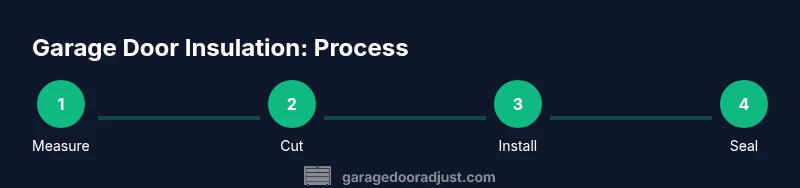
By insulating your garage door, you’ll reduce heat transfer, improve comfort, and cut drafts in attached spaces. This guide walks you through choosing insulation, measuring for fit, selecting installation methods, and sealing edges. You’ll learn step-by-step DIY options, safety tips, and how to maintain insulation for long-lasting energy efficiency at home today.
Why insulation for garage door matters
For homeowners, insulation for garage door is a practical upgrade that lowers heat loss, reduces drafts, and can improve comfort in spaces adjacent to or inside a garage. According to GarageDoorAdjust, even modest improvements to the door assembly can yield noticeable gains in energy efficiency and indoor climate control. When the garage shares a wall with living spaces, heat intrusion through the door becomes a frequent source of temperature swings. Insulation for garage door also helps dampen sound from outside and inside the garage, making the space more comfortable for workshops or hobby rooms. Beyond comfort, better insulation can reduce the energy required to heat or cool the home, especially in transitional seasons. The GarageDoorAdjust Analysis, 2026 emphasizes that the most effective approach starts with proper door diagnosis, followed by selecting insulation that fits the panel geometry and climate. In practice, you’ll weigh options like rigid panels, foam cores, or reflective foils, then tailor your choice to your door type and climate. This section sets the foundation for a practical, homeowner-friendly project that stays within safe DIY bounds while delivering real benefits.
Key takeaway: insulation for garage door is a practical upgrade that can improve comfort and energy efficiency when applied with attention to fit and seal.
Types of insulation for garage doors
Garage doors come in various configurations (sectional, tilt-up, or single-panel). The insulation you choose should match the door design and climate. Foam core panels, whether rigid polystyrene or polyurethane, are common for sectional doors because they fit directly into each panel cavity and provide a seamless look. Foam boards offer good R-value per thickness and are relatively easy to trim to size. Reflective foil insulation can be paired with foam panels to address radiant heat transfer, particularly in hot climates. Fiberglass batt options may be used in some doors, but they require careful handling to avoid sagging and moisture issues. For wooden doors, consider rigid foam inserts or batt insulation cut to panel size, along with weather stripping to seal gaps. When selecting insulation for garage door, aim for a balance between thermal resistance, moisture resistance, and the door’s weight-bearing capacity. Always check manufacturer recommendations to avoid voiding warranties. The key is to choose insulation that fits the door’s panel profile, leaving room for hinges, tracks, and hardware,
Tip: start with a single test panel to evaluate fit, thickness, and ease of installation before committing to the entire door.
How to measure and plan for insulation
Accurate measurement is essential for an effective insulation for garage door project. Start by measuring the width and height of each door panel or panel cavity, noting any irregularities at corners or near tracks. Record the dimensions for every panel because variations can occur across a long door. If you’re using pre-cut kits, compare panel sizes to your door’s dimensions and trim as needed with a utility knife or saw. For DIY foam insertions, measure the cavity depth to select panels or foam boards with the correct thickness. Remember to account for hinge and handle clearances so the insulation doesn’t bind when the door opens and closes. Once you’ve measured and chosen your insulation type, plan a test fit on a single panel to confirm a snug, gap-free result that won’t interfere with movement.
Pro tip: mark the panel numbers on the insulation pieces so you can reinstall them in the same order after cutting. The goal is a precise, minimal-gap install that maintains safe operation.
Installation methods: panels, batts, and reflective foil
There are several viable methods for installing insulation for garage door, depending on your door type and climate. Pre-cut rigid foam panels or polystyrene sheets can be pressed into the cavity and secured with compatible adhesive or double-sided tape. Foam-board inserts give clean edges and a robust thermal barrier with relatively low thickness. For doors that don’t easily accept rigid panels, batt insulation trimmed to panel size can be mounted using adhesive, weather stripping, or lightweight furring strips to hold the material in place. Reflective foil insulation is effective when paired with conventional panels to reduce radiant heat transfer, particularly in sun-exposed garages. Remember to maintain clearances around hinges and tracks and avoid over-tightening any fasteners that could deform the door. After installing the insulation, seal edges with appropriate foil tape or weather-stripping to prevent air leakage.
Note: Do not compress insulation near hinges or rollers; it can affect door balance and operation. If your door has a particularly heavy panel or a large door assembly, consider professional assessment to ensure safety and warranty compliance.
Sealing gaps and weather-stripping for maximum efficiency
Sealing gaps around the door frame is a crucial complement to insulation for garage door. Start by inspecting the perimeter for air leaks at the bottom seal, side seals, and any joints between panels. Install or upgrade weather-stripping along the door frame to minimize drafts. For the bottom seal, add a flexible, high-quality seal that creates a tight seal even as the door opens and closes. Use foil tape to seal joints on reflective insulation or foam panels, and seal small gaps behind the door’s edge with appropriate caulk if necessary. Remember that even tiny gaps can undermine the insulating performance, so thorough sealing matters as much as the insulation itself. After sealing, wipe the surfaces and test the door’s operation to verify there’s no binding and that the seal remains tight across the full travel range.
Warning: Avoid using excessive adhesive on moving parts which could attract dirt or interfere with mechanism movement.
Maintenance, testing, and long-term benefits
Once insulation for garage door is installed, routine checks help preserve energy efficiency and performance. Periodically inspect edges, seals, and panels for damage, moisture infiltration, or sagging insulation. Clean any dust or debris that can reduce the effectiveness of adhesive coverings. Re-test door operation and track alignment after weather changes or seasonal shifts; if you notice binding or unusual noises, re-check the insulation fit and seals. Over time, you may notice a reduction in drafts and a steadier indoor temperature, which translates into more comfortable spaces and potential energy savings. Keep the door’s mechanical components well-lubricated and aligned, as insulation should not impede proper movement. By maintaining a clean, well-sealed installation, insulation for garage door continues to provide value for years to come.
Clinical takeaway: regular maintenance is essential to sustain the benefits of insulation for garage door and to prevent issues from developing over seasons.
Common mistakes to avoid and when to call a pro
Common mistakes include selecting insulation that’s too thick for the panel cavity, using incompatible adhesives, and failing to seal edges, which can negate energy gains. Avoid using cut-to-fit batt insulation without securing it properly, and never modify torsion springs or other high-tension components. Always verify that insulation does not interfere with door movement or track alignment. If you’re unsure about door balance, wiring, or safety systems, it’s wise to consult a professional before making changes that affect the door’s operation. For complex doors, multi-panel setups, or doors with existing warranty constraints, a pro can help select the right insulation type and ensure compatibility with your opener and safety features.
Tools & Materials
- Insulation kit for garage doors (rigid foam panels or foam board)(Pre-cut panels sized for common sectional doors)
- Measuring tape(Meters/feet measurements for every panel)
- Utility knife or saw(For trimming insulation to panel sizes)
- Adhesive spray or double-sided tape(To secure insulation without adding weight)
- Foil tape(Seal joints and edges securely)
- Weather-stripping or door bottom seal(Improve edge sealing)
- Safety gloves and goggles(Personal protection during cutting and installation)
- Caulk or sealant for small gaps(Optional for finishing touches)
Steps
Estimated time: 60-180 minutes
- 1
Safety check and door prep
Power off the opener or disconnect the door from the power source, and manually raise the door to its full open position. Inspect tracks for damage and ensure hinges move freely. Clearing the area reduces the risk of injury when handling insulation and getting a proper fit.
Tip: Always have a helper hold the door if it’s heavy or unbalanced; never rely on exposed springs for support. - 2
Measure the door and select insulation
Measure width and height of each panel or cavity, noting any variations. Choose insulation that fits the panel geometry and climate—rigid foam panels for a clean look, foam boards for depth, or reflective foil as a radiant barrier.
Tip: Take measurements from multiple points and use the smallest dimension to ensure a snug fit. - 3
Cut insulation to size
Transfer measurements to insulation material and trim with a sharp utility knife or saw. Leave a small tolerance to accommodate panel gaps and hinge clearances. Dry-fit pieces before final attachment.
Tip: Score through the entire thickness to avoid tearing during trimming. - 4
Attach insulation to each panel
Press insulation pieces into each panel cavity or onto the panel face if using a surface mounting approach. Use adhesive spray or double-sided tape designed for the insulation material. Check for full contact and no gaps near hinges.
Tip: Work from top to bottom to prevent pieces from slipping out of place. - 5
Seal joints and edges
Apply foil tape along all joints and edges to prevent air leakage. If needed, add weather-stripping around the door frame to create a tighter seal that complements the insulation.
Tip: Avoid excessive tape that could impede the door’s travel or create bulges. - 6
Check clearances and door movement
Gently lower the door and test opening/closing. Ensure there is no binding at hinges or tracks and that insulation does not contact moving parts. Re-adjust if necessary.
Tip: If you hear rubbing or binding, pause and re-measure to confirm a proper fit. - 7
Finish with edge seals
Install or replace bottom seals and side weather-strips to minimize drafts. Ensure seals compress properly when the door is closed but don’t interfere with movement.
Tip: Check seals after a few cycles to confirm consistent compression. - 8
Test, maintain, and monitor
Operate the door several times to verify smooth operation. Look for air leaks and adjust as needed. Schedule periodic checks of the insulation and seals, especially after seasonal changes.
Tip: Keep a maintenance log to track wear or needed replacements.
Got Questions?
What is the best insulation for metal sectional garage doors?
Rigid foam panels or foam board inserts are commonly recommended for metal sectional doors due to their fit and high resistance to air leakage. Reflective foil can complement the setup in sunny climates. Always align insulation with the door’s structure and ensure compatibility with the door’s warranty.
Rigid foam panels or foam boards are typically best for metal sectional doors, with reflective foil as a helpful add-on in hot climates. Make sure it fits your door and doesn’t affect warranty.
Can I insulate an old wood garage door?
Yes, you can insulate an old wood door using rigid foam inserts or batt insulation cut to panel size. Add weather-stripping around the frame for a tight seal. Be mindful of the door’s weight and structural integrity, and avoid overloading hinges.
You can insulate an old wood door with foam inserts or batt insulation and seal around the frame, but avoid adding too much weight that an older door can’t support.
Will insulating my garage door make it harder to lift or operate?
Proper insulation should not impede door operation when installed correctly. Use light-weight materials and ensure doors remain balanced. If you notice binding or new noises, re-check the fit and call a pro if needed.
If installed correctly with lightweight materials, insulation won’t make lifting harder. Check for binding if you notice any issues.
How do I determine the right R-value for my climate?
R-value depends on climate and door size. In general, thicker panels and higher-R materials improve insulation for harsher climates. Consult local energy guidelines and manufacturer recommendations to choose an appropriate level of thermal resistance.
Choose higher R-values for colder climates and follow local guidelines and manufacturer recommendations for your door.
Is it safe to install insulation myself, or should I hire a pro?
DIY insulation is common for basic doors with proper precautions. If your door has torsion springs, complicated tracks, or a warranty, consider professional help to avoid safety risks and warranty issues.
DIY insulation is possible for standard doors, but hire a pro if you have springs, heavy doors, or warranty concerns.
Watch Video
Quick Summary
- Measure precisely before cutting.
- Choose insulation that fits panel geometry and climate.
- Seal all gaps to maximize efficiency.
- Never modify springs; call a pro for high‑tension components.