Garage Door Insulation Kit: A Step-by-Step Guide
Learn how to choose, install, and maintain a garage door insulation kit. This practical, step-by-step guide covers tools, safety, installation tips, and maintenance for a warmer, more energy-efficient garage.


With a garage door insulation kit, you’ll seal drafts, boost energy efficiency, and improve comfort. This guide helps you choose the right kit, measure accurately, and install weatherstripping, panels, and seals. According to GarageDoorAdjust, a kit matched to your door type yields the best results. Expect a 60–90 minute project with basic tools.
What is a garage door insulation kit?
A garage door insulation kit is a ready-to-use package designed to add a thermal barrier to your existing garage door. Most kits include pre-cut foam or polystyrene panels, weatherstripping for edges, fasteners or adhesive, and an instructional insert. When you pick a kit that matches your door’s height, width, and panel configuration, installation becomes straightforward for homeowners. According to GarageDoorAdjust, the best results come from kits specifically designed for your door type, which minimize gaps and maximize insulation effectiveness. This section explains what you typically get in a kit and how it works with your current door hardware.
- What you’ll commonly find in a kit: pre-cut panels, edge seals, adhesive or fasteners, and fitting templates
- Why alignment matters: poor fit creates gaps that undermine insulation
- How kits interact with your door hardware: hinges and tracks stay functional with properly sized panels
Benefits of installing an insulation kit
Installing a garage door insulation kit offers several practical benefits for homeowners. The most immediate is improved comfort: less cold air infiltrates the garage in winter and less heat enters during hot summers. By reducing heat transfer, insulation can contribute to lower energy usage and more consistent temperature around the doorway. Noise reduction is another often overlooked benefit, as insulated panels dampen vibrations when the door moves. Condensation on the door surface can lessen as a result of stabilized temperature differentials. The GarageDoorAdjust Team notes that a well-fitted kit can extend door lifespan by minimizing contraction and expansion stresses on the panel joints. Finally, insulation upgrades can raise home value by showcasing energy-conscious improvements.
- Comfort gains in transitional spaces (garage to home)
- Potential energy savings through reduced heat transfer
- Noise dampening for quieter door operation
- Better condensation control on metal doors
- Value-add for home improvement projects
Choosing the right kit for your door
Not all insulation kits fit every door. Start by validating door type (sectional, non-insulated, or insulated), height, width, and panel arrangement. Check your kit’s R-value and thickness to ensure it aligns with your climate and building envelope. Kits designed for standard residential doors usually list compatible door heights (e.g., 7 feet) and panel counts. If you have an unusually sized door, look for universal kits with adjustable panels or consider a custom solution. Pay attention to adhesive quality and weatherstripping materials; high-grade adhesives reduce peeling, while flexible weatherstrips seal irregular gaps along the frame. The goal is a snug fit that minimizes drafts without hindering door movement.
- Confirm door height and width compatibility
- Compare R-values and panel thickness for climate needs
- Prioritize durable adhesives and flexible edge seals
- Check compatibility with existing hardware to avoid interference
Preparing for installation
Preparation reduces the risk of errors and makes the process smoother. Start by disconnecting or disabling the automatic garage door opener to prevent unexpected movement. Clean the door surface thoroughly to ensure adhesives bond properly. Gather all tools and parts from the kit and lay them out on a clean work surface. Measure and plan panel placement before cutting anything, and sketch a quick reference layout on masking tape to avoid misalignment. If you’re working in a dusty or humid environment, allow surfaces to dry completely before applying adhesive. Finally, review safety gear—gloves, eye protection, and a sturdy ladder if you’ll reach the upper segments.
- Disable the opener for safety
- Clean surfaces and dry thoroughly
- Lay out materials and plan placement
- Use proper safety gear for elevated work
Step-by-step installation overview
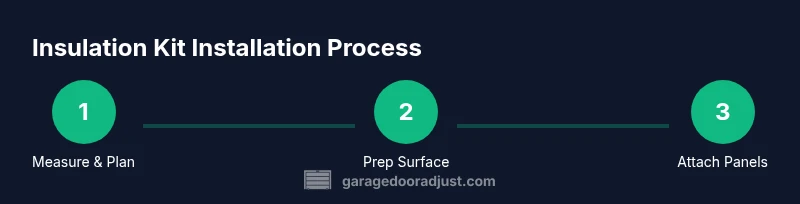
This section provides a high-level roadmap of the installation process to complement the detailed steps that follow. Start by measuring door dimensions and preparing the surface. Next, trim insulation panels to fit each section, then apply weatherstripping to all door edges. Attach insulated panels to the door surface, ensuring tight contact with the frame and minimal gaps. Seal seams and joints with tape or sealant to prevent air leaks. Finally, test door operation and await any adhesive cure time if required by your kit. Refer to Figure references in your kit instructions for diagrams.
- Measure and verify door dimensions
- Cut panels to fit each section precisely
- Apply edge weatherstripping and sealant
- Attach panels in a flush, gap-free fashion
- Verify opening/closing with no interference
Common installation mistakes and how to avoid them
Avoid these frequent errors:
- Cutting panels too large: trim gradually and test fit before final adhesion
- Skipping surface prep: dirt or moisture reduces adhesive strength
- Misaligning panels: double-check alignment with the door’s section lines
- Over-tightening fasteners: can bow panels and create gaps
- Using the wrong adhesive: ensure kit-specified adhesive types are used To prevent mistakes, follow the kit’s template, dry-fit panels, and verify operation after each major step.
Maintenance and troubleshooting
After installation, inspect seals and edges every 3–6 months. Look for peeling adhesive, cracked edging, or loose panels and address promptly to maintain performance. If you notice reduced efficiency or misalignment, re-check the weatherstripping and reseal any gaps. Clean panels gently with a damp cloth to prevent buildup, and avoid harsh solvents that could degrade foam. If you need to re-seal around the perimeter, consider replacing edge seals rather than reapplying over worn material. Regular checks prolong effectiveness and keep the door operating smoothly.
- Schedule periodic inspections
- Replace worn weatherstripping as needed
- Keep panels free from moisture and residue
- Re-seal gaps to maintain energy effectiveness
Tools & Materials
- Garage door insulation kit(Assorted panels sized for standard doors; verify height/width compatibility with your door)
- Utility knife(For trimming insulation to fit door sections)
- Measuring tape(Accurate measurements of width, height, and panel layout)
- Scissors(Alternative cutting tool for panels)
- Pencil or marker(Mark cut lines and reference points on panels)
- Duct tape or weather-resistant tape(Seal edges and secure panels during installation)
- Gloves(Protect hands while handling materials)
- Screwdriver or drill (optional)(Some kits use screws for panel attachment)
- Ladder(Access higher door sections safely)
- Sealant (silicone or butyl)(Seal bigger gaps or joints if needed)
Steps
Estimated time: 60-120 minutes
- 1
Measure door and plan layout
Use a measuring tape to capture door height and width, plus count the number of panels. Sketch a quick layout and mark cut lines with a pencil to guide panel trimming. Accurate measurements prevent wasted material and ensure a snug fit.
Tip: Double-check measurements in two directions (width and height) to avoid off-by-one errors. - 2
Prepare the door area
Clear the surrounding area, disconnect the opener, and clean the door surface with a damp cloth. A clean, dry surface improves adhesive bonding and reduces the chance of trapped moisture.
Tip: Mix a small amount of sealant only if your kit requires it; avoid excess moisture that can weaken seals. - 3
Cut insulation panels to fit
Trim insulation panels to match the measured sections. Dry-fit pieces before applying adhesive to confirm alignment with hinge lines and panels.
Tip: Cut slightly smaller than the mark and test-fit; you can nudge panels into place without forcing them. - 4
Apply weatherstripping to door edges
Affix weatherstripping along door edges to seal the perimeter. Ensure a continuous seal without gaps that could let air through.
Tip: Press seals firmly for a continuous tack and wipe away any excess adhesive before it cures. - 5
Attach insulation panels
Secure panels to the door surface following the kit template. Align panels with door segments and avoid covering tracks or hinges.
Tip: Work from top to bottom to maintain consistent alignment and reduce shifting during attachment. - 6
Seal joints and seams
Use tape or sealant to seal all panel edges and joints. This prevents air leakage and moisture intrusion.
Tip: Overlap tape slightly at panel seams for durable seals that resist peeling. - 7
Check operation and clearance
Open and close the door slowly to verify smooth movement and confirm that no panel interferes with tracks or hardware.
Tip: If interference occurs, slightly reposition panels or trim edges for clearance. - 8
Cure time and final test
If your kit uses adhesive, allow the recommended cure time before heavy use. Run a full door cycle twice to ensure proper seating.
Tip: Note cure time on the kit instructions and plan installation accordingly.
Got Questions?
What is a garage door insulation kit?
A garage door insulation kit provides pre-cut panels and weatherstripping to seal and insulate your garage door. It reduces heat transfer and improves comfort by filling gaps and blocking drafts. Install according to the kit instructions for best results.
A garage door insulation kit adds panels and weatherstripping to seal and insulate your door, improving comfort and reducing drafts. Follow the kit instructions for best results.
How long does installation take?
Most homeowners complete the installation in about 60–120 minutes, depending on door size and kit complexity. Allow extra time for curing adhesives if used by the kit.
Most people finish in about an hour, give or take, depending on door size and kit complexity.
Can I install it myself or do I need a pro?
Many insulation kits are designed for DIY installation with common tools. If your door is unusually large or uses custom panels, hire a pro for a precise fit and to protect the door’s warranty.
Yes, most people can install it themselves, but for unusual doors or warranties, a professional installation can ensure a perfect fit.
Will it fit standard door sizes?
Most kits fit common residential 7-foot sectional doors. Always verify height, width, and panel count before purchasing.
Most standard doors are compatible, but check the kit specs against your door dimensions.
How do I maintain the insulation after installation?
Regularly inspect seals and panels for wear, clean surfaces, and reseal edges as needed. Replace worn weatherstripping to keep drafts out.
Inspect seals regularly and replace worn parts to keep the insulation effective.
Does insulation affect door operation or warranty?
If you use a kit compatible with your door and follow the instructions, operation should remain smooth. Some brands may affect warranties; check the manufacturer guidance.
As long as you use a compatible kit and follow the instructions, operation should be fine. Check warranty terms if unsure.
Watch Video
Quick Summary
- Choose a kit matched to your door type for best fit
- Prepare the area and surface before applying insulation
- Trim panels precisely and seal all edges for optimal performance
- Test door operation after installation and observe cure times
- Perform regular maintenance to sustain energy savings