Garage Door Insulation Pros and Cons: A Practical Guide
A detailed, objective comparison of insulated vs. non-insulated garage doors, covering energy efficiency, comfort, costs, and installation considerations. Learn when insulation pays off, with practical tips for homeowners troubleshooting garage door issues.


Insulated garage doors generally deliver better energy efficiency, quieter operation, and more comfort, especially in extreme climates. This comparison highlights the trade-offs: insulation adds upfront cost and installation complexity, but can reduce energy waste over time. For homeowners, the key is balancing climate, usage, and budget to decide if insulation is worth it.
What insulation does for a garage door
Insulation reduces heat transfer through the largest moving surface in many homes: the garage door. According to GarageDoorAdjust, adding insulation to a garage door can lower heat exchange between the garage and outdoors and help maintain a more stable temperature inside. This matters even if the garage isn't heated or cooled as part of the living space, because stored items and adjacent living areas can be affected by temperature swings. Insulation also slows the movement of outside noise into the garage, which is a comfort factor for many homeowners who use the space as a workshop or exercise area. The practical effect is fewer drafts near the door, more consistent temperatures, and a reduced burden on heating and cooling systems elsewhere in the home. When you assess your current door, look for gaps around the edges and at the bottom, as those are the main routes for cold air to infiltrate. A well-sealed, insulated door can be a simple way to upgrade comfort without restructuring your living space.
The main insulation options
There are several common paths homeowners consider when insulating a garage door. The most common interior option is a sandwich panel or foam core door where rigid insulation is bonded between steel or other face panels. Polyurethane foam cores are particularly effective per inch, providing high thermal resistance with a relatively thin profile. Polystyrene panels are another option: they tend to be cheaper, lighter, and easier to retrofit, but offer lower insulation per inch and can be more sensitive to moisture. Fiberglass batt insulation is less common in modern doors but can be used in retrofits or in doors with removable panels. For retrofit projects, you might also see insulated blankets that attach to the interior surface, providing a more budget-friendly improvement without replacing the entire door. Each option has trade-offs in installation complexity, durability, and compatibility with existing tracks and weather seals. According to the GarageDoorAdjust team, the best choice depends on climate, door type, and how you use the space.
Insulated vs non-insulated: energy, comfort, and structure
Energy efficiency is the primary differentiator. An insulated door slows heat exchange, reducing how much the garage temperature drifts toward outside levels. Comfort is a close second; insulated doors tend to feel more stable to anyone working in or around the garage, and they can reduce drafts near living spaces that share a wall with the garage. Structural considerations matter too: insulation adds weight, which can affect the balance of the door, spring wear, and the life of hinges and tracks. Non-insulated doors are lighter and cheaper upfront, and they may suffice in mild climates or for spaces that are rarely heated or cooled. However, you lose the potential for energy savings and weather-related comfort improvements. From a maintenance perspective, well-sealed insulated doors can resist moisture infiltration better, reducing issues like frost on edges and cold air pockets that can cause doors to stick in winter.
Temperature control and heat transfer explained
Heat moves through a door mainly by conduction — through the door material itself — and by air leaks around edges. Insulation cuts conduction, and a good seal reduces convective heat transfer. The most effective insulation applications seal the door perimeter tightly and minimize gaps where air can leak. Thermal bridging at mounting hardware and the door panel joints can still occur, so installation quality matters as much as the insulation material itself. In practical terms, a well-insulated door with solid weather stripping will change how your garage behaves in winter and summer, making it easier for your HVAC system to maintain comfortable temperatures in adjacent living spaces.
Sound dampening and vibration considerations
Insulation also contributes to quieter operation by dampening door panel vibrations and reducing outside noise intrusion. This is particularly noticeable for attached garages where the wall shares space with living areas or bedrooms. The longer a door remains rigid and free of gaps, the less chance there is for creaks and rattles when it opens or closes. While noise reduction is a welcomed bonus, it should not be the sole reason to choose insulation. The core thermal performance and weather sealing provide the primary climate-related benefits, with acoustic improvement acting as a supplementary perk.
Durability, maintenance, and weather resistance
Insulated doors tend to be more resistant to temperature-related warping and moisture intrusion, especially when moisture barriers are integrated into the panel design. Maintenance for insulated doors focuses on weather seals, hinge lubrication, and ensuring tracks stay aligned. If you live in a region with freeze-thaw cycles, proper sealing around the door perimeter becomes critical to prevent ice buildup that can impede operation. Conversely, non-insulated doors are simpler mechanically but rely more heavily on exterior weather stripping; over time, worn seals can become air-leaks, reducing any potential energy benefits.
Costs, savings, and long-term value
The initial cost of an insulated door is higher than a comparable non-insulated door due to materials, core construction, and potential upgraded hardware. The long-term value comes from energy savings, improved comfort, and possibly increased property value. The actual payback period varies with climate, door usage, and energy prices, but the general consensus from industry guidance is that insulation pays off in homes used year-round in seasons of extreme temperatures. If you park your car in the garage during winter or want to buffer heat in summer, insulation is more likely to be cost-effective over time. Consider also the added value of reduced condensation and less frost buildup on interior spaces adjacent to the garage.
When insulation makes sense (and when it doesn't)
Insulation makes sense for attached garages that share walls with living spaces or for detached garages where the space is heated or cooled for projects, workshops, or habitations. If your climate experiences extreme temperatures or you spend significant time in the garage, insulation can meaningfully improve comfort and energy efficiency. In mild climates with minimal use of the garage as a living or working space, the upfront cost may not be justified. Finally, if your existing door is in poor condition, you may prefer a full door replacement with modern insulation to ensure long-term performance rather than retrofitting panels or blankets that may have limited lifespan.
Practical installation considerations
Before choosing an insulation approach, check door type, panel construction, and compatibility with tracks and springs. Retrofit blankets are the simplest option if you want a quick upgrade without removing the door. Full-door insulation requires careful assessment of weight, balance, and spring tension to avoid undue stress on hardware and to ensure safe operation. Weather seals around the door perimeter should be inspected and replaced if worn. If you opt for a polyurethane foam core, ensure proper curing and ventilation during installation to avoid off-gassing and to ensure uniform insulation. Overall, professional installation is strongly advised for standard garage doors, especially if you rely on automatic openers, to preserve safety and guarantee the door’s warranty.
DIY vs professional installation and safety tips
DIY insulation can be viable for simple retrofits or blanket installs on smaller doors, but you should have a clear plan for sealing gaps and avoiding obstructing the opener or tracks. If you choose a full replacement, hiring a qualified installer ensures correct panel alignment, correct balance, and proper weather sealing. Safety is critical: disconnect power to the opener during any interior work near tracks, use sturdy ladders, and observe pinch-point precautions. If you are unsure about spring tension or the weight impact of insulation, a pro installation reduces risk and often yields better long-term performance. GarageDoorAdjust recommends starting with a thorough inspection of seals, then weighing the cost and effort of upgrades against expected energy savings and comfort gains.
Quick self-checks to gauge insulation needs
A quick way to gauge insulation needs is to assess drafts around the door with your hand or a light source at night, check for frost accumulation on the door edges in winter, and estimate indoor temperature variance between the garage and adjacent living spaces. If you notice significant temperature swings or drafty pockets, insulation is likely beneficial. Measure door type and available headroom to determine if a full replacement or retrofit will fit your space. Finally, compare quotes for insulation options and consider the long-term energy savings and comfort improvements when calculating a rough return on investment.
Comparison
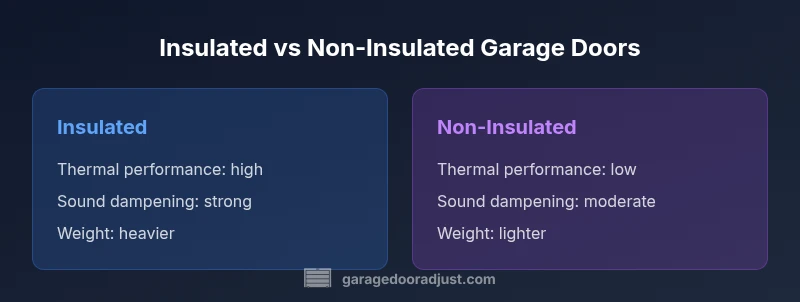
| Feature | Insulated Garage Door | Non-Insulated Garage Door |
|---|---|---|
| Thermal performance | high | low |
| Sound attenuation | strong | moderate to weak |
| Weight impact | heavier (affects springs and opener load) | lighter |
| Initial cost | mid-to-high | low |
| Long-term energy savings | potentially significant | less pronounced |
| Best for | cold/hot climates, energy-conscious homeowners | budget-focused or mild-climate projects |
Upsides
- Improved energy efficiency and reduced heating/cooling loads
- Enhanced comfort with fewer drafts and more stable temperatures
- Better condensation control and potential moisture resistance
- Quieter operation due to reduced panel vibrations
- Increased home value and curb appeal when paired with other efficiency upgrades
Disadvantages
- Higher upfront cost compared to non-insulated doors
- Longer payback period in mild climates or if the garage is rarely heated/cooled
- Potential installation complexity that may affect warranty if not done properly
- Heavier doors may require upgraded springs or hardware and professional installation
Insulated doors generally win for most homes, especially where climate and comfort matter.
If your garage is used regularly and your climate swings widely, insulation delivers energy savings and comfort advantages that justify the cost. For simple storage needs in mild climates, a non-insulated door may be a reasonable short-term choice.
Got Questions?
What is the main benefit of garage door insulation?
The primary benefit is reduced heat transfer, which stabilizes the garage temperature, improves comfort, and lowers energy costs over time. Insulation also helps with sound dampening and moisture control.
Insulation mainly reduces heat transfer and improves comfort, with added benefits like quieter operation and better moisture control.
Is insulation worth it for attached garages only, or detached ones too?
Both types can benefit. Attached garages share living space heat, so insulation helps control temperature more effectively. Detached garages gain from temperature stability and reduced moisture intrusion, especially if the space is used for hobbies or as a workshop.
Both attached and detached garages can benefit; insulation helps with temperature and moisture control in either case.
What materials are best for insulation?
Polyurethane foam cores offer high insulation per inch and good overall performance. Polystyrene panels are cheaper and easier to retrofit, while fiberglass is less common in modern doors due to moisture and performance considerations.
Polyurethane is usually best for performance, with polystyrene as a cheaper retrofit option.
How long does installation take?
Installation time varies with door type and method, but professional installation typically completes in a few hours. DIY retrofits may take longer and require careful attention to seals and safety.
A professional install usually takes a few hours; DIY projects can take longer depending on door type and skill level.
Can I install insulation myself, or should I hire a pro?
DIY insulation can work for simple retrofits, but for full-door insulation or when upgrading springs/hardware, a professional installation ensures safety and preserves warranty. Assess your comfort with tools and safety risks first.
You can DIY small retrofits, but for best results and safety, professional installation is usually wiser.
Quick Summary
- Assess climate and usage to determine value
- Balance upfront cost against long-term energy savings
- Inspect door condition and weather seals before upgrading
- Consider professional installation for optimal performance
- Choose insulation quality aligned with door type and space use