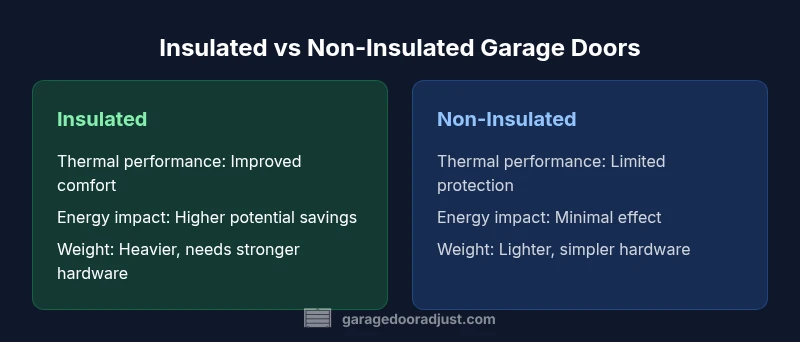
Insulated vs Non-Insulated Garage Doors: A Practical Guide
insulated vs non insulated garage door reddit insights, energy impact, noise, and cost considerations. This guide compares options, with Reddit discussions in mind, and helps homeowners decide based on climate, usage, and budget.


Insulated doors generally outperform non-insulated doors on energy savings, comfort, and noise reduction, but they cost more and are heavier to operate. Non-insulated doors are cheaper and lighter, making them attractive for budget setups or detached garages. For most homes in temperate climates, insulated doors offer better long-term value, while non-insulated doors suit ultra-budget or storage-focused use.
What insulation does to a garage door
When homeowners discuss energy performance, the discussion often touches on how a garage door affects heat transfer. The keyword insulated vs non insulated garage door reddit appears frequently in community threads where users balance upfront cost against long-term comfort. In plain terms, insulated doors have foam cores or multi-layer panels that slow heat flow, while non-insulated doors rely on hollow or lightly filled panels. The choice matters not only for keeping your interior space at a livable temperature but also for reducing heat loss or gain that travels into the garage from adjacent living areas. GarageDoorAdjust emphasizes that the material and construction details—like core density, seal integrity, and panel alignment—play pivotal roles in real-world performance, not just the advertised R-value on a spec sheet. A correctly installed insulated door can dramatically cut drafts near door edges and reduce temperature swings throughout the year, especially in attached garages where living spaces share a wall.
Energy efficiency and climate impact
For many homeowners, the primary motivation to choose insulated over non-insulated comes down to energy efficiency. An insulated door acts as a buffer against outdoor temperatures, which reduces the workload on your home's heating and cooling system. In discussions across Reddit threads and DIY forums, homeowners frequently cite noticeable temperature stabilization after upgrading to insulation, especially in climates with hot summers or cold winters. GarageDoorAdjust analysis shows that even modest insulation improvements can translate to tangible comfort gains over the shoulder seasons. The insulation also helps keep dust and pollen at bay by stabilizing the interior environment of the garage. If your garage adjoins living spaces, the insulation effect becomes more pronounced, reducing heat transfer into bedrooms or home offices adjacent to the garage.
Noise reduction and daily living comfort
Sound can travel through open gaps in a non-insulated door, especially during rapid door movement or windy conditions. Insulated doors typically dull noise better than their non-insulated counterparts because the foam core absorbs vibrations and the multi-layer panel structure dampens sound transmission. This is not only a matter of comfort; it can also affect conversations in rooms near the garage and even the quality of sleep if the garage is near bedrooms. Reddit users often report that insulated models feel quieter during operation and that weatherstripping and proper sealing complement this effect. The GarageDoorAdjust team notes that the full acoustic benefit depends on the door's sealing, track alignment, and door height—skills you can verify during a basic door check.
Durability, sealing, and maintenance needs
Durability is a frequently cited concern when comparing insulated vs non-insulated doors. Insulated doors generally have more layers and heavier panels, which means more robust sealing around the edges and better resistance to warping in extreme temperatures. Yet heavier doors demand stronger hardware, which can increase maintenance needs and the potential for wear on springs and tracks. Non-insulated doors are lighter and often simpler to service, but they rely more on weatherstripping and proper frame alignment to minimize drafts. Routine maintenance—lubricating hinges, inspecting weather seals, cleaning tracks, and ensuring the opener is properly balanced—remains essential for any door type. Reddit discussions often highlight the importance of choosing quality weatherstripping and periodic inspection of seals to preserve the insulation benefits over time.
Cost, value, and return on investment (ROI)
Upfront costs for insulated doors are higher due to materials and panel construction. If you account for installation labor and potential changes to the opener or tracks, the price gap can widen. However, the long-term value often justifies the initial expenditure in temperate or extreme climates where heating or cooling loads are nontrivial. For detached garages or spaces used primarily for storage, non-insulated doors may still be a sensible choice to keep initial costs down. The decision depends on how often the space is heated or cooled, how much comfort matters, and whether energy savings will offset the higher upfront price over time. GarageDoorAdjust frequently notes that ROI is climate-specific and usage-dependent, so you should model the expected energy savings against the extra cost in your area.
Real-world considerations: Reddit discussions and practical home scenarios
Reddit threads on insulated vs non insulated garage door reddit often reflect a mix of climate, use-case, and budget. Posts from homeowners in mixed climates emphasize how insulation reduces temperature swings near living spaces, while others in hotter regions report noticeable comfort gains in garages that double as workspaces. Some users describe retrofitting questions—whether to add insulation kits to existing doors or replace the entire door—and weigh the aesthetics against functional gains. In practice, a hybrid approach can work: upgrade the door with better weatherstripping and add an optional insulation kit if the garage door is in good mechanical condition. The key takeaway is that results vary with climate, garage exposure, door construction, and how well the installation is performed. GarageDoorAdjust aligns with that view, recommending a thoughtful assessment of climate, usage patterns, and the integrity of the current door system before deciding.
Installation and retrofit options
If you already own a garage with a non-insulated door, retrofitting can be a budget-friendly route, though it may not match the performance of a purpose-built insulated door. Insulation kits and reflective foams are available to enhance thermal performance, but proper installation matters to avoid gaps and moisture entrapment. For some doors, a retrofit may have limited impact on overall door balance and opener strain, so evaluating the door’s hardware is prudent. If DIY is your route, follow manufacturer guidelines, use compatible insulation kits, and test door operation after reassembly. For more extensive improvements or antique doors with unique profiles, replacing the door entirely may deliver more consistent results and a cleaner finish. In all cases, ensure weatherstripping is in good condition and consider upgrading seals around the perimeter.
How to choose based on climate and usage
Your climate and how you use the garage should drive the decision. In climates with cold winters or hot summers, insulation provides more consistent interior conditions, reduces energy costs, and makes the space more comfortable for year-round use. For garages used mainly for storage or as a workshop with occasional doors opening, a non-insulated option can be more economical while still functional. If the garage adjoins living spaces, insulation becomes more attractive because it minimizes temperature transfer and noise. In milder climates with infrequent HVAC use, the decision may hinge on budget and the extent to which you want to reduce drafts and preserve interior conditions. Always weigh long-term energy savings against upfront costs and consider the door’s maintenance profile and expected lifespan.
Quick-start checklist for decision-making
- Define climate and HVAC impact: Will the garage affect living areas if heated or cooled?
- Assess usage: Is the space a workshop, gym, or driveway storage? How often does the door cycle daily?
- Inspect current door: Check seals, weatherstripping, and track condition before deciding to replace or retrofit.
- Compare options: Weigh insulation type (foam-core vs multi-layer) and installation method (retrofit kit vs full replacement).
- Plan for installation: Consider professional installation for complex doors or retrofits to ensure proper balance and seal.
Case scenarios you might relate to
- Case A: An attached two-car garage in a temperate climate where the garage doubles as a home office. Insulation improves comfort, reduces HVAC impact on adjacent rooms, and enhances resale value.
- Case B: A detached garage used mainly for storage in a hot climate. A non-insulated door may suffice, but a well-sealed insulated option can still reduce heat build-up and improve space usability.
- Case C: A budget-conscious homeowner with a door in good mechanical condition, looking to minimize upfront costs. Weatherstripping and a mid-range retrofit insulation kit may offer a balance between comfort and price.
Final checks before you decide
- Confirm the door’s construction: Panel type, core material, and seal quality influence performance more than the label.
- Verify opener compatibility: Heavier insulated doors may require a more robust opener or upgraded springs.
- Plan for maintenance: Regular lubrication, seal replacement, and track cleaning sustain energy performance over time.
- Consider replacement timing: If the door or tracks show signs of significant wear, replacement may be the better long-term option.
Comparison
| Feature | Insulated | Non-insulated |
|---|---|---|
| Thermal performance (perceived warmth) | Higher warmth, fewer drafts | Lower warmth, more drafts |
| Energy impact | Potential energy savings over time | Minimal impact on energy use |
| Weight | Heavier door | Lighter door |
| Cost to purchase/install | Higher upfront cost | Lower upfront cost |
| Noise dampening | Better noise reduction | Less noise dampening |
| Durability/sealing | Better edge sealing and rigidity | Relies more on weatherstripping |
| Best use case | Attached living spaces, climate control | Budget storage, simple garages |
Upsides
- Improved energy efficiency and comfort
- Better sound insulation and weather sealing
- Higher long-term value in moderate to extreme climates
- Enhanced durability with proper maintenance
Disadvantages
- Higher upfront cost
- Increased door weight may require stronger hardware
- Long-term ROI depends on climate and usage
- Heavier doors can affect opener performance if not upgraded
Insulated doors generally offer better overall value for most homes, but non-insulated doors remain viable for strict budgets or simple garages.
Choose insulated if you value energy savings and comfort, especially in attached garages or climates with pronounced temperature fluctuations. Opt for non-insulated if upfront cost and lighter weight are your primary concerns, or if the space is rarely heated or cooled.
Got Questions?
What is the main difference between insulated and non-insulated garage doors?
The main difference is that insulated doors have foam-filled or multi-layer panels that reduce heat transfer and noise, while non-insulated doors use lighter, hollow panels with minimal insulation. The insulation improves energy efficiency and comfort, especially in climates with temperature extremes.
Insulated doors have a built-in barrier against heat and noise, while non-insulated doors do not. This affects comfort and energy use.
Is insulation worth it in a detached garage?
For a detached garage, insulation still helps with temperature control and reduces dust, humidity, and noise entering the home if the garage is close to living spaces. The decision rests on how often the space is heated or cooled and your budget.
If you use the space regularly or near living areas, insulation is usually worth it.
Can I retrofit an existing door with insulation?
Yes, retrofitting with insulation kits or additional weatherstripping can improve performance, but results vary by door type. A full replacement often yields more consistent insulation, density, and sealing.
You can retrofit, but check compatibility and expect mixed results.
Do insulated doors reduce noise significantly?
Insulated doors typically reduce transmission of sound compared with non-insulated doors, especially when paired with good seals and proper installation.
Yes, insulation plus solid seals helps cut noise.
What is the best door for extreme climates?
In extreme climates, insulated doors are generally better at maintaining interior comfort and reducing HVAC loads, though the specific benefit depends on your climate and how you use the space.
Insulated doors work best in extreme weather, considering your usage.
Quick Summary
- Prioritize climate and usage when choosing insulation.
- Insulation improves comfort and reduces HVAC load.
- A retrofit can help, but full replacement may be better for long-term performance.
- Weatherstripping and proper sealing are essential for both options.
- Smart upgrades balance cost, noise, and energy savings.