Insulated Garage Door vs DIY: A Practical Comparison
This guide compares insulated garage door vs diy options for homeowners, focusing on energy efficiency, installation effort, upfront costs, safety, and long-term value in 2026.


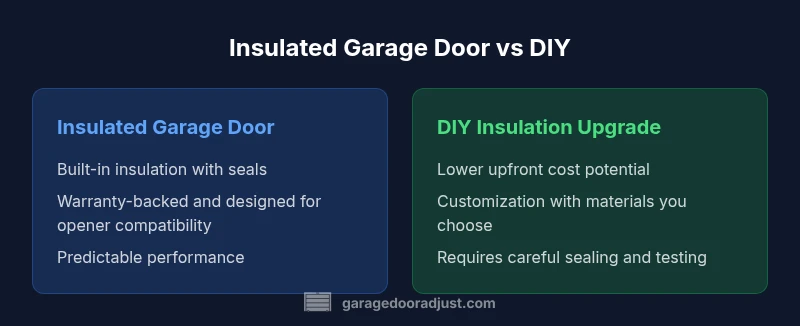
For most homeowners, insulated garage door vs diy choices hinge on energy savings, install effort, and long-term value. An off-the-shelf insulated garage door brings seamless insulation, built-in seals, and warranty support, but costs more upfront. A DIY insulation upgrade can cut costs and improve comfort, yet it often sacrifices performance, durability, and safety guarantees.
Context: What insulated garage door vs diy means for homeowners
For homeowners evaluating energy upgrades, the decision between insulated garage door vs diy options hinges on climate, usage, and long-term goals. When you frame the question this way, you are weighing turnkey performance against customization flexibility. According to GarageDoorAdjust, choosing the right path often comes down to a few core factors: insulation quality, installation effort, warranty coverage, and the expected lifespan of the solution. This article lays out the core differences, the practical tradeoffs, and the scenarios in which each path shines. The goal is to help you decide with clarity, not guesswork, because the right choice improves comfort, reduces energy loss, and protects your investment in the long run. As we progress, keep your climate, usage patterns, and maintenance willingness in mind—these drive whether insulated garage door vs diy is the smarter move for your home.
"## Key Differences at a Glance
- Energy performance: A factory built insulated door provides consistent R-value and seals, while a DIY retrofit depends on the quality of materials and installation.
- Installation complexity: Replacing a door with a preinsulated unit is straightforward for professionals; retrofitting insulation into an existing door can be fiddly and time-consuming for DIYers.
- Cost trajectory: Upfront cost is higher with a new insulated door, but long-term energy savings can offset this. DIY insulation may require fewer dollars initially but can incur additional costs later if rework is needed.
- Warranty and support: A manufactured insulated door typically comes with a manufacturer warranty; DIY upgrades may have limited or no warranty coverage.
- Durability and maintenance: An engineered door maintains seal integrity over time; DIY insulation must be checked for settling or gaps to avoid performance losses.
Energy Efficiency and Comfort: Insulated Garage Doors vs DIY Upgrades
Insulation quality is the main driver of energy performance in garage doors. A purpose‑built insulated garage door integrates panels with rigid foam cores, precise seals, and compatibility with standard tracks and openers. This leads to more consistent temperature control and reduced heat transfer during hot summers and cold winters. A do‑it‑yourself insulation project can improve overall comfort by adding reflective or mineral wool materials and improving seals, but results depend on air‑tightness and alignment. In many cases, the DIY approach leaves small gaps, compressed foam, or uneven edges that undermine the insulation effect. For homes in regions with significant seasonal swings, the payoff from a professionally insulated door is usually clearer, especially when paired with quality weather-stripping and proper spring balance. The key takeaway is that insulation alone is not a magic fix—how it is installed matters just as much as what you install.
Installation, Time, and Disruption
Installing a truly insulated door involves removing the existing door assembly, aligning tracks, and anchoring a new unit with proper hardware. When done by qualified technicians, this process is efficient, predictable, and covered by warranty. DIY insulation upgrades, by contrast, typically focus on adding insulation layers, reflective barriers, or seals to an existing door. This path can be tempting for tight budgets or a weekend project, but it often consumes more time than anticipated and may require specialized tools. Poor fit or misaligned seals can negate the expected energy gains and create new issues with opening balance, noise, or safety sensors. In short, plan for a realistic timeline and be honest about your comfort with hands‑on work before choosing insulated garage door vs diy.
Cost and Value: Upfront, Long-Term, and Hidden Considerations
Cost is rarely the sole driver, but it consistently shapes the decision between insulated garage door vs diy. A new insulated door carries a higher upfront price, yet it delivers standardized insulation, a tested seal system, and predictable long-axis performance. DIY insulation upgrades generally cost less at the outset, but the long-term value depends on materials quality, installation accuracy, and whether you preserve the door’s structural integrity. Hidden costs can include additional weather-stripping, rebalancing, or replacement of panels if the retrofit introduces wear on moving parts. Homeowners should factor in potential warranty limitations and the need for periodic maintenance when estimating long-term savings or costs.
Durability, Maintenance, and Warranty Implications
Durability matters when you compare insulated garage door vs diy options. Factory insulated doors are engineered for consistent performance over years of opening cycles, with seals tested for wear and panels designed for resistance to temperature changes. Warranty coverage on a manufactured insulated door is a major advantage, often covering panels, springs, and hardware. DIY insulation upgrades can compromise durability if seals don’t hold or if added materials interfere with operation. Maintenance becomes a heavier responsibility for DIY projects, because regular checks for gaps, moisture, or shifting insulation fall to the homeowner. If warranty protection matters to you, lean toward the professionally insulated option, unless the DIY path offers an explicit warranty on the materials you select.
Safety and Compliance: What to Watch For
Safety should be non‑negotiable when choosing between insulated garage door vs diy. A professional installation ensures correct spring balance, track alignment, and sensor calibration, reducing the risk of door failure. DIY insulation projects can introduce unintended friction or add weight in places that make the door harder to operate or more prone to jam, especially near the opener. Additionally, some jurisdictions require certain electrical and mechanical standards for garage doors; noncompliance can lead to fines or voided insurance. If you value safety compliance and consistent operation, the insulated door route tends to deliver clearer confidence and fewer headaches than a retrofit approach.
Practical Scenarios: Best Fit by Household Type
- New construction or major remodels: An insulated garage door often makes the most sense, delivering integrated performance and warranty coverage.
- Budget-conscious projects with time to spare: A DIY insulation upgrade might fit short‑term goals, provided you accept potential trade‑offs in durability and warranty.
- Extreme climates or high daily use: A professionally installed insulated door generally provides the most reliable energy savings and ease of maintenance over time.
- Existing door nearing end of life: Replacing with an insulated unit can simplify maintenance and improve energy performance in one step.
How to Decide: Step-by-Step Checklist
- Define your energy goals and climate considerations.
- Evaluate whether you need a full door replacement or a retrofit.
- Check warranty implications and safety requirements.
- Consider the time you can commit to installation and maintenance.
- Obtain quotes for both paths and compare long-term value rather than upfront price alone.
- Test for air leaks and seal integrity after any installation, and schedule a professional inspection if you are unsure.
Common Mistakes and How to Avoid Them
- Overlooking seal integrity: Even a well‑insulated door can leak if seals are worn or misaligned.
- Ignoring the opener interaction: Mismatched balance or faulty sensors can undermine insulation gains.
- Skipping a professional assessment: A door that looks good but is misbalanced will wear out parts faster.
- Underestimating maintenance needs: DIY projects often require more ongoing checks for gaps and moisture.
- Failing to verify warranty terms: Modifying a door without understanding warranty implications can leave you without protection.
The GarageDoorAdjust Perspective
From the GarageDoorAdjust point of view, the insulated garage door vs diy decision should be guided by your climate, expected usage, and willingness to invest in maintenance. We emphasize practical results over hype: a properly installed insulated door delivers consistent energy performance and reliable operation, while a well‑executed DIY retrofit can improve comfort on a limited budget if you can commit to diligent sealing and tuning. Our team prioritizes clarity, safety, and real-world value when guiding homeowners through this choice, and we encourage readers to consult qualified professionals for critical steps that affect safety or guarantees.
Take Action: Next Steps and Resources
Ready to decide? Start with a clear cost–benefit view, schedule a door assessment if you can, and map out your installation timeline. If you choose insulated garage door vs diy, contact a reputable installer to obtain a quote and a preview of how the door will integrate with your current opener and sensors. If you opt for a DIY path, gather a complete materials list, set a realistic timeline, and perform a careful inspection of seals and tracks after installation. Useful resources include manufacturer guides, local code requirements, and independent energy‑efficiency resources to help you verify that your project meets safety and performance standards.
Comparison
| Feature | Insulated Garage Door | DIY Insulation Upgrade |
|---|---|---|
| Energy Efficiency Impact | High, with factory‑built panels and precise seals | Moderate, depends on materials and sealing quality |
| Installation Difficulty | Low-to-moderate for standard door replacement by pros | Moderate-to-high due to retrofit complexity |
| Upfront Cost | Higher upfront for new insulated door | Lower upfront for DIY insulation materials |
| Durability & Warranty | Strong warranty and long-term durability | Warranty often limited or void if modifications are not authorized |
| Maintenance | Low maintenance with standard components | Requires ongoing checks for gaps and settling |
| Time to Complete | Typically a full installation day with professional crew | Could span several days to weeks for a careful retrofit |
| Best For | Homes seeking maximum energy savings and predictable results | Budget-conscious projects with time and willingness to DIY |
Upsides
- Consistent performance and climate control with factory insulation
- Strong warranty coverage and predictable long-term durability
- Lower maintenance frequency for a professionally installed door
- DIY insulation can reduce upfront costs if executed well
- Easier integration with existing tracks and opener when replacing doors
Disadvantages
- Higher upfront cost for a complete insulated door
- DIY insulation carries risk of gaps, misalignment, and reduced durability
- Potential warranty pitfalls or voids for non-authorized modifications
- DIY may require significant time and careful attention to details
Insulated garage door generally offers the best balance of performance and value
For most homeowners, a professionally installed insulated door delivers energy savings, warranty protection, and durable operation. DIY insulation upgrades can be attractive for tight budgets, but expect trade-offs in long-term reliability and safety guarantees.
Got Questions?
What is the main difference between insulated garage door and a DIY insulation upgrade?
An insulated garage door is a complete product with built‑in insulation and hardware, typically installed by professionals and backed by a warranty. A DIY insulation upgrade adds insulation to an existing door and relies on homeowner installation, with variable results and often weaker warranties.
The insulated door is a full replacement with guaranteed insulation and support; a DIY upgrade adds materials to your current door but may lack warranty protection.
Can I achieve the same energy savings with a DIY insulation upgrade?
DIY insulation can improve energy performance, but achieving the same level of insulation consistency and seals as a factory insulated door is challenging. The outcome depends on materials, air sealing, and fit.
DIY can help, but it rarely matches the uniform performance of a purpose-built insulated door.
Will installing an insulated garage door affect my current opener?
A properly installed insulated door should work with your existing opener, but balance, track alignment, and sensor calibration must be correct. A retrofit may require adjustments to ensure safe operation.
Yes, but you may need to recheck the balance and sensors after any change.
Is a DIY insulation upgrade eligible for a warranty?
Most DIY insulation upgrades do not carry the same warranty protections as a manufactured insulated door. Check manufacturer terms and local codes before proceeding.
Warranty is usually limited for DIY upgrades; confirm terms before starting.
How long does it typically take to install an insulated door vs a DIY retrofit?
A professional installation of an insulated door is completed in a single day under normal conditions. A DIY retrofit can take longer and depends on your skill, weather, and access to tools.
Professional install happens in a day; DIY may stretch across multiple days.
What are common mistakes people make when attempting a DIY insulation upgrade?
Common errors include leaving gaps, misaligning seals, failing to balance the door, and ignoring safety sensors. These mistakes can reduce insulation gains and create safety risks.
Watch for gaps, misalignment, and sensor issues to avoid safety problems.
Quick Summary
- Assess your energy goals before choosing
- Prioritize warranties and safety in your decision
- Weigh upfront cost against long-term savings
- Plan installation time to minimize disruption
- Choose a solution with proven performance