Difference Between Insulated and Non-Insulated Garage Doors
Explore the difference between insulated and non-insulated garage doors—energy efficiency, noise reduction, durability, and value—to help homeowners decide the best option for their garages.


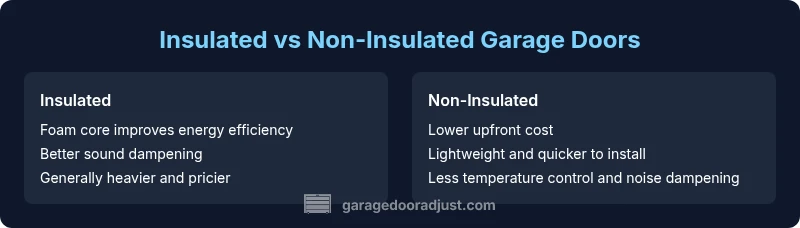
According to GarageDoorAdjust, the difference between an insulated garage door and a non-insulated door centers on heat transfer, comfort, and long-term value. Insulated doors add a foam core and sealed skins that slow energy loss, reduce noise, and improve durability, especially in attached garages. The tradeoffs are higher upfront cost and extra door weight, which can affect spring life and installation requirements.
What is an insulated garage door?
An insulated garage door uses a foam-filled core, typically polyurethane or polystyrene, sandwiched between outer skins of steel or aluminum. This construction traps air and slows heat transfer, helping keep a garage closer to indoor temperatures. When we talk about the difference between insulated garage door and its non-insulated counterpart, the key distinction is the presence of that foam core and tighter panel seals. Insulated doors also tend to feel stiffer and more solid when you push on them, thanks to their integrated insulation and panel design. According to GarageDoorAdjust, insulation quality is a major driver of overall performance in climate-controlled spaces, especially for attached garages where the door serves as a boundary between living areas and utility spaces.
In practical terms, insulated doors come with a higher price tag and a heavier build, but they offer tangible benefits in energy efficiency, noise reduction, and long-term comfort. The level of insulation is often described by the core material and the method of sealing—polyurethane cores generally provide a more continuous, energy-efficient barrier than polystyrene. Materials and construction techniques vary by manufacturer, but the core concept remains the same: a better-sealed door reduces heat loss and air infiltration, contributing to a more comfortable garage and potentially lower utility costs over time.
How insulation affects energy and comfort in your garage
The primary value of insulation in a garage is to minimize heat exchange with the outside environment. In attached garages, a well-insulated door helps maintain indoor temperatures, reducing the load on home heating and cooling systems. This can translate into a more comfortable space for projects, storage, and even for living areas adjacent to the garage. Insulation also dampens sound transmission, which is particularly noticeable in busy households where garage activity can be disruptive. From a practical standpoint, a well-insulated door reduces drafts around the door header and weatherstrips, helping to seal gaps that would otherwise let in cold air or warm air during seasonal transitions. GarageDoorAdjust notes that the energy savings and comfort improvements are more pronounced in climates with extreme seasonal variations and in homes with attached garages.
Key differences when comparing insulated vs non-insulated doors
In a side-by-side comparison, insulation influences several performance attributes:
- Heat transfer and temperature stability: Insulated doors maintain steadier garage temperatures, which matters when you use the space for workshops, hobbies, or storage near living areas.
- Weight and mechanical load: Foam-filled doors are heavier than non-insulated doors. This affects spring selection, track wear, and opener motor load. A proper install is important to ensure longevity of components.
- Noise control: Steel-skinned insulated doors tend to dampen noise better than thin, uninsulated panels, providing a quieter operation.
- Weather sealing: Insulated doors usually pair with more robust weatherstripping and tighter gaps, reducing drafts and moisture intrusion around the perimeters.
- Upfront cost and long-term value: While insulation adds upfront cost, energy savings and increased comfort can improve long-term value, especially in climate zones with hot summers or cold winters.
How to choose insulation level and door construction
Choosing the right insulated garage door means balancing climate, budget, and desired performance. Key considerations include:
- Core material: Polyurethane foam cores typically offer a dense, continuous barrier with strong thermal performance, while polystyrene cores are lighter and less costly but often provide less overall insulation.
- Door thickness and panel design: Thicker doors with continuous foam layers generally provide better insulation and rigidity, reducing flex and rattling.
- Front and back skins: The outer materials (steel, aluminum, wood composite) affect durability, aesthetic options, and maintenance needs.
- Weatherstripping and seals: High-quality weatherstrips at the header, sides, and bottom improve airtightness and reduce drafts.
- Windows and reinforcements: Optional windows add light but can reduce the perceived insulation; reinforced designs help manage structural load.
- Climate considerations: In extreme climates, prioritize higher insulation levels, weather sealing, and proper installation to maximize benefits. GarageDoorAdjust emphasizes evaluating the door in the context of seasonal comfort and energy use.
Installation and maintenance: what changes with insulation
Insulated doors can be heavier and require stronger hardware, including torsion springs and reinforced tracks. Professional installation is often recommended to ensure the opening remains square and balanced, which preserves opener efficiency and lifespan. Once installed, maintenance remains similar to non-insulated doors but with added attention to weatherstripping integrity and foam edge seals. Regular lubrication of hinges, rollers, and tracks, plus periodic inspection for foam degradation or panel damage, keeps an insulated door performing at peak efficiency. Proper alignment and seal checks extend both insulation performance and overall door longevity, and GarageDoorAdjust notes that a high-quality installation makes a bigger difference than insulation alone.
Myths about insulated garage doors debunked
- Insulation makes doors unreasonably heavy and hard to operate: Modern insulated doors are designed with balanced hardware; a proper installation mitigates this concern.
- Insulated doors are only for extreme climates: They benefit any space where comfort, noise, or energy efficiency matter, including attached garages in mild climates.
- Retrofitting insulation is always impossible: Some retrofits are feasible, but most cases benefit from upgrading to a purpose-built insulated door for best performance.
- Insulation guarantees energy savings: Savings depend onClimate, usage, and home envelope; insulation contributes but doesn’t replace good heating or cooling strategies.
Scenarios: when insulation matters most for homeowners
- Attached garages in cold or hot climates: Insulation helps maintain living area temperature, reduces drafts, and can lower utility costs over time.
- Garages used as workshops or studios: A stable temperature improves comfort and reduces humidity-related issues that can affect tools and materials.
- Frequent door use with weather extremes: Insulation minimizes energy exchange during peak seasonal changes and weather events.
- Budget-conscious upgrades: If upfront costs are a concern, start with a well-sealed non-insulated option and upgrade later if needed, or select a mid-range insulated door with strong seals.
Value and return on investment: a practical takeaway
Insulation adds initial cost, but the value comes from improved comfort, reduced drafts, and potential energy savings over the life of the door. When deciding, weigh your climate, garage usage, and how much you value quiet operation and a stable interior environment. A well-installed insulated door can contribute to a more efficient home envelope and may increase resale appeal for many buyers.
Comparison
| Feature | Insulated garage door | Non-insulated garage door |
|---|---|---|
| Energy performance | Better temperature control and reduced heat transfer | Higher heat transfer and more temperature swings |
| Weight | Heavier due to foam core | Lighter, thinner panels |
| Noise reduction | Improved sound dampening | Minimal noise dampening |
| Weather sealing | Tighter seals and better drafts control | Standard seals with higher drafts risk |
| Upfront cost | Higher upfront cost | Lower upfront cost |
| Durability and maintenance | Foam core with solid skin; can resist dents but may require careful sealing | Thin core; easier to dent and may require more frequent weatherstripping checks |
Upsides
- Improved energy efficiency for attached garages
- Better temperature control and comfort
- Enhanced sound reduction and privacy
- Potential increase in home value and curb appeal
Disadvantages
- Higher upfront cost and heavier door
- Requires compatible hardware and potentially skilled installation
- Possible increased maintenance around seals and foam edges
Insulated doors are generally the better long-term choice for most attached garages.
Choose insulated if you value energy efficiency, comfort, and noise reduction, especially in extreme climates. Non-insulated doors stay appealing for tight budgets or mild climates, but may incur higher energy costs and less comfort over time.
Got Questions?
What is the difference between insulated and non-insulated garage doors?
The insulated door has a foam core that slows heat transfer and reduces noise, while the non-insulated door lacks this core and thus transfers more heat and sound. Insulation also affects weight and durability, influencing installation and maintenance needs.
Insulated doors keep heat in and noise out more effectively than non-insulated doors. They’re heavier and may need stronger hardware, but they perform better in extreme climates.
Do insulated doors save money on energy bills?
Insulated doors can reduce energy loss, particularly for attached garages or spaces adjacent to living areas. Actual savings depend on climate, usage, and the home envelope, so consider the overall energy strategy in your home.
Yes, insulated doors can cut energy losses, especially if your garage borders living spaces. Savings vary by climate and usage.
Is insulation worth it for a detached garage?
For detached garages, insulation improves comfort and reduces weather impact, but the benefit is often less dramatic than for attached garages. Assess usage, climate, and whether you’re willing to invest in better seals and panel construction.
It can be worth it if you use the space regularly or if weather control is important, even in a detached garage.
Can insulated doors be retrofitted with insulation?
Retrofitting insulation into an existing door is sometimes possible, but most homeowners achieve best results by upgrading to a purpose-built insulated door with integrated foam and seals. Retrofit options vary by door type and installation conditions.
Retrofits exist, but upgrading to a purpose-built insulated door generally yields better performance.
What is the cost impact of insulation?
Insulation adds upfront cost due to materials and installation complexity. The long-term value comes from comfort and potential energy efficiency, which can offset the premium over the door’s life.
Insulation costs more upfront, but you may gain comfort and energy savings over time.
How do I maintain an insulated door?
Regularly inspect weatherstrips, lubricate moving parts, and check for foam edge degradation or moisture. Keep the door balanced and aligned to maximize insulation performance and reduce wear on springs and tracks.
Check seals, lubricate parts, and keep the door aligned for best insulation and longevity.
Quick Summary
- Prioritize insulation for attached garages in variable climates
- Expect higher upfront costs with insulated doors
- Consider door weight when selecting springs and opener
- Ensure proper installation for best performance