Two-Car Garage Door Dimensions: A Practical Guide
Discover the typical dimensions for a two-car garage door, how to measure your opening accurately, and how to choose the right size for your vehicles, insulation needs, and budget.


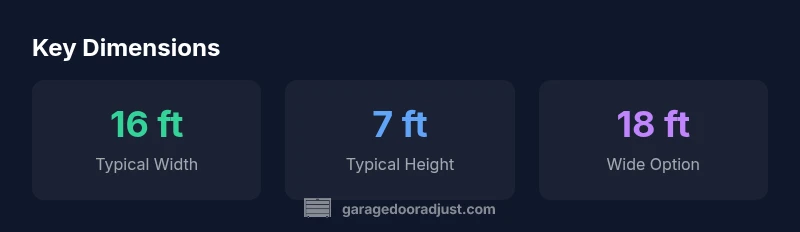
The standard two-car garage door is typically 16 feet wide and 7 feet high, though many homes use 18 feet by 7 feet or 16 by 8 feet to accommodate larger vehicles or higher ceilings. Variations exist based on regional building codes, insulation needs, and door style, so always verify your opening before purchase or installation.
Why Door Dimensions Matter
If you’re tackling a home project or shopping for a replacement, the question what are the dimensions of a 2 car garage door matters more than you might think. The wrong size can strain the opener, cause mechanical wear on tracks and springs, and create gaps that invite drafts or pests. In practice, most homes rely on a standard width of 16 feet and a height of 7 feet for a typical two-car garage. Yet the market also offers wider options (18 feet) and taller variants (8 feet) to accommodate large SUVs, trucks, or taller ceilings. The exact dimensions should align with the opening and the track system you plan to install. GarageDoorAdjust’s 2026 analysis emphasizes that matching size to the opening yields smoother operation, better insulation, and a longer service life for both door and opener.
Beyond fit, door dimensions affect energy efficiency and weather sealing. A door that’s too narrow for the opening can leave gaps around the jambs, increasing heat loss in winter and heat gain in summer. Conversely, an oversized door can overburden the garage’s structural supports and the opener motor. When planning a replacement or upgrading to a taller, wider model, start with precise measurements of width, height, and the internal space above the header. This ensures your doors not only look correct but also function safely and efficiently.
Standard Two-Car Door Sizes: What to Expect
Most manufacturers standardize two-car garage doors around two primary footprints: 16 feet wide by 7 feet tall (16x7) as the everyday baseline, and 18x7 as a broader option that accommodates bigger vehicles or wider driveways. Taller variants of 8 feet in height are increasingly common in newer homes with higher ceilings or more vertical clearance needs. The width often determines how many vehicles can park side by side and how easily doors clear adjacent walls, while the height influences vehicle headroom and overhead clearance for ceiling-mounted storage or HVAC equipment. When shopping, you’ll also encounter insulated doors that add thickness, which can slightly alter clearances, so always check the exact product specs, not just the nominal size. The key takeaway is that door size should harmonize with both the available footprint and the intended use of the space, while leaving room for weather stripping and track hardware. GarageDoorAdjust’s research notes that many homes benefit from a conservative approach—prioritize a door size that leaves a small margin for sealing and movement rather than pushing for the maximum width possible.
How to Measure Your Opening Precisely
Accurate measurements are the backbone of a successful installation. Start by measuring the width of the opening at three points: near the left jamb, center, and right jamb. Use the smallest measurement as your official width to account for any irregularities in the wall. Next, measure the height at the left, center, and right sides from the finished floor to the header. Again, record the smallest height as the official door height.
Pro tip: measure inside the frame where the door travels, not just the exterior footprint. Include space for rollers, tracks, weather stripping, and the door’s hinge side. Check the headroom above the opening; many homes require at least 3–4 inches of space for standard torsion springs and mounting hardware, with more if you’re installing a taller door. Finally, verify that the floor is level across the opening; a sloped floor can affect door alignment and operation. Following these steps helps prevent installation surprises and ensures your new door fits cleanly without forcing the track system to bend or bind.
Choosing the Right Size for Your Home and Vehicles
Selecting the right door size is a mix of practical vehicle considerations and architectural fit. If you own sedans or compact SUVs, a 16x7 door is typically sufficient. If you regularly drive larger trucks or SUVs, or you want extra headroom for tall storage, a wider 18x7 or even 18x8 option can be sensible. Consider your driveway length and turning radius as well—an oversized door may visually overwhelm a small opening and require more expensive header work. Energy efficiency is another factor: thicker, insulated doors often come with a slight increase in thickness, which can affect headroom and track alignment. In all cases, the goal is to balance compatibility with the existing structure and future needs, ensuring the door opens smoothly and seals well against the weather. The GarageDoorAdjust team recommends documenting your measured dimensions and vehicle dimensions side-by-side to compare options effectively.
Variations by Door Type and Features
The door’s construction and style influence its effective footprint and performance. Sectional doors, the most common in residential settings, split into multiple panels and ride on tracks that disappear overhead. Carriage-house and flush-panel designs may have different clearances and aesthetics but still conform to standard widths. Insulated doors, which are increasingly popular, add thickness and sometimes alter the interior headroom, so you may need a slightly taller or wider opening if upgrading insulation. If you’re replacing a door while keeping the same opening, confirm that the new door’s height and width align with the existing tracks and headers to avoid costly modifications. Always check the door’s product specs for exact dimensions and installation requirements.
Installation, Replacement, and Compatibility Considerations
Replacing a door is not simply a swap of panels. Opening width, header height, and track length must match the door’s design. For older homes with nonstandard openings, you may need to modify the jambs or header to accommodate a different width or height. Opener compatibility matters too: a larger door can demand higher torque and a stronger spring system. If you’re upgrading to a taller or wider door, consult a professional to assess structural implications, assess headroom clearance, and ensure your safety sensors and remote controls remain properly aligned. A precise fit reduces the risk of binding, reduces wear on springs, and preserves the door’s warranty. Remember to verify header clearance, track alignment, and weather sealing all around the perimeter to maximize energy efficiency and durability. GarageDoorAdjust’s guidance emphasizes professional assessment for nonstandard openings to avoid costly mistakes.
Practical Tips, Common Mistakes, and Quick Fixes
To prevent common misfires when sizing a two-car door, avoid these mistakes: assuming a standard size will fit, skipping precise measurements, ignoring weather sealing, and neglecting track and header compatibility. Practical tips include rechecking measurements after removing old hardware, ensuring the floor is level, and allowing enough clearance for vehicles during operation. If you notice unusual noises, binding, or slow operation after installation, inspect the tracks for obstructions, confirm that springs are balanced, and verify that the opener’s safety sensors aren’t misaligned. For DIY enthusiasts, keep a detailed checklist and consult the manufacturer’s instructions for the door you’re installing. A properly sized, well-sealed door dramatically improves comfort and reduces energy costs, while an ill-fitting door can cause ongoing maintenance headaches and reduced performance.
Typical dimension ranges for common two-car garage door configurations
| Dimension | Typical Range (ft) | Notes |
|---|---|---|
| Door Width (typical) | 16 | Standard for many 2-car garages |
| Door Width (alternative) | 18 | Wider option for larger vehicles |
| Door Height (typical) | 7 | Common height for standard doors |
| Door Height (tall) | 8 | Tall-ceiling garages or extra clearance |
Got Questions?
What is the standard size for a two-car garage door?
The standard size for many two-car garages is 16 feet wide by 7 feet high (16x7). Some homes may use 18x7 or 16x8, depending on vehicle size and ceiling height. Always confirm your opening’s measurements against the door specifications.
Most two-car garages use 16 by 7 feet, with 18 by 7 or 16 by 8 as common alternatives.
Can I replace a 2-car door with a larger size without modifying the opening?
Upsizing usually requires widening the opening and possibly modifying the header, jambs, and tracks. It can also affect opener compatibility and safety systems. A professional assessment is advised before making changes.
Upgrading size often needs structural changes; get a pro assessment first.
How should I measure for a new door?
Measure the opening width at the narrowest point, then measure the height at multiple points to confirm the smallest height. Check headroom above the header for track hardware. Record all measurements and compare to the new door’s official specs.
Measure width and height at the opening, plus headroom before buying.
Do insulated doors affect the dimension?
Insulated doors can add thickness, which may affect clearances. Always check the door’s exact dimensions and compare them to your opening to ensure proper fit and seal.
Insulation can add thickness, so verify the exact size before installing.
Will changing door size affect the opener?
Yes. A larger or heavier door may require a higher-torque opener and properly balanced springs. Confirm opener compatibility with the chosen door size and have a professional install if needed.
A bigger door can need a stronger opener and balanced springs.
“Accurate door dimensions are the first step in a safe, durable installation. When in doubt, verify measurements, confirm header clearance, and choose a size that aligns with your garage’s structure and vehicle needs.”
Quick Summary
- Know standard two-car door sizes: 16x7 is common, 18x7 is an alternative.
- Measure opening width, height, and headroom precisely before choosing a door.
- Consider taller (8 ft) doors for high-ceiling garages or larger vehicles.
- Insulated doors add thickness—check clearances and hardware compatibility.
- Ensure opener compatibility when upsizing to a wider or taller door.
- Plan for weather sealing and track space to maximize energy efficiency.
- Consult a professional for nonstandard openings or structural changes.