How Big Is a Garage Door? A Practical Size Guide
Learn typical garage door sizes for single and double openings, how to measure openings accurately, and the factors that influence width, height, and installation in residential garages.


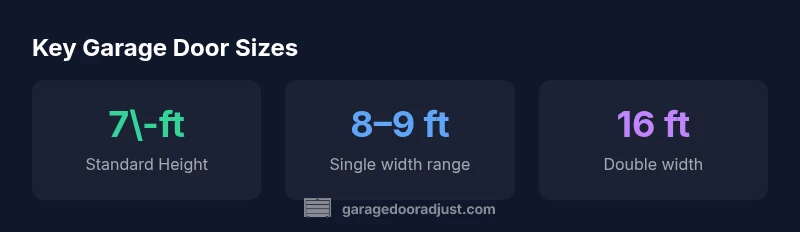
Most standard residential garage doors are 7 feet tall. For single-car garages, common widths range from 8 to 9 feet; double-car doors are typically 16 feet wide. Some homes use 7x10 or 8x8 configurations. Custom doors may be taller (8 feet) or wider (over 16 feet). Always measure to confirm.
How big is a garage door? What size means in practice
When homeowners ask how big a garage door should be, they are often balancing vehicle dimensions, garage layout, and future needs. In practical terms, size refers to two primary measurements: width and height of the door itself, plus the rough opening into which the door fits. A door that is mis-sized relative to the opening can cause track misalignment, binding at the jamb, or motor strain for the opener. In the United States, most residential doors adhere to a few standard footprints. The height is commonly fixed at seven feet for many homes, while width varies by the number of vehicles housed. The term how big is a garage door expands to include the space you’ll need above the door for tracks, springs, and the header. If you ask a pro, they will explain the distinction between the door leaf, the frame, and the rough opening, and how each influences what you buy and install. Bold takeaways: accuracy in height and width matters for safe operation and reliable opening.
Standard sizes by opening type
Garage door sizing typically breaks down into single-car and double-car openings, with room for variations based on regional preferences and home design. For single-car garages, the most common widths are 8, 9, or occasionally 7 feet wide, with a standard height around 7 feet. These sizes fit the majority of compact and mid-sized vehicles, while leaving space for safe clearance on either side of the door. Double-car doors are typically about 16 feet wide, providing enough room for two standard-sized vehicles side by side and a balanced appearance. Taller alternatives exist: 8-foot-tall doors are available for taller garages or ceiling-height needs, but they require compatible tracks, torsion springs, and opener clearance. When planning upgrades, several notes help guide the decision: (1) the rough opening must accommodate the chosen leaf width, (2) tracks and springs must align with the door height, and (3) the opener motor and rail length must be compatible with the overall door size. For oversized or specialty openings (RVs, tall trucks, or unusually wide bays), custom doors may be necessary.
How to measure your current door accurately
Measuring correctly is essential before ordering a replacement or new opener. Start with the opening height and width—do not rely on the leaf size alone. Steps to measure accurately:
- Width: Measure left to right at three points along the opening (top, middle, bottom) and use the smallest measurement. This accounts for any bowing or deviations.
- Height: Measure from the floor to the top of the opening at the center, and repeat at the left and right sides. Use the smallest height measurement.
- Depth and clearance: Check the track height above the door, ceiling clearance, and space for torsion springs. Note any obstructions such as lighting, HVAC ducts, or ceiling fixtures.
- Arch and bevels: If your opening is not perfectly rectangular, record the most constraining dimension and consult a pro. Finally, confirm the rough opening size, not just the door leaf, since installation hardware and weather seals affect fit.
- Documentation: Take photos of the opening and label measurements by location. This helps a contractor or retailer reproduce the correct size and ensure compatibility with the existing opener if you’re upgrading.
How size affects openers, tracks, and installation
Door size is tightly linked to the components that support operation and safety. A door that is wider or taller than the opener is designed for can strain the motor, shorten the life of the tracks, or create gaps where weather seals fail. When sizing up, homeowners should consider:
- Opener compatibility: Standard 7-foot doors typically pair with common belt or chain openers. Taller or wider doors may require higher horsepower and longer rails.
- Track system: The track length and curvature must match the door height and width. Mismatched tracks can cause binding, noisy operation, or misalignment.
- Springs and balance: Proper spring tension depends on door weight and size. A door that’s too large for the existing springs can become unsafe or hard to operate.
- Headroom and side room: Ensure there is adequate space above the door for tracks and brackets, and lateral clearance on both sides for sideloading or mounting hardware.
Understanding these relationships helps prevent costly mistakes and ensures a smooth replacement or upgrade. If you’re unsure, a professional assessment is worth the cost. A properly sized system improves energy efficiency, reduces noise, and extends the life of the opener.
Regional variations and custom options
There is no universal “one size fits all” rule; regional building practices influence typical door sizes. In North America, seven-foot height is common, with widths chosen to fit vehicles and garage bays. Europe and parts of Canada may follow different conventions or include higher doors for taller vehicles or higher ceilings. Custom doors can accommodate unusual openings, unusual materials, or enhanced insulation. When pursuing custom options, homeowners should consider:
- Insulation: Thicker panels affect overall door weight and clearance. Insulated doors can require a different balanced system and may demand a different opener horsepower.
- Panel style and texture: Decorative panels or textures alter measurements if you’re matching existing surrounding architecture.
- Material thickness: A thicker door may impact the available headroom and track geometry.
- Weather sealing: Custom thresholds and weatherstripping can influence the overall fit and energy efficiency.
Custom doors offer flexibility, but they also introduce installation complexity. Budget for both the door and installation, and consult a professional when sizing to ensure the opening can support the chosen configuration without compromising safety.
Practical steps for choosing the right size for replacement
If you’re replacing a garage door and want to ensure you pick the right size, follow these practical steps:
- Measure the rough opening accurately (as described above).
- Check local codes and HOA guidelines for any restrictions on door size.
- Decide whether you’ll need an insulated option or a non-insulated variant based on climate and energy goals.
- Consider future needs—larger vehicles, higher ceilings, or a preference for taller doors could justify a larger width or height.
- Verify opener compatibility and track length with the door height, width, and weight.
- Obtain multiple quotes from licensed pros and request a formal measurement before purchase.
- If you’re uncertain, schedule a professional assessment that includes a full safety check and a written plan.
Following these steps helps ensure you select a door that fits precisely, performs reliably, and remains within budget while meeting long-term needs.
Common garage door size ranges by opening type
| Door Type | Typical Width | Typical Height | Notes |
|---|---|---|---|
| Single-car standard | 8–9 ft | 7 ft | Most common residential size |
| Single-car tall | 8–9 ft | 8 ft | For higher ceilings or tall vehicles |
| Double-car standard | 16 ft | 7 ft | Common two-car opening |
| Double-car tall | 16 ft | 8 ft | Tall door option |
| Custom wide | 18–20 ft | 7–8 ft | For oversize or RV openings |
Got Questions?
What is the most common garage door size?
For single-car garages, the most common size is about 7 feet high and 8–9 feet wide. Double-car openings are typically about 7 feet high and 16 feet wide. These sizes cover the majority of residential installations.
Most homes use a 7-by-8 or 7-by-9 foot door for singles, and about 7-by-16 for doubles.
Do all garages use the same door size?
No. Door size varies with vehicle width, garage layout, and local building practices. Always measure your rough opening rather than assuming a standard size.
Sizes vary by home—measure your opening to be sure.
How do I measure a garage door opening correctly?
Measure the opening width at three points and use the smallest value. Do the same for height from floor to top, noting any slope or obstructions.
Measure width and height in multiple spots to confirm the smallest dimensions.
Can I install a larger door than the rough opening?
Often you’ll need to adjust the opening or replace the tracks and springs. A professional assessment helps determine feasibility and safety.
It’s best to have a pro confirm if you need to widen the opening.
Are permits needed for door size changes?
Local codes may require permits for structural changes or major modifications. Check with your building department before purchasing.
Check local codes before changing door size.
Is insulation important when sizing a garage door?
Insulated doors improve energy efficiency and reduce drafts, especially in heated or cooled garages. They come in standard and custom sizes.
Insulated doors are a smart upgrade for energy efficiency.
“Accurate measurements are the foundation of a reliable garage door replacement; even a few inches off can affect operation and safety.”
Quick Summary
- Measure rough opening, not just door leaf size
- Most homes use 7 ft height with 8–9 ft single-car width
- Double-car doors are commonly 16 ft wide
- Tall or custom doors require compatible tracks and openers
- Consult a professional to verify fit before purchase