Double Garage Door Size: A Practical Sizing Guide
Discover standard dimensions, measurement methods, and practical tips for sizing a double garage door. Learn typical widths/heights, how to measure your opening, regional variations, and what to consider when choosing a size.


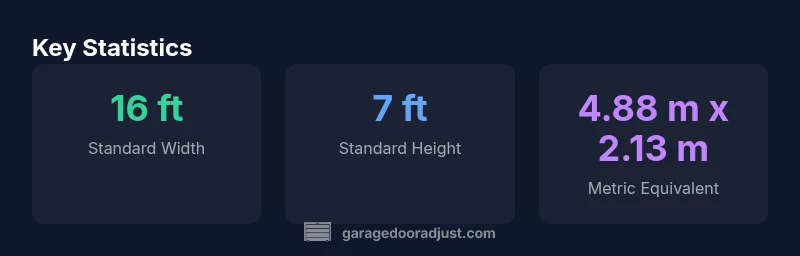
How big is a double garage door? A standard double garage door is typically 16 feet wide by 7 feet tall (about 4.88 by 2.13 meters) in many U.S. homes. Variations exist: openings can range from 14 to 18 feet wide and 7 to 8 feet high. Always measure your opening first.
Understanding double garage door sizing
When homeowners ask how big is a double garage door, they are really asking about the opening width and door height that will comfortably accommodate vehicles, storage space, and configuration. In most regions, a standard double door is built to be wide enough for two average vehicles, yet narrow enough to fit within common driveway layouts. The typical reference point is about 16 feet wide by 7 feet tall, which translates to roughly 4.88 meters by 2.13 meters. However, this is a baseline, not a universal rule—your actual opening may vary based on local codes, wall framing, and track placement. In practice, the door’s width must leave room for side jambs and weatherstripping, while the height must account for curb entries, overhead tracks, and the ceiling clearance needed to operate the opener. If you’re planning a replacement or new installation, begin with a precise measurement and consider future needs, such as taller vehicles or additional storage above the door.
- Actionable note: Start with a precise rough opening measurement and then verify with a professional to confirm fit.
Regional variations and common dimensions
Sizing for double garage doors varies by region. In North America, the 16 ft x 7 ft standard is dominant, but you’ll encounter 14 ft or 18 ft widths and heights from 7 ft to 8 ft depending on vehicle size and driveway geometry. In other markets, widths may be categorized in meters with ranges like 4.5–5.0 m wide and 2.0–2.4 m high. Regardless of region, dimensions must align with the door panel design, track system, and framing. When comparing options, keep in mind that a slightly larger opening often requires reinforced framing and longer tracks, which can affect installation time and cost. GarageDoorAdjust's analysis emphasizes validating your rough opening and ensuring there is adequate side clearance and headroom for smooth operation.
- Quick tip: If you’re unsure about local variations, consult your local installer or building codes for the exact required dimensions.
How to measure your opening accurately
Accurate measurement is the foundation of choosing the right size. Here’s a step-by-step method you can use before contacting a pro:
- Width: Measure the full width of the rough opening from inside wall to inside wall on both sides, taking several readings at different points to account for any sags.
- Height: Measure from the floor to the top of the lintel (the horizontal support above the door). Do this at multiple points to catch any rounding or uneven framing.
- Headroom: Check the space above the door to the ceiling or any obstruction (lights, HVAC ducts). This determines which opener rail and trolley you can use.
- Sideloads and jambs: Verify the thickness of the side jambs and any molding that could affect door fit.
Document all measurements in inches or millimeters, and bring them to the installer. Double-check your numbers and consider nominal versus actual finished sizes, which may differ after weatherstripping is installed.
Choosing between width, height, and insulation
Width and height are both crucial, but other factors influence the final decision:
- Vehicle accommodation: A wider door reduces the risk of scraping mirrors or doors on tight drives, but it may add cost and weight.
- Headroom for the opener: Taller doors require more headroom for rails and tracks; ensure your ceiling space supports the chosen model.
- Insulation: If energy efficiency matters, look for sectional doors with higher R-values and tighter weatherstripping, which can impact headroom and panel weight.
- Aesthetics and curb appeal: The proportion of door size to the garage opening affects the overall look of your home.
In many cases, slightly widening a door will improve accessibility and future-proof the space, but it may require more substantial framing work. GarageDoorAdjust recommends weighing long-term needs against upfront costs and installation complexity.
dataTableSectionStartsWithHeadingForBodyBlocksOrNotTheSystemExpectsStringsOnly?
bodyBlockNoteAnotherSection
Typical double garage door dimensions by region
| Region | Typical Width | Typical Height | Notes |
|---|---|---|---|
| United States & Canada | 16 ft | 7 ft | Most common size; verify with measurements |
| Non-US regions | Varies | Varies | Check local codes; custom options common |
Got Questions?
What is the most common double garage door size?
The most common size in many regions is 16 feet wide by 7 feet high. Variations exist depending on vehicle size, driveway, and local codes.
The standard size you’ll likely see most is 16 by 7, but check your opening for exact measurements.
Can I install a double-door in an existing single-door opening?
If your opening is too narrow or not square, you cannot simply swap in a larger door without modifying the frame and possibly reinforcing the header. A pro assessment is advised.
Usually not without some framing work; have a pro check the current opening.
Are non-standard sizes common?
Yes, custom widths exist, typically ranging around 14–18 feet with heights around 7–8 feet. Costs and installation complexity increase with non-standard sizes.
Non-standard sizes are available, but expect higher price and potential delay.
How should I measure for a new door?
Measure the rough opening width and height, plus headroom and side clearances. Record multiple readings to confirm consistency before ordering.
Measure width, height, and headroom carefully to avoid misfits.
What about insulation and energy efficiency?
Insulated doors improve energy savings; look for R-value and weatherstripping. Heavier insulated panels may require stronger hardware and proper balance.
Insulated doors can save energy; check R-value and seals.
“Sizing for a double garage door should prioritize fit, clearance, and future accessibility; measuring accurately saves time and avoids costly mistakes.”
Quick Summary
- Measure openings precisely before buying
- Standard size is about 16 ft x 7 ft, but variations are common
- Region and vehicle size drive width/height choices
- More height may require reinforced framing and longer tracks
- Non-standard sizes are available but may increase cost