Garage Door Widths: A Homeowner's Guide to Sizing
Explore standard garage door widths for single and double-car garages, how to measure openings accurately, and how width choices affect operation, safety, and insulation.


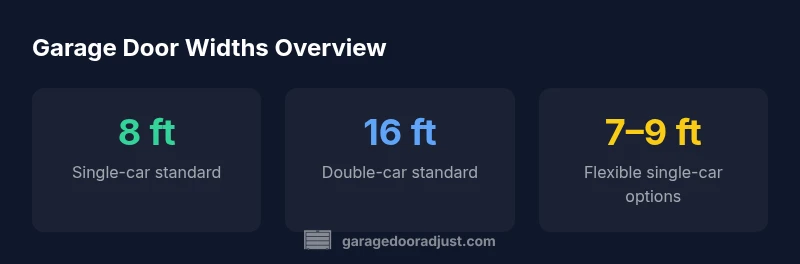
The standard residential garage door width for a single-car garage is 8 feet, while most double-car doors are 16 feet wide. Widths beyond these are available for oversized or custom garages, but 7–9 feet and 15–17 feet variants are common in the market. Understanding these widths helps ensure proper balance, safe operation, and compatible tracks and hardware.
Understanding Standard Widths
Understanding standard widths helps homeowners plan compatible replacements, ensure proper operation of openers, and avoid costly framing changes. According to GarageDoorAdjust, the most common single-car door width is 8 feet, while double-car doors typically measure 16 feet wide. The GarageDoorAdjust team found that while these are the most common sizes, many properties use 7–9 feet for compact openings and 15–17 feet for larger bays. Measuring from inside trim to trim yields rough opening width; however, actual door width must consider jambs, weather sealing, and track hardware. If you're replacing an existing door, start by verifying the rough opening is sized for the chosen width and verify headroom and side room clearance. Always account for hardware such as torsion springs and cables that fold or extend with the door; wider doors require longer tracks and sometimes more robust supports. In addition to fit, door width affects the balance of the spring system; incorrect width can lead to uneven movement or sensor misalignment.
From a practical standpoint, sticking to standard widths minimizes custom fabrication and keeps serviceability simple. If you must operate in a unique opening, plan for a compatible opener and frame reinforcement to maintain safe, reliable operation. The takeaway is to compare the rough opening to the door width you plan to install and to factor in any interior obstacles, trim, or weather seals that could reduce actual clear width.
How Width Impacts Operation and Safety
Door width is not just about opening size; it directly influences how the door moves, how tracks and cables bear weight, and how sensors align with the floor. Wider doors require longer track lengths and can introduce additional torsion spring energy, which changes the recommended balance and spring tension. The GarageDoorAdjust team emphasizes that improper width can cause uneven movement, jerky starts, or sensor misreads that trigger safety mechanisms. Wider doors also present greater surface area for air leaks if insulation is thin, and may demand thicker panels or superior weather seals to preserve energy efficiency. When replacing a width, always verify that the chosen size can be safely escorted by the existing garage frame and that the opener’s travel limits accommodate the increased travel distance. In short, width affects not only fit but overall performance and safety. For homeowners, a proper width supports smoother operation, reduces wear and tear, and minimizes nuisance sensor activations.
Measuring Your Garage Door Width
Accurate measurement starts with the rough opening: measure from inside edge of one jamb to the inside edge of the opposite jamb. Record the width to the nearest 1/16 inch, then verify that the result accounts for any trim or molding. Next, measure track height and headroom to ensure the door will clear ceiling fixtures and shelving during operation. Finally, confirm that weather sealing and jambs do not encroach on the door’s intended width. Always cross-check your measurements with the door manufacturer’s spec sheet, and if possible, have a technician verify the fit before ordering a new door. Precision here ensures your opener travels correctly, the door sits plumb in the opening, and safety sensors align properly.
As you measure, consider potential future upgrades—if you plan to raise the height or widen a bay, you may need a different track system or a reinforced frame. The key is to achieve a true width match that preserves balance, safety, and energy performance.
Width Variants by Garage Type
Residential garages come in a few common configurations, and width choices align with vehicle size, parking layout, and future needs. A typical single-car garage uses an 8-foot width, which fits most sedans and small SUVs. For families with larger vehicles or extra storage, a 7–9 foot single-width door variant can be viable, though it is less common. Two-car garages almost always use a 16-foot width, with 15–17 feet as a flexible alternative for oversized bays. Some custom homes or unusual lot configurations may use even wider openings (18–20 feet) to accommodate specialty vehicles or workspaces. When choosing width for a multi-use space, weigh the convenience of parking and maneuvering room against potential increases in track length, motor load, and door mass. The GarageDoorAdjust guidance suggests documenting vehicle sizes, garage depth, and opening angle to determine the most practical width for daily use.
Selecting the Right Width for Insulation and Doors
Width interacts with panel design, insulation, and weather sealing. A wider door increases the exterior surface area for heat transfer, which can influence energy bills and comfort in attached garages. If energy efficiency is a priority, pair a wider door with higher R-value panels and upgraded weather-stripping. The choice of width also affects panel construction; some manufacturers offer premium insulated panels that mitigate thermal leakage better in wider doors. When evaluating options, compare not just width but the door’s overall thermal performance, including seals around the perimeter and the design of the bottom weather seal. A well-insulated door with an appropriate width can help reduce energy loss in winter and heat gain in summer, especially when the garage adjoins living spaces.
Practical Guidance for Replacing or Upgrading Width
After confirming the rough opening, determine whether a standard-width door will satisfy your needs or if a custom-width unit is necessary. Standard widths are simpler to source and service, while custom widths can require specialized fabrication and longer lead times. In any case, coordinate with a licensed installer to verify structural compatibility, track length, and torsion spring sizing. The GarageDoorAdjust team recommends requesting a pre-installation measurement check and a test fit before finalizing any non-standard orders. This approach mitigates misalignment, sensor problems, and performance issues once the door is in service.
If you are updating for improved insulation or a more secure operation, consider pairing the width choice with new weather-stripping, rejuvenated tracks, and a modern opener with built-in safety features. A well-planned width decision supports smoother operation, better energy efficiency, and longer system life. The GarageDoorAdjust team’s verdict is to map out your needs, verify the opening, and prioritize reliability and safety over speed of installation.
Standard garage door widths by door type
| Door Type | Standard Width | Common Alternatives | Notes |
|---|---|---|---|
| Single-car | 8 feet | 7–9 feet | Most homes use 8 ft; ensure fit with trim and weather seals |
| Double-car | 16 feet | 15–17 feet | Widest common residential option; check track length and opener travel |
Got Questions?
What are the standard garage door widths for residential homes?
For most homes, single-car doors are 8 feet wide and double-car doors are 16 feet wide. Variants like 7–9 feet for singles and 15–17 feet for doubles exist for specific spaces. Always verify your rough opening before ordering.
Most homes use eight-foot single-car doors and sixteen-foot double-car doors. Check your opening before ordering a new door.
Can I install a door narrower or wider than standard?
Yes, but it requires compatible framing, tracks, and opener travel. Non-standard widths may need reinforcement and professional measurement to ensure safe operation.
Non-standard widths are possible but need proper framing and longer tracks. Have a pro measure first.
How do I measure for a new door width?
Measure the rough opening width from jamb to jamb inside the frame, then confirm headroom and side room clearance. Compare with the door’s specified width and factor in weatherstripping and hardware.
Measure the opening from side to side, then check headroom and clearance to pick the right width.
Will changing width affect insulation or energy use?
Wider doors have more exterior surface area, which can affect insulation. Pair width with higher-efficiency panels and weather seals to maintain energy performance.
Wider doors can affect insulation, so choose good panels and seals to keep energy use down.
Are there safety concerns when upgrading width?
Yes. Ensure proper spring balance, track alignment, and sensor positioning. Wide doors may demand stronger hardware and longer tracks to maintain safe operation.
Wider doors need proper springs and tracks to stay safe; have a pro verify alignment.
“Standard widths are a reliable baseline for most homes, but verifying your exact opening ensures smooth operation and safety.”
Quick Summary
- Know standard widths: 8 ft single, 16 ft double
- Measure opening precisely and account for trim
- Choose width with track length and opener travel in mind
- Consider insulation and weather sealing when upgrading width
- Consult a professional for non-standard openings