Common Garage Door Size: A Practical Homeowner Guide
Find typical widths and heights for common garage door sizes, learn how to measure openings accurately, and choose the right size for single- and double-car garages. This expert guide from GarageDoorAdjust covers standard sizes, insulation considerations, and installation tips.


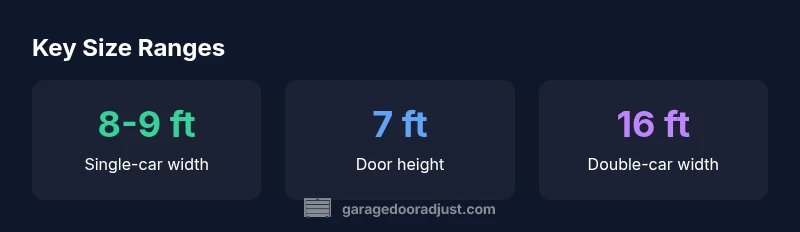
Common garage door size typically means a standard 7-foot tall door with widths of 8-9 feet for a single-car garage and 16 feet for a two-car setup. The most common residential configuration is 9x7 or 8x7 feet, though custom widths range from 8 to 16 feet and heights from 7 to 8 feet depending on clearance and vehicle height.
What "common garage door size" means
When homeowners talk about the size of a garage door, they’re usually referring to two primary dimensions: width and height. Width determines how much horizontal clearance you have to back a vehicle in and out, while height affects headroom and clearance under ceiling-mounted tracks or torsion springs. For many years, the industry has relied on standard residential dimensions to simplify purchases, replacements, and opener compatibility. According to GarageDoorAdjust, understanding these standard sizes helps homeowners plan more effectively and avoid costly misfits. The GarageDoorAdjust team found that most houses are built around one of a few core opening sizes, and knowing where your opening fits can prevent ordering a door that is too wide, too narrow, or too short for the space. The goal is a safe, reliable fit that leaves adequate clearance for tracks, weather seals, and the overhead opener. This is especially important in regions with extreme temperatures, where insulation and wind resistance are part of the sizing conversation.
Beyond purely functional considerations, common sizes also affect curb appeal and resale value. A door that fits well with its frame looks balanced and reduces the chance of air leaks or moisture intrusion. If you’re upgrading your door, sticking to standard widths (and corresponding heights) makes it easier to source compatible openers, panels, and weatherstripping. In short, knowing the common garage door size helps you choose options that are easy to install, maintain, and upgrade over time.
Typical door widths by garage type
Most single-car garages use doors in the 8–9 ft width range, which accommodates the vast majority of compact and mid-sized sedans and small SUVs. A door at 8 ft is common for older homes, while 9 ft is a good fit for many newer layouts or vehicles with wider mirrors. Double-car garages, by contrast, often use a 16 ft width to provide ample clearance for two vehicles side by side. In some cases, builders opt for 15 ft as a compromise between standard availability and narrower lot constraints. Heights tend to be 7 ft as the default, with taller options (8 ft) reserved for taller vehicles, higher ceilings, or specialized insulation packages. When you consider rare variations, you’ll encounter openings that are 10 ft wide or even 12 ft wide in certain custom homes, but these are not the norm in most suburban neighborhoods.
For new construction, you’ll frequently see 9x7 or 8x7 doors as the baseline. If you’re retrofitting an older opening, you may need to adjust the frame or door track to maintain proper fit and operation. Remember that the door width and the door panel configuration (single-panel, 2-panel, 3-panel, etc.) can influence the overall exterior appearance and alignment with window arrangements or decorative elements on the façade.
Height considerations and overhead clearance
The standard residential door height is 7 ft, which works for most vehicles and allows sufficient headroom for typical torsion spring setups and track hardware. However, households with higher-profile vehicles, roof racks, or storage solutions above the door may require 8 ft clearance. In new builds or major renovations, 8 ft doors are increasingly common, especially in garages with taller interior ceilings or additional insulation. When you choose a taller door, you’ll also need to verify that the garage’s door opening frame, header, and jambs can accommodate the increased height and weight. The height choice can also affect the performance of the opener, as higher doors require longer travel and potentially different spring or balance systems.
Weather and energy considerations matter, too. Taller doors often use different insulation configurations and weatherstripping details to reduce drafts at the top edge. If you’re retrofitting, factor in compatibility with your existing opener model and ensure that your mounting hardware has adequate clearance for safe operation.
Other sizing factors: insulation, track layouts, and openers
Size is more than a simple width and height: insulation rating, track geometry, and opener compatibility all influence the best choice for your space. Insulated doors are common in climates with temperature extremes, and their thickness can affect width tolerances and the ability to fit into pre-existing frames. The track layout (replacement rail length, torsion spring alignment, and panel curvature) must match the door’s height and weight. Some openers are designed strictly for standard dimensions and may require adapters or alternate mounting brackets if you opt for non-standard widths or heights.
If you’re upgrading to an insulated or steel-faced door, consider overall thickness—this can alter how the door sits within the jamb and how weather seals compress against the frame. In addition, door size interacts with the garage’s floor slope; if the floor is uneven, it can cause binding or misalignment over time. Always verify that your chosen size works harmoniously with your opener’s horsepower, remote range, and safety features.
How to measure your opening accurately
Begin by measuring width: measure the inside of the header opening from side to side at three points (top, middle, bottom) and use the narrowest measurement as your official width. For height, measure from the floor to the header in three places, noting the smallest value—this determines the finished opening height you’ll be using. Don’t confuse rough opening with finished opening; door manufacturers specify the finished size, which should be 1–2 inches smaller than the rough opening for proper clearance.
Also check for: headroom (space above the door inside the garage for tracks and springs), sideload clearance (space on the sides for rollers and weatherstripping), and jamb straightness (to ensure the door sits squarely). Take photos or diagrams of the opening and compare them to the door’s installation instructions. If you’re unsure, consult a professional; improper sizing can lead to binding, excessive wear, or opener failure.
Planning for future needs and replacements
When planning for a future door replacement, aim for sizes that align with common dimensions to simplify sourcing and installation. If you anticipate future vehicles or storage changes, consider selecting a size that preserves headroom and clearance while leaving room for potential upgrades in insulation or panel design. Standard sizes tend to be easiest to source, audit, and install, and they pair more reliably with a wide array of openers and remote systems. For homes with unique angles or irregular driveways, a custom solution may be warranted, but you’ll want to weigh the benefits against longer lead times and higher costs.
Finally, document your measurements and keep a note of any non-standard features. This information helps when you request quotes from installers or when you compare options from different manufacturers.
Real-world examples and case studies
Example 1: A mid-century home with a narrow driveway uses an 8-ft single-car door. The homeowner upgraded to an insulated 8x7 door for energy savings, then added an automatic opener compatible with a 1-2 hp motor. Example 2: A two-car garage with a standard 16-ft door offers comfortable clearance, enabling two full-sized vehicles to park side by side without mirrors contacting the door panels. In both cases, sticking to standard widths where possible reduced installation time and ensured compatible weather sealing and opener operations.
Common sizes by door type
| Door Type | Common Width (ft) | Common Height (ft) | Notes |
|---|---|---|---|
| Single-car (standard) | 8-9 | 7 | Common residential width range |
| Double-car (two-car) | 15-16 | 7 | Most common size for 2-car garages |
| Oversized/custom | 12-16 | 7-8 | Flexible options for larger vehicles or tighter sites |
Got Questions?
What is the most common garage door size?
For many homes, the most common size is 9x7 feet for a single-car door and 16x7 feet for a standard double-car door. These dimensions balance vehicle clearance with ease of sourcing and installation.
The most common sizes are about 9 by 7 feet for a single car and 16 by 7 feet for two cars.
Can I resize an existing opening without replacing the door?
In some cases you can resize the rough opening or adjust jambs, but many installations require a door that matches standard finished opening dimensions. A professional assessment is recommended.
You may sometimes adjust the frame, but many cases need a door that fits standard finished dimensions.
Do garage door sizes differ by region or house type?
Yes. While 7-foot doors are common in many areas, some regions use taller doors for better headroom and insulation. Always verify local building practices before ordering.
Regional norms vary; check local codes and typical home designs.
How do I measure my opening accurately?
Measure width at three points inside the header and use the smallest value. Do the same for height from the floor to the header, noting the lowest measurement. Record rough and finished opening dimensions for comparison.
Measure width and height at multiple points and use the smallest values to guide size.
Should I prioritize insulation when choosing size?
If you live in a climate with temperature extremes, insulation can justify thicker doors even if they aren’t the absolute smallest option. Balance insulation with structural fit and opener compatibility.
Yes—insulation matters in extreme climates, but balance it with fit and opener compatibility.
“Sizing your garage door to standard dimensions reduces installation complexity and ensures consistent opener compatibility.”
Quick Summary
- Identify your opening's width and height before shopping.
- Choose standard sizes when possible to simplify sourcing.
- Consider insulation and track layout early in the planning.
- Measure accurately to avoid fit issues and opener incompatibility.
- Plan for future needs to minimize retrofit costs.