Size of Garage Door for 2 Cars: A Practical Guide
Discover standard and flexible sizing for a two-car garage door, including widths, heights, and measurement tips to ensure proper fit and opener compatibility.


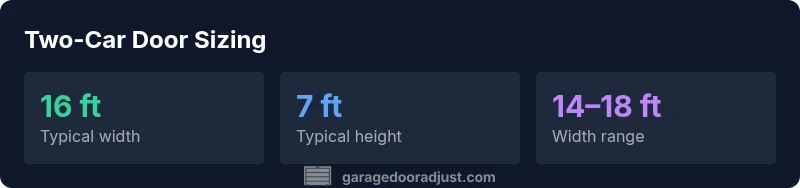
Typical two-car garage openings are 16 feet wide and 7 feet tall, though many builds use 14–18 ft widths and 7–8 ft heights to accommodate larger vehicles. If you have two equally sized doors, each is commonly 8 feet wide, totaling 16 feet. Measure your actual opening to ensure the door matches your space and the chosen opener. For broader real-world options, plan for occasional vehicle and driveway variations.
What the size of garage door for 2 cars covers
In everyday terms, the phrase size of garage door for 2 cars refers to the opening width and height needed to clear two vehicles while allowing space for the door itself to move smoothly on tracks and springs. It also encompasses how the door size interacts with the installed opener, ceiling clearance, and surrounding structure. According to GarageDoorAdjust, homeowners frequently underestimate headroom and track space, which can lead to misfitting doors or insufficient clearance for taller vehicles. The goal is a balanced opening that accommodates common car dimensions, offers easy access, and stays within the home’s architectural rhythm. The GarageDoorAdjust team found that most two-car configurations aim for a width around 16 feet and a height near 7 feet, with regional and vehicle-size variations.
Why standard sizes are common—and when to diverge
Most new homes use a standard 16-by-7-foot opening because it works for a wide range of sedans, SUVs, and small trucks, while keeping construction costs predictable. However, popular deviations exist: some homes install 14–15-foot widths for tighter driveways, while others widen to 18 feet to accommodate larger vehicles or storage space beside the opening. Height can also shift, with 7 feet as a baseline and 7 feet 6 inches or 8 feet becoming more common for taller SUVs or trucks. Choosing the right height matters for overhead clearance, garage insulation, and alignment with the door’s track system. Budget-conscious homeowners may opt for standard sizes first and upgrade later if needed.
Width options: single large door vs. two smaller doors
There are two primary layout choices for a two-car opening. A single, double-wide door (often 16 ft) provides a seamless look and can be easier to seal and insulate. An alternative is two narrower doors (typically two 8-foot doors). Each configuration has pros and cons: a single door reduces the number of seams and potential draughts, but a two-door setup can improve parking alignment for narrower driveways and can offer energy benefits if each door is individually insulated. In both cases, ensure the track system and torsion springs are correctly sized for the door’s total width and weight.
How height and headroom affect installation
Door height and headroom influence both the garage ceiling design and the opener choice. A taller door requires more overhead clearance and can affect the torque and speed of the opener. The typical minimum headroom should account for the door height plus space for tracks, rollers, and a safe mounting area for the motor. If you’re installing taller doors (7'6
/8'), check that your ceiling height, wall height, and header framing can accommodate the extra components. Planning ahead reduces retrofit costs and ensures smoother operation over the door’s life.
Measuring your opening: a practical guide
To size correctly, start by measuring the width at three locations: the top, middle, and bottom of the opening. Use a level to verify that the sides are plumb. Record the smallest width and the largest height across the opening. Document any irregularities such as trim, weatherstripping, or uneven floors. If the opening isn’t perfectly rectangular, consider hiring a pro to avoid future opener or track alignment problems. Also measure the interior ceiling height to confirm you have sufficient clearance for tracks and the motor housing.
Opener compatibility and safety considerations
Your garage door size interacts with the opener’s horsepower, force range, and compatibility with smart controllers. A standard residential opener in a 16x7 or 16x8 opening usually performs well with a 1/2 HP to 3/4 HP motor. Heavier or wider doors may require higher horsepower or reinforced tracks. Always verify that the opener’s travel and force settings align with your door’s weight and spring configuration to prevent slamming or binding.
Real-world scenarios and homeowner tips
In real homes, the door size often depends on the driveway’s width, the garage’s interior layout, and the vehicles parked inside. If you’re replacing an old door, measure the existing opening first and compare it to standard sizes. If you’re building a new garage, map out the door size early in the architectural plan to ensure sufficient structural clearance and proper insulation. For most households, sticking to the 16x7 baseline works well, with adjustments for unusually tall vehicles or particularly narrow driveways.
Planning for the future: energy, insulation, and accessibility
Even within a standard size, door materials and insulation levels can impact ongoing costs and comfort. Insulated doors reduce heat transfer, save energy, and dampen noise, which is especially valuable if the garage is attached to living spaces. When sizing for future needs, consider whether a potential vehicle upgrade or expanded driveway might warrant a larger opening or a separate door design. A well-chosen size today can save you trouble and expense later.
Typical two-car garage door sizes by opening type
| Opening Style | Typical Width | Typical Height | Notes |
|---|---|---|---|
| Two-car opening (single door) | 16 ft | 7 ft | Common standard size |
| Two-car opening (two doors) | 16 ft total (two 8 ft doors) | 7 ft | Split into two doors |
| Tall-vehicle option | 18 ft | 7–8 ft | Accommodates taller vehicles |
| Narrow driveways | 14 ft | 7 ft | Possible with customization |
Got Questions?
What is the most common width for a two-car garage door?
The most common width for a two-car opening is 16 feet, though some homes use 14–18 feet depending on space and vehicle size.
Most two-car garages use a 16-foot door, but sizes can vary from 14 to 18 feet.
Can I replace a single 16-foot door with two 8-foot doors?
Yes, but you may need new tracks, hardware, and compatibility checks with the opener and ceiling height.
Yes, you can use two eight-foot doors, but you’ll need to update hardware and ensure your opener fits.
What if my driveway is narrow?
A narrow driveway can still work with 14-foot doors or two smaller doors, but evaluate clearance and driveway slope.
If your driveway is narrow, you might opt for 14-foot doors or two smaller doors; get a professional measure.
Is 7 feet tall enough for most vehicles?
For most cars and SUVs, 7 feet is sufficient, but tall trucks may require 7.5–8 feet.
For most vehicles, 7 feet works, but very tall models may need more height.
Should I insulate my garage door?
Insulation improves energy efficiency and reduces noise, especially for attached garages and garages near living spaces.
Insulation helps with energy and noise, especially if the garage is attached.
“Two-car garage openings generally align with standard dimensions, but precise measurements are essential for clearance and opener compatibility.”
Quick Summary
- Measure your opening before buying a door.
- Start with width, then verify height and clearance.
- Two-car openings commonly use 16 ft width.
- Consider future needs like larger vehicles and insulated doors.
- Check opener compatibility with door size.