Standard Single Car Garage Door Size: What Fits Your Space
Learn the standard single-car garage door size, including common widths/heights, how to measure openings, and tips for selecting the right size for your space.


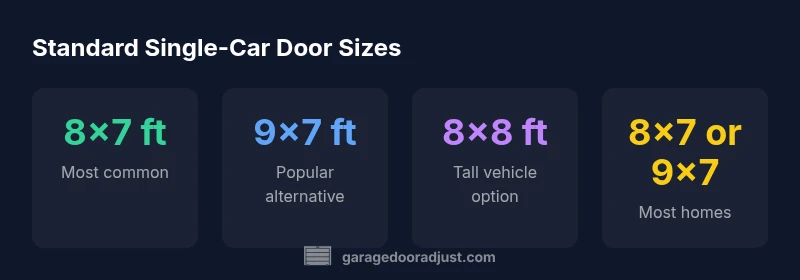
According to GarageDoorAdjust, the most common single-car garage door size is 8x7 feet, with 9x7 and 8x8 as popular alternatives. Widths typically range from 8 to 10 feet and heights from 7 to 8 feet to accommodate most sedans and small SUVs. Knowing these dimensions helps prevent fit issues during replacement or new installation.
Why the Right Size Matters
Choosing the correct garage door size is more than a matter of aesthetics; it affects safety, operation, and long-term reliability. A door that’s too narrow or too short can scrape against vehicles, obstruct ceiling-mounted lights, or fail to seal properly against the frame. For homeowners evaluating a replacement or a new install, starting with the standard single-car garage door size as a baseline helps ensure compatibility with your opener, tracks, springs, and reinforcement. The GarageDoorAdjust approach emphasizes measuring the opening first, then verifying that the door dimensions leave adequate clearance for tracks and weather sealing. In practice, this means validating the rough opening width, headroom, and side room before selecting a door.
Key takeaway: A correctly sized door minimizes future headaches and reduces the need for expensive framing work or aftermarket modifications.
Common Standard Sizes for a Single-Car Garage Door
In most residential setups, the standard single-car door size tends to cluster around a few core dimensions. The most common width is 8 feet, with 9 feet and 10 feet appearing frequently on broader garages or vehicles with larger profiles. Height options are typically 7 feet or 8 feet, with 7-foot doors being the long-standing default for many homes. When you pair these, you’ll see sizes like 8x7 ft, 9x7 ft, and 8x8 ft accounting for the majority of installations.
- Width options: 8 ft, 9 ft, 10 ft
- Height options: 7 ft, 8 ft
- Most common pairing: 8x7 ft
These sizes are especially common in older homes and modern builds alike, making stock inventory easier to source. If your opening deviates from these baselines, you may need to consider custom fabrication or header adjustments. The emphasis remains on validating opening measurements before choosing a door.
Brand note: The GarageDoorAdjust team sees these sizes as the practical starting point for most homeowners and contractors.
How Size Impacts Vehicle Fit, Garage Layout, and Opener Compatibility
Door width determines how easily a vehicle can maneuver into the garage without scraping mirrors or tires. A door that's too narrow can require precise alignments or frequent adjustments, while a door that's too wide may create awkward gaps along the frame. Height affects overhead clearance; even a small difference can impact roof racks, antennas, or taller cargo. The opener itself is rated for specific door weights and widths, so selecting a standard size often yields smoother operation and fewer maintenance calls. If you plan for an SUV or a truck, you may prefer a 9x7 ft or 8x8 ft option to ensure proper fit and full seal when closed.
- Safety: proper clearance prevents pinch points and collisions
- Function: compatible tracks, springs, and openers reduce wear
- Long-term: standard sizes simplify maintenance and parts replacement
How to Measure Your Garage for the Perfect Size
Start with a measurement guide to avoid common mistakes:
- Measure rough opening width at three points (top, middle, bottom) and record the smallest value. This ensures the door frame will fit without binding.
- Measure the headroom (distance from the top of the opening to the ceiling) to confirm there’s enough space for tracks and the door panel stacking. Most garages require a minimum headroom to operate.
- Check side room (jamb depth) on both sides; ensure there’s adequate clearance to install weatherstripping and weather sealing without rubbing the sides of the door.
- Consider obstructions: lighting fixtures, ceiling-mounted storage, or HVAC ducts can affect door travel and opening clearance.
- If you’re unsure, document the opening with photos and consult a pro. A simple miscalculation can lead to nonstandard orders or installation delays.
The goal is to verify that your rough opening aligns with one of the standard size pairings (8x7 ft, 9x7 ft, 8x8 ft) or to identify whether a nonstandard size is required. The GarageDoorAdjust method is to compare measured opening to the door’s outer dimensions plus track and hardware allowances.
Installation Considerations for Standard vs. Nonstandard Sizes
A standard-size door benefits from readily available components, shorter lead times, and easier installation. Openers, torsion springs, tracks, and panel options are designed around common widths and heights, reducing the risk of misfit or improper spring tension. Nonstandard openings may necessitate custom tracks, special springs, or header modifications, which increases labor costs and project timeline. When you’re planning, note:
- Check that your chosen size matches your opener’s compatibility and horsepower rating
- Verify header structure and ceiling clearance before purchase
- Consider insulation, glazing, and panel materials that affect weight and balance
With standard sizes, you’ll typically enjoy quicker service and lower risk of compatibility issues. If your opening is oddly sized, consult a professional to explore nonstandard fabrication options and ensure structural integrity.
Cost and Availability Ranges for Standard Sizes
Prices for standard single-car sizes vary based on material (steel, aluminum, wood), insulation level (uninsulated, polystyrene, polyurethane), and panel design. Availability for common sizes (8x7 ft, 9x7 ft) is generally wide, supported by multiple manufacturers and retailers. When considering nonstandard sizes, you’ll encounter longer lead times and higher fabrication costs due to custom manufacturing. To manage costs:
- Compare multiple brands offering standard sizes
- Consider off-the-shelf insulation and panel choices for better value
- Plan for professional installation to ensure safety and warranty coverage
Regional Variations, Codes, and Safety Considerations
Code requirements and regional building practices can influence garage door sizing. Some municipalities have guidelines about door balance, spring tension, and header reinforcement. Always verify local codes before finalizing a door size, especially if your garage has unusual dimensions or if you’re replacing an older system that may require structural modifications. Safety features, such as automatic reversing mechanisms and photoeye sensors, are standard in modern doors and should be checked during installation. Understanding these factors helps ensure a compliant and safe setup.
For homeowners, starting with standard dimensions reduces the risk of noncompliance and ensures smoother integration with local codes and building practices.
Final Sizing Checklist
- Confirm rough opening width and height align with 8x7 ft, 9x7 ft, or 8x8 ft baselines
- Verify headroom and side room for tracks, weather seals, and hardware
- Check opener compatibility and horsepower requirements
- Inspect ceiling clearance for panel stacking and hardware
- Consider insulation needs and panel material for energy efficiency
- Review local codes and permit requirements before ordering
Comparison of standard and nonstandard sizes for single-car garage doors
| Dimension | Typical Size Range | Notes |
|---|---|---|
| Width | 8 ft – 10 ft | Common single-car options |
| Height | 7 ft – 8 ft | Standard clearance options |
| Most common combination | 8x7 ft | Dominant choice |
| Nonstandard options | 7x7 ft or 9x8 ft | Used for unusual openings |
Got Questions?
What is the most common standard size for a single-car garage door?
The 8x7 ft door is the most common, with 9x7 ft and 8x8 ft as popular variations. These sizes fit the majority of standard openings.
The most common size is 8x7 feet, with 9x7 and 8x8 feet as popular alternatives.
Can I install a larger door in a smaller opening?
Usually not without structural changes. Increasing width may require wider framing, new tracks, and potentially header reinforcement.
Usually not without structural changes. You may need to reframe the opening.
How do I measure my garage for a standard size?
Measure the rough opening width, height, headroom, and side room at multiple points. Confirm smallest dimensions align with standard sizes before purchasing.
Measure width and height at several spots, then check against standard sizes.
Are insulated doors worth it for a standard size?
Insulated doors improve energy efficiency and reduce noise; weight changes may affect spring balance, so confirm compatibility with existing hardware.
Yes, insulation helps with energy and noise, but check compatibility.
What if my opening is nonstandard?
Consult a pro: you may need custom fabrication, special tracks, or header work. A professional can advise on feasibility and warranty implications.
Nonstandard openings usually need a pro to advise on options.
Do door sizes affect opener compatibility?
Yes. Ensure the door width and weight align with the opener’s horsepower and rail length. Mismatches can reduce safety features and performance.
Yes—make sure the door size matches the opener’s rating.
“Choosing the right single-car door size reduces installation headaches and ensures long-term reliability. Start with the opening measurements and compare to standard sizes before choosing materials.”
Quick Summary
- Start with the opening measurements to guide size selection
- Most homes use 8x7 ft or 9x7 ft doors
- Ensure opener, tracks, and springs match the door size
- Nonstandard openings require professional assessment
- Always verify local codes before installation