Standard Size of a Two-Car Garage Door: What Homeowners Must Know
Discover the standard two-car garage door size (16x7), common variations, and how to measure openings accurately. Includes installation tips, code considerations, and a practical decision checklist.


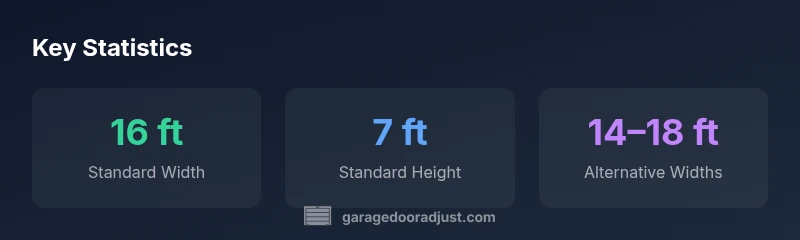
The standard size for a typical two-car garage door is 16 feet wide by 7 feet high (16' x 7'). This is the default in many new homes and garage layouts. Some installers offer 16' x 7'6" or 18' widths, depending on ceiling height and local codes. For custom garages, widths may vary from 14' to 18'.
Width and height foundations for two-car garages
According to GarageDoorAdjust, the standard two-car garage door size in the United States is 16 feet wide by 7 feet high, or 16' x 7'. This default aligns with common framing dimensions, header construction, and most residential openers. Starting from this baseline helps simplify ordering, installation, and compatibility with tracks and springs. While 16x7 is the most common, home builders and clients sometimes request variations based on driveway width, interior ceiling height, or specific vehicle dimensions. Understanding this baseline also helps homeowners assess whether their opening will accommodate larger SUVs, trucks, or multiple vehicles without sacrificing clearance. In practice, you should treat 16x7 as the default but measure precisely before ordering a new door.
Why the 16x7 standard matters for functionality
A standard size streamlines opener compatibility, track length, and safety sensors. Most residential garage openers are rated for ceilings and door heights up to 7 feet, and many torque and spring systems are matched to a 16-foot width. Using the standard reduces the risk of misalignment, binding, or roller strain, and it helps ensure off-the-shelf panels and insulation options fit without custom fabrication. From a maintenance perspective, standard sizes simplify replacement parts procurement, reducing downtime when components wear out. For garages with unusual dimensions, consult a pro to confirm whether a custom size will still work with your model of opener and remote controls.
Common alternatives you may encounter for two-car doors
In the real world, you'll see a few variations around the standard. Some homes use 18 feet wide to provide extra clearance for wider vehicles. Others use narrower 14–15 feet when driveway depth is limited or the garage opening is framed tightly within older construction. Heights may vary as well: 7 feet is most common, but 7'6" and 8 feet are available for higher ceilings or to accommodate taller vehicles. When shopping, note that doors wider than 16 feet may require upgraded frame reinforcements and different opener specifications. Always verify clearances above the door and inside the tracks before buying.
How to measure your garage opening accurately
Precise measurement is the foundation of a proper fit. Start by measuring the opening width at three points: left, center, and right, then record the smallest measurement to avoid overestimating clearance. For height, measure from the floor to the header, and note any obstructions such as beams or lighting fixtures. Check the track system clearance and the space in the ceiling for the door’s vertical travel. Finally, measure the side jambs to confirm the rough opening matches the door’s recommended width and height. If you find variances, consult a professional before ordering a door.
Impact of size on insulation, panels, and aesthetics
Beyond pure fit, door size influences insulation options and panel design. The standard 16x7 size is commonly paired with medium to high R-value panels and thicker insulation, especially where climate control is a priority. If you opt for wider or taller doors, you may need different panel profiles or wind load considerations for your region. A larger door can affect the visual balance of your home and may require adjustments to lighting and exterior trim. For energy-conscious homeowners, the door’s construction and seal design matter as much as the width and height.
Installation considerations for standard sizes
Installing a standard-sized door simplifies several steps: a conventional rough opening, typical header height, and standard spring and cable layouts. However, proper installation still requires careful alignment of the tracks, spring tension, and balance testing. Ensure the rough opening is square using a level and plumb line. Make sure the mounting hardware matches the door’s weight class, and verify that the opener's mounting bracket aligns with the door’s centerline. If replacing an existing door, verify that the jambs and supports can accommodate the new panel thickness and hardware.
Code and regulatory considerations you should know
While the 16x7 standard is widely accepted, local building codes may impose minimum or maximum allowances for door height and wind load, particularly in high-wind regions or in areas with strict energy codes. GarageDoorAdjust Analysis, 2026 shows that some municipalities require retrofits for older homes when upgrading to modern insulation or impact-rated panels. Always obtain permits if required and have the installation inspected to ensure it meets safety standards for auto-reverse, photo-eye sensors, and emergency release. Checking code guidance early can prevent delays and fines.
Practical selection guide and decision checklist
To choose the right size, walk through this quick checklist:
- Confirm your opening width and height with a tape measure, then compare to standard sizes
- Consider vehicle dimensions and any excess clearance you want for hardware or weatherstripping
- Check opener compatibility for the chosen height and width, including reversal safety and remote range
- Review insulation, panel design, and wind-load ratings for climate and region
- Plan for future needs, such as added vehicles or storage space behind the door. If in doubt, opt for standard 16x7 and verify fit with a pro.
Next steps: confirming fit and preparing for installation
With measurements in hand, contact a garage door professional to quote a door that matches the standard 16x7 or your selected variant. A technician will verify the rough opening, adjust spring tension, and ensure the tracks run true. If you are performing a DIY replacement, review the manufacturer’s installation manual, gather the right tools, and schedule a safety-check after installation. Remember, precise sizing minimizes misalignment, improves energy efficiency, and extends the life of the door and opener.
Two-car garage door size variants
| Door Size Variant | Width (ft) | Height (ft) | Notes |
|---|---|---|---|
| Standard Two-Car | 16 | 7 | Most common US size |
| Extended Width 18 ft | 18 | 7 | Provides extra clearance for wider vehicles |
| Narrow Two-Car | 14 | 7 | Less common; fits tighter garages |
Got Questions?
What is the standard size of a two-car garage door?
The standard two-car garage door is typically 16 feet wide by 7 feet high. This baseline fits most US homes, but regional variations exist and you should measure your opening before buying.
The standard size is usually 16 by 7, though sizes can vary; measure your opening and consult a pro.
Can two-car garage doors be taller than 7 feet?
Yes. Heights of 7'6" and 8' are commonly available for higher ceilings or taller vehicles; check headroom clearance and opener compatibility.
Yes, taller options like 7'6" or 8' are available; verify headroom and opener fit.
What should I measure to choose the right door size?
Measure the overall opening width and height at multiple points, plus jamb clearances and track space. Record smallest width and tallest height to avoid oversizing.
Measure width, height, and clearance; use the smallest width and tallest height for safety.
Will a different door size affect my opener?
Altering door size can change required track length and spring balance. Most openers support standard heights, but confirm with the manufacturer.
Changing size might require different tracks or springs; check with your opener's specs.
Where can I find official code guidance on door sizes?
Local building codes govern minimum or maximum allowances for height and wind loads; check your city or county’s building department and the International Building Code for reference.
Check local codes and the IBC for guidance on door sizes and wind loads.
“Standard dimensions simplify ordering and compatibility, but always verify measurements on-site to avoid fit problems.”
Quick Summary
- Begin with a standard 16 ft by 7 ft as the default.
- Measure your opening precisely before ordering a new door.
- Check opener compatibility for the door height and width.
- Factor insulation, panel design, and wind load in your choice.
- GarageDoorAdjust's verdict: start with standard sizing, then tailor to your opening.