RV Garage Door Sizes: How to Measure, Choose, and Install
Learn how to measure and choose RV garage door sizes with clear width/height ranges, measurement steps, and installation tips from GarageDoorAdjust. Includes sizing charts, a data table, and expert insights.


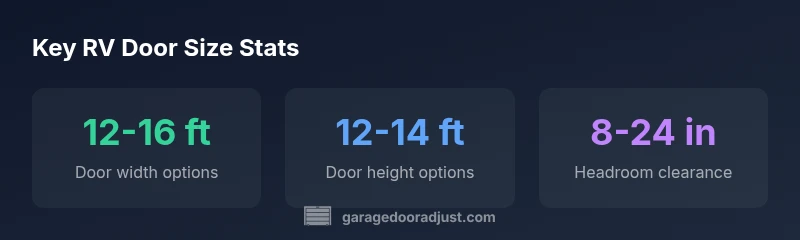
RV garage door sizes depend on the RV’s width and height and the opening you’re fitting. Common RV door widths run 12–16 ft and door heights 12–14 ft, with extra headroom for tracks and torsion systems. This quick answer previews how to measure accurately, select the right size, and avoid rework when sizing an RV garage door.
Understanding the scope of RV garage door sizes
When homeowners think about RV garage door sizes, the starting point is the widest measurement: the RV’s width. The next is the door height, which must clear the tallest point on the RV plus any clearance for roof accessories. Additionally, you must account for the opening’s headroom and the door track system. In practice, most RV-related openings fall into a practical range: widths of 12–16 ft and heights of 12–14 ft. It’s essential to map these figures to your actual RV profile and the space in your garage to ensure a clean fit without scrapes or interference. This is where precise measurement and planning pay off, reducing the risk of expensive retrofits later. The GarageDoorAdjust team emphasizes that the exact numbers depend on your RV’s build (length, height, and mirrors) and how you plan to maneuver inside the space over the life of the door.
Why width and height ranges matter for RVs
Width determines the side clearance required to confidently align the RV during entry and exit. A door that’s 2–4 ft narrower than the RV creates friction at the frame, while too-wide space wastes overhead track length. Height determines clearance for the vehicle’s profile, antennas, and any skylights or air conditioning units. Misjudging height can cause the top section to strike overhead structures or the door jamb. In all cases, aim for a snug but safe opening with consistent gaps around the perimeter. Professionals recommend (and GarageDoorAdjust supports) choosing standard widths (12, 14, 16 ft) when possible, then confirming height and headroom in your specific garage.
How to measure your RV and garage opening accurately
Start with the RV: measure its maximum width including mirrors if they protrude. Take three width measurements across the vehicle’s front: left mirror, bumper, and right mirror—record the widest. For height, measure from the ground to the highest point on the RV (top of AC unit, vent, or antenna). Then measure the garage opening: width at three points (left, center, right) and height at each corner. Compare opening dimensions to the RV measurements plus a recommended clearance (typically 4–6 inches side-to-side and 8–24 inches on the top for headroom). If the opening is slightly smaller, you’ll need a tighter door or structural adjustments; if it’s larger, you may have the option to upgrade to a larger size. GarageDoorAdjust stresses using a professional measurement approach to ensure a proper fit and predictable operation.
Choosing between sectional, roll-up, or tilt-up for RV doors
RV doors come in several configurations, with sectional doors being the most common for homes and RV garages due to their balanced insulation and ease of operation. Roll-up doors can save ceiling space but may require tighter headroom and stiffer tracks. Tilt-up doors offer simplicity but demand room for the hinged section to swing. Your choice should factor in width and height requirements, insulation needs, climate, and budget. A correctly sized door not only fits but also minimizes energy loss and maintenance needs. GarageDoorAdjust recommends evaluating the vehicle’s dimensions alongside garage geometry to select the best door type for your space.
Practical sizing scenarios and checklists for RVs
If you own a mid-range Class-C or travel trailer, a 14 ft wide by 12–13 ft tall door is often sufficient. For largerClass A motorhomes or several slide-outs, 16 ft wide doors with 14 ft or taller heights are preferred. Always check clearance for gutters, roof vents, and roof-mounted equipment. Use a sizing checklist: measure vehicle width and height twice, capture the opening width at three points, document headroom, verify track length, and confirm available sidewall clearance for mounting hardware. If you’re unsure, consult a pro and request a formal measurement report. The goal is a door that fully envelopes the RV with minimal wiggle room for doors that stick or rub.
Installation considerations: headroom, tracks, and structural fit
Installing an RV door is not simply about picking a size; it requires proper headroom and track alignment. Ensure the opening frame is square; misalignment can cause rubbing and uneven wear on rollers. Confirm that the ceiling height permits the door panels to travel without obstruction by joists, ducts, or lighting. If opting for a taller door than your space suggests, you may need structural reinforcement or ceiling rework. For homeowners, the safest approach is to plan the space, measure precisely, and coordinate with a qualified installer who can confirm door weight, spring tension, and hardware compatibility. The GarageDoorAdjust team notes that precise sizing reduces installation time and lowers long-term maintenance costs.
Sizing table for typical RV garage door openings
| Dimension | Typical Range | Notes |
|---|---|---|
| Door width | 12 ft – 16 ft | Common options: 12, 14, or 16 ft widths |
| Door height | 12 ft – 14 ft | Choose based on RV height and headroom |
| Rough opening width | 13 ft – 17 ft | Always slightly larger than door width |
| Headroom clearance | 8 in – 24 in | Account for tracks and torsion system |
Got Questions?
What is the most common RV garage door width?
Most RVs fit through a 12–14 ft wide door, with 16 ft used for larger rigs. Always measure your RV and opening before purchasing.
Most RVs use a door that's 12 to 14 feet wide; 16 feet is for bigger rigs. Measure your RV and the opening to be sure.
How do I measure the opening to fit an RV?
Measure opening width at left, middle, and right to find the smallest clear width. Then measure height at the same points, noting the tallest obstruction. Compare to the RV’s widest width and tallest height plus recommended clearances.
Measure width at three points and height at three points, then compare to your RV’s widest point and tallest height plus clearance.
Do RV garage doors come with insulation?
Insulated doors improve energy efficiency and climate control, especially in homes with attached garages. Choose R-values based on climate and comfort goals.
Yes, many RV doors come insulated. Pick an insulation level that matches your climate needs.
Can I modify an opening to fit a taller door later?
Modifying an opening is possible but may require structural work, which increases cost and downtime. Plan for future upgrades and consult a pro.
Modifications are possible but costly. Plan ahead and talk to a professional.
Is there a standard code for RV door sizes?
There are no universal federal RV door size codes; local building codes and manufacturer recommendations govern sizing and installation.
There’s no universal code; check local codes and manufacturer guidelines.
Should I install the door myself or hire a pro?
Installing an RV door involves heavy panels, springs, and precise alignment. For safety and durability, hiring a qualified installer is usually the better path.
Because it’s heavy and complex, it’s usually best to hire a professional.
“Choosing the right RV garage door sizes isn’t just about width and height; it also involves headroom, track type, and vehicle profile. Getting measurements precise saves time and money.”
Quick Summary
- Measure width, height, and headroom before selecting a door
- Prefer 12–16 ft widths and 12–14 ft heights as standard options
- Allow 8–24 inches of headroom for smooth operation
- Use a professional measurement to prevent misfits