One Car Garage Door Size Guide: Common Dimensions 2026
Explore typical single-car garage door dimensions, how to measure your opening, and how size choices affect insulation, opener compatibility, and garage usability.


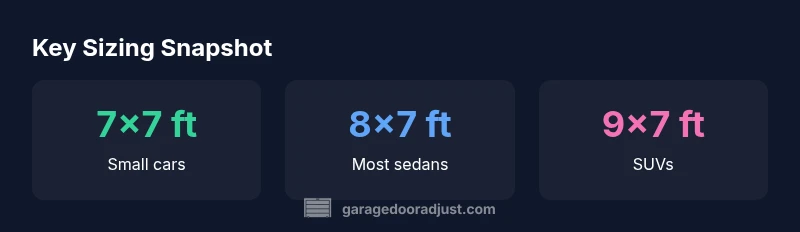
For a single-car garage, the typical door size falls in a 7 to 9 foot width and 7 feet height, with common presets at 7x7, 8x7, and 9x7 feet. The exact size you need depends on your vehicle width, clearance, and opener requirements. According to GarageDoorAdjust, choosing the right size minimizes fit issues and improves insulation and safety.
Understanding the one car garage door size
Understanding the one car garage door size means recognizing that width and height determine not only the opening but also the door's performance, insulation, and compatibility with your opener. For homeowners, this is one of the most critical measurements in a garage renovation or repair because a mis-sized door can lead to collision with vehicles, improper sealing, and costly modifications. The term 'one car garage door size' usually refers to a single-panel or sectional door designed to cover a standard single-garage opening. The width and height you choose should align with your vehicle’s width, the space on either side of the doorway, and the headroom above the door. GarageDoorAdjust emphasizes that precise sizing reduces service visits, ensures smooth operation, and improves energy efficiency. Before you buy a door, write down your exact opening measurements and verify the compatibility of the door with your current opener and tracks.
Our team also recommends considering future needs—if you plan to upgrade to a larger vehicle or install a more expansive storage system, size for those possibilities now to avoid costly retrofits later.
Common dimensions for single-car doors
Single-car doors come in a few standard width-and-height combinations, with width typically ranging from seven to nine feet and height commonly seven feet or a little taller. The most frequently installed sizes are 7x7 ft, 8x7 ft, and 9x7 ft. In many homes, a 9x7 ft door accommodates mid-size SUVs, while 7x7 ft fits compact cars. The 8x7 ft option often strikes a balance between driveway clearance and vehicle width. If you anticipate growing with a larger vehicle in the future, a 9x7 ft or even a 10x7 ft door may be worth considering. Always verify that your chosen size aligns with your garage opening and the space around it.
How to measure your current door accurately
Begin by measuring the door width from inside jamb to inside jamb at the header line, not the curb edge. Next, measure the door height from the floor to the bottom of the header at the center of the door. Check the clearance on both sides for obstructions and note any irregularities in the jambs or tracks. Record Headroom height above the door—the space required for tracks and springs. Finally, measure the total opening height and width including weatherstripping. If you’re unsure, photograph the opening and bring the measurements to a reputable installer. Accurate measurements save time and ensure the new door fits properly with existing tracks and the opener.
The impact of height, width, and clearance on usability
Door width affects how easily vehicles enter and exit, while door height determines whether tall vehicles fit without contacting the frame. Clearance around the opening must accommodate mirrors, side-view angles, and weather stripping. Headroom is essential for torsion springs or extension systems, which influence the door’s travel path. Too-tight a fit can cause binding, squeaks, or premature wear on tracks and rollers. Conversely, an oversized door may create ventilation gaps or reduce energy efficiency. Strive for a balance that provides ample clearance and optimal operation without sacrificing security or insulation.
Materials, insulation, and their relation to size
While door width and height determine fit, the door’s materials and insulation influence energy efficiency, noise, and durability. Steel, wood, and composite doors come in the same broad size ranges; insulation levels (R-values) vary, influencing thermal performance but not the required opening size. Thicker panels for insulation may slightly affect the inner frame fit, but this rarely changes the door’s footprint in standard openings. When sizing for insulation-minded upgrades, coordinate with your installer to select a door that maintains clearances while achieving your energy goals.
Regional variations and standard practices
In the United States and Canada, single-car doors commonly come in 7x7 ft, 8x7 ft, and 9x7 ft options, with newer homes trending toward wider openings for larger vehicles. In other regions, standard sizes may differ due to vehicle dimensions or construction practices. Always verify local building codes and contractor recommendations for your area, and use actual vehicle width, including mirrors, when estimating required clearance. If you’re replacing in a region with different norms, consult a local pro to choose the closest standard size that still fits your opening and vehicle.
How size influences garage door openers and hardware
Openers are rated by horsepower and torque that must match the door width. A wider, heavier door generally requires a more powerful opener and reinforced tracks. If you replace a door with a larger size, you may need to upgrade the opener, tracks, torsion springs, and possibly framing to maintain safe operation. Before purchasing, confirm compatibility with your current opener features (smart controls, safety sensors) and the door’s weight class. Compatibility ensures smoother operation and reduces wear on components.
Planning a new install or replacement: steps you should take
- Measure opening width and height precisely (include jambs and weatherstripping). 2) Inspect jambs, tracks, and headroom for obstructions. 3) Decide on a door size that accommodates future needs and vehicle changes. 4) Check local codes and permit requirements if you’re changing the opening size. 5) Choose a door with appropriate insulation and a compatible opener. 6) Hire a qualified installer to ensure proper mounting and alignment. A pro can verify whether any framing adjustments are needed before ordering a new door.
Maintenance checks to keep your size fit
Regularly inspect weatherstrips and seals to maintain proper clearance and energy efficiency. Lubricate moving parts such as rollers, hinges, and tracks to prevent binding. Verify that the door remains level and tracks stay aligned, especially after temperature changes or heavy use. If you notice rubbing, binding, or unusual sounds, schedule a professional inspection to prevent damage that could affect opening size or safety.
Comparison of common single-car garage door sizes
| Door Size (WxH) | Vehicle Fit | Notes |
|---|---|---|
| 7x7 ft | Compact cars | Baseline for smaller garages |
| 8x7 ft | Most sedans | Balanced space and clearance |
| 9x7 ft | SUVs & larger sedans | Popular for new homes |
| 10x7 ft | Full-size SUVs/trucks | Requires wider opening |
Got Questions?
What is the standard size for a single-car garage door?
Standard sizes for single-car garages are commonly 7x7 ft, 8x7 ft, and 9x7 ft. The 9x7 ft option is popular for SUVs, while 7x7 ft suits compact cars. Always measure your opening to confirm the best fit.
Most single-car doors are 7x7 to 9x7. Measure your opening to choose the right one.
Can I replace a 7x7 door with an 8x7 or 9x7?
Yes, but you may need to adjust tracks, jambs, and possibly framing. A larger door can affect opener compatibility and headroom, so consult a pro before buying.
Upgrading is possible, but check tracks and framing first.
Do regional variations affect door size?
Yes. The US commonly uses 7x7 to 9x7, while other regions may differ. Always verify local practices and vehicle sizes when sizing.
Regional norms vary; confirm local standards before choosing a size.
Will changing door size affect my garage door opener?
Yes. Different widths require different torque and horsepower. Ensure the opener is rated for the new size or upgrade if needed.
Changing size can mean upgrading your opener.
How should I measure for a new door if my opening is unusual?
Measure width at the widest point between jambs, height from floor to header, and note any obstructions. Take multiple measurements and photograph the opening.
Measure the opening carefully and document every dimension.
Are there standard sizes for insulated vs non-insulated doors?
Insulation levels affect thickness and R-value, not the standard footprint. Choose insulation based on climate, then match the size to the opening.
Insulation matters for energy, not footprint size.
“Sizing a single-car garage door correctly is foundational to safe, energy-efficient operation. When in doubt, size to the largest vehicle you expect to park, and standard off-the-shelf doors offer the best balance of cost and compatibility.”
Quick Summary
- Measure opening precisely before choosing a door size
- Most single-car doors fall between 7x7 ft and 9x7 ft
- Opener and hardware must match the door size
- Vehicle width and mirrors determine needed clearance
- Insulation affects energy use, not the door footprint