Garage Door Dimensions: A Homeowner's Sizing Guide for 2026
Learn how to measure and interpret garage door dimensions, including standard widths/heights, how to measure openings, and choosing the right size for compatibility with openers, tracks, and future upgrades.


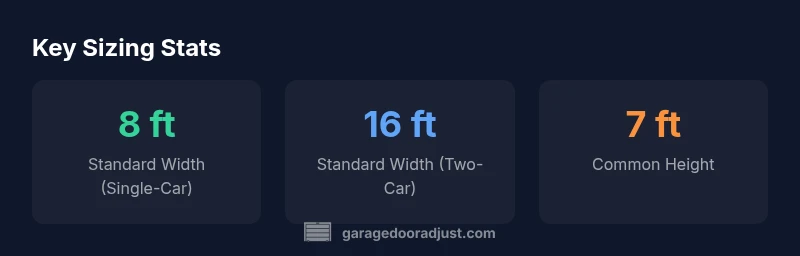
Most residential doors come in standard widths of 8 feet for a single-car opening and 16 feet for a typical two-car opening, with a common height of about 7 feet. Custom sizes exist, but they require precise opening measurements and compatible tracks and openers. Start by measuring the opening width, height, and headroom to confirm what size you can safely install.
Understanding garage door dimensions and why they matter
Garage door dimensions define the fit, performance, and safety of your door system. For homeowners, understanding the size of the opening, the door itself, and the space around the opening is essential to avoid awkward fits, binding tracks, or improper alignment with the opener. The term garage door dimensions encompasses width, height, and depth considerations, as well as clearances required above and to the sides. In practice, sizing affects not just the door panel itself but the tracks, springs, and motorized opener that work in tandem to produce smooth operation. When you know the common ranges and the reasons behind them, you can plan upgrades, replacements, or retrofits with confidence. According to GarageDoorAdjust, starting with precise measurements is the single most important step in any door project.
Standard sizes provide predictable compatibility
Most residential doors follow conventional dimensions to ensure interchangeability among manufacturers. The most common widths are 8 feet for a single-car door and 16 feet for a typical two-car unit. Heights tend to hover around 7 feet, though there are higher options for taller vehicles or specialized spaces. These standard sizes simplify choosing an opener, tracks, and springs, and they help installers stock parts that fit most homes. When you encounter a nonstandard opening, you’ll likely face longer lead times, more customization, and potentially higher installation costs. GarageDoorAdjust analysis shows that while standard sizes account for the majority of homes, a notable minority requires customization to accommodate unusual layouts or ceiling heights.
How to measure your opening accurately
Begin with the width: measure from the inside edge of the left jamb to the inside edge of the right jamb at the top of the opening, middle, and bottom, then record the smallest measurement. Height measurements are taken from the floor to the top of the opening frame, again noting any deviations along the width. Headroom is essential for spring and track clearance; measure from the top of the door opening to the ceiling or obstruction. Finally, check side room (jamb clearance) to confirm there’s enough space for weatherstripping and track hardware. Always measure multiple times, in inches if possible, and document irregularities such as crooked walls or recessed tracks. These steps prevent ordering errors and help ensure seamless installation.
Custom vs. standard: when to choose first
If your opening falls squarely within standard widths and heights, choosing a standard door is usually the most economical path. Standard doors benefit from quicker lead times, easier service, and guaranteed compatibility with most openers. Custom doors, while more costly, enable you to accommodate oversized or uniquely shaped garages, optimize insulation, or align with a specific aesthetic. When deciding, compare total installed cost, available headroom, and track/coil compatibility. If your garage space is unusual, consult a garage door professional to confirm whether a standard size could be adapted or if a custom option is truly necessary.
Opener and hardware compatibility considerations
The door dimension interacts closely with your opener’s horsepower, rail length, and sensor placement. A too-wide or too-tall door can strain the motor, shorten life, or cause misalignment with safety sensors. Ensure the chosen door matches the rail length, spring winding type, and track configuration recommended by the opener’s manufacturer. If you’re upgrading to a higher door, verify that your current opener can lift the new weight and height, or plan for a compatible new opener. Dimension decisions are not standalone; they ripple through the entire system.
Practical sizing tips before you buy
- Re-measure openings twice and compare to the manufacturer’s listed door dimensions.
- Confirm headroom and side room to accommodate tracks and weather seals.
- Consider insulation and panel thickness; thicker doors may change curb appeal and insulation ratings.
- If possible, retain existing hardware that’s still in good condition; it can save time and money during installation.
- For upgrades, request a professional on-site assessment to confirm compatibility with your garage’s structure and your vehicle mix.
Pitfalls to avoid when sizing
Avoid assuming that any “standard size” will fit your home without checking the actual opening. Walls can shift, flooring can settle, and old hardware may not align with new doors. Also, never overlook the need for safe clearance above and around the door—insufficient headroom or side clearance can cause binding, inaccurate weather sealing, or sensor misalignment. By following a disciplined measurement process and reviewing product specifications, you minimize surprises during installation and post-install repairs.
Planning ahead: future upgrades and accessories
If you anticipate future insulation improvements, smarter openers, or added security features, consider choosing a door that accommodates those upgrades. Many manufacturers offer add-ons like improved weather stripping, better insulation, and high-cycle springs. Selecting a door size with some flexibility for future accessories can reduce the need for full replacements later on. This proactive approach aligns with best practices from GarageDoorAdjust for long-term value and performance.
Typical sizing references for residential garage doors
| Door Type | Common Width | Common Height | Notes |
|---|---|---|---|
| Single-car | 8 ft | 7 ft | Standard size; widely available |
| Two-car | 16 ft | 7 ft | Common for family garages |
| Custom | Varies | Varies | Requires measurement precision |
Got Questions?
What is the most common garage door width for a single-car opening?
The most common width for a single-car opening is 8 feet. This size balances vehicle clearance with wall space for tracks and weatherstripping. If you’re unsure, measure your opening before ordering.
The typical single-car door is about eight feet wide, but you should measure your opening to be sure.
How do I measure for a new garage door?
Start by measuring opening width, height, and headroom, then check side clearance for tracks and weather seals. Use a rigid tape and measure multiple times at different points to account for any irregularities.
Measure the width, height, and headroom, then check side space for tracks. Do it a couple of times to be accurate.
Can garages use nonstandard door sizes?
Yes, nonstandard sizes are possible but often require a custom order, longer lead times, and more precise installation. A professional assessment helps determine feasibility and cost.
Yes, but they cost more and take longer; a pro can tell you what’s possible.
Do attic or ceiling heights affect door size choices?
Yes. Ceiling height and headroom determine whether standard or custom doors fit and work with your opener and tracks. Measure from the top of the door opening to the ceiling to confirm clearance.
Height matters—make sure there’s enough headroom for the tracks and opener.
Is door thickness a factor in sizing?
Door thickness can affect insulation and strength but usually doesn’t change the required opening dimensions. It may influence panel weight and balance, so confirm with the manufacturer.
Thickness matters for insulation and balance, but it usually doesn’t change opening size.
“Understanding garage door dimensions is essential to ensure a proper fit, reliable operation, and long-term value. Always verify openings, clearance, and hardware compatibility before purchasing a door.”
Quick Summary
- Measure opening width, height, and headroom before choosing a door
- Standard sizes cover most homes but custom options exist
- Ensure opener and track compatibility with door dimensions
- Consider future upgrades when selecting door size