How Wide Is a Two-Car Garage Door? Widths, Standards, and Tips
Discover standard widths for a two-car garage door, including common sizes like 16 ft and 18 ft, plus factors that affect choice, clearance, and installation.


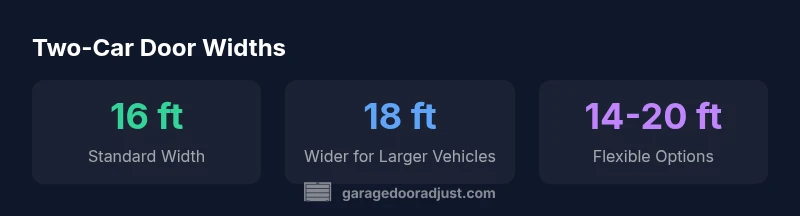
How wide is a two-car garage door? In most homes, the standard width is 16 feet, with 18 feet being the common wider option for larger vehicles. According to GarageDoorAdjust, this 16 ft vs 18 ft range covers the vast majority of residential setups, while some older or specialized installations may use 14 ft or 20 ft widths depending on space and needs.
Why door width matters
When homeowners ask how wide is a two-car garage door, the answer isn’t just about car length. Width affects fit, clearance, weather sealing, and the opener’s mechanical load. A door that’s too narrow can rub against vehicles or frame hardware, while a door that’s too wide may leave insufficient jamb space for weatherstripping and track alignment. From the GarageDoorAdjust perspective, choosing the right width is a balance among vehicle dimensions, driveway geometry, and local installation norms. In practice, most homes rely on the two most common sizes: 16 feet for standard configurations and 18 feet when extra clearance is desired for larger sedans, pickups, or SUVs. Some properties still rely on 14 feet for very tight lots, while select properties/upsizes use 20 feet for enhanced space and easy maneuvering. The key is ensuring smooth operation without compromising sealing, headroom, or safety hardware.
- Vehicle width is a primary constraint.
- Door width interacts with track length and opener compatibility.
- Local codes and HOA rules can influence acceptable widths.
Tip: Start with your existing vehicle dimensions and take careful measurements of the opening, then compare to standard widths to determine the best fit.
Common widths you’ll encounter and what they fit
Two-car garage doors come in several standard widths, with 16 ft and 18 ft being the most prevalent in North American homes. The 16 ft option fits most sedans, small SUVs, and compact crossover vehicles, offering balanced space for weatherstripping and curb appeal. The 18 ft width accommodates larger pickups and full-size SUVs, providing extra clearance for mirrors and door hardware. In markets with tighter lots, you’ll occasionally see 14 ft doors as a narrow alternative; for specialty setups—such as double doors for wider home garages or service bays—20 ft or wider doors are available but less common. When sizing, remember that the door’s operating system, including springs, tracks, and openers, should be compatible with the finished width to avoid performance issues.
- 14 ft: tight spaces, limited vehicle types.
- 16 ft: standard fit for most households.
- 18 ft: extra clearance for larger vehicles.
- 20 ft+: rare, but useful for wide driveways and commercial-style setups.
Note: Width choices also affect insulation options and panel configurations, which can influence cost and energy efficiency.
Measuring your opening safely
Accurate measurement is the foundation of selecting a correct width. Start by measuring the widest point at the opening, taking three horizontal measurements: left jamb, center opening, and right jamb. If you notice an irregular opening due to framing or settlement, document the smallest measured width to ensure the door will fit without rubbing. Check the existing tracks and weatherstripping to verify they align with the door’s header and jambs. Don’t forget to measure the workspace in front of the door for headroom and clearance when the door is fully open. If you’re replacing an existing door, compare the new width options to your current clearance while verifying your opener’s travel path. Finally, consult a qualified installer to validate that the choice meets structural and safety requirements.
- Use a tape measure and level for accuracy.
- Record multiple measurements and use the smallest width for planning.
- Confirm opener compatibility with the chosen width.
Quick check: If any measurement shows less than 1/4 inch variance, choose the narrower dimension and adjust with shims or frame rework as needed.
How width affects vehicle fit and maneuverability
The width of the door directly dictates how easily vehicles enter and exit the garage. A 16 ft door typically accommodates most sedans and midsize SUVs without issue, while an 18 ft door reduces the risk of scraping mirrors or bumpers on wider vehicles. If you regularly park larger pickups or trucks, the added width can make reversing in safer and simpler. For owners upgrading from a narrower door, consider additional driveway space and turning radius to prevent last-minute scrapes. If your home sits on a constrained lot, you may still opt for 14 ft doors, but you’ll trade off space for the ability to widen later. When budgeting, factor in the cost of hardware, reinforcement, and potential adjustments to jambs and tracks.
- 16 ft suits most families.
- 18 ft offers extra clearance.
- 14 ft is a narrow solution for tight lots.
- 20 ft+ suits oversized or dual-use spaces.
Pro tip: If you anticipate changing vehicle sizes in the next few years, a wider door with compatible opener can be a future-proof choice.
Installation considerations when changing width
Upgrading width is not just about a broader opening; it often requires structural assessment. Wider doors may need extended tracks, reinforced jambs, and updated torsion hardware. The garage door opener must be compatible with the door’s weight and travel distance. If your current framing is not wide enough, you may need to remove and reposition framing members or install a new header. It is essential to verify local codes, permitting requirements, and wind-load ratings for your region. A professional installer can determine whether the existing foundation and framing can support a larger door, and they can recommend whether to adjust the opening to a standard width (like 16 or 18 ft) rather than pursuing a nonstandard size.
- Structural checks are essential.
- Ensure tracks and springs are compatible with the width.
- Get a permit if required and hire a certified pro.
Caution: A wider door can increase the force on the opener and require recalibration of safety sensors and rollers.
Practical tips to maximize clearance and future-proofing
- Start with a standard width (16 ft) and only go wider if needed for vehicle size or driveway geometry.
- Choose an energy-efficient panel option with good insulation to reduce heat transfer.
- Verify that spring systems and openers are designed to handle the door width you plan to install.
- Plan for weather sealing and UV protection around the jambs and headers.
- Consider future changes, such as different vehicles, and select a width that minimizes future upgrades.
Actionable steps: Measure three times, consult a qualified installer, and request a written plan with track layout, header reinforcement, and opener compatibility before purchase.
Common width questions and quick fixes
- Can I swap a 16 ft door for an 18 ft door mid-life? Yes in many cases, but it often requires structural changes and recalibration of the opener.
- Will a wider door improve insulation? Not directly; door width affects area, but insulation depends on panel quality and seals.
- Do HOA or building codes limit width? Some communities have limits or standards; always check local guidelines.
- Do I need a new opener for a wider door? Often yes, depending on motor torque and travel distance.
If you notice rubbing, binding, or opener strain, consult a professional promptly to avoid damage to tracks, rollers, or springs.
Width options and typical vehicle fits
| Width (ft) | Common Vehicle Fit | Notes |
|---|---|---|
| 14-15 | Compact cars, tight spaces | Less common; check opening irregularities |
| 16 | Most sedans and small SUVs | Balanced width for generic use |
| 18 | Full-size pickups, large SUVs | Extra clearance for mirrors and bumper |
| 20+ | Oversized vehicles or dual-use spaces | Less common; verify structural support |
Got Questions?
What is the most common width for a two-car garage door?
The most common width for a two-car garage door is 16 feet. This size fits the majority of sedans and mid-sized SUVs while providing adequate space for weather seals and opening hardware. If you regularly accommodate larger vehicles, an 18-foot door is a popular alternative.
Most two-car garages use 16 feet; 18 feet is common for bigger vehicles.
Can I replace a 16-foot door with an 18-foot door?
Yes, but it often requires structural assessment, updated jambs, extended tracks, and ensuring your opener can handle the weight and travel distance. A professional installer can confirm compatibility and perform any needed reinforcement.
Yes, but you’ll want a pro to check structure and hardware.
How do I measure for a wider door?
Measure the widest point of the opening, including any obstructions near the sides. Verify headroom and track alignment, and check the door’s mounting hardware. Use the smallest opening measurement for planning and consult an installer for final confirmation.
Measure carefully from jamb to jamb, then plan with the smallest width you find.
Are there height restrictions when increasing width?
Width changes don’t usually affect height, but modifications may require longer tracks or different spring systems. Check ceiling clearance and ensure there’s enough space above the door to accommodate a fully open panel.
Width changes can touch height if space is tight; check ceiling clearance.
Do wider doors affect insulation or energy efficiency?
Insulation quality depends on door panel construction, not width alone. A wider door can mean more surface area to insulate, so choose high-quality panels and weather seals to maintain energy efficiency.
Insulation depends on panels, not width by itself.
What if my garage space is irregular or non-standard?
Non-standard openings may require custom fabrication or adaptation of tracks and headers. A professional can assess structural feasibility and provide a tailored solution.
A pro can tailor tracks and headers for odd openings.
“Width decisions should balance everyday use with long-term flexibility; start with a standard size like 16 ft and only go wider if you truly need it.”
Quick Summary
- Measure your opening accurately before choosing width
- 16 ft is the standard for most two-car garages; 18 ft is common for larger vehicles
- Consider future vehicle changes and ensure opener compatibility when widening
- Wider widths require structural checks and professional installation