Garage Door Sizes: What Sizes Do They Come In?
Learn standard garage door sizes, how to measure openings, and options for single- and two-car garages, including height variations and custom sizing guidance from GarageDoorAdjust.


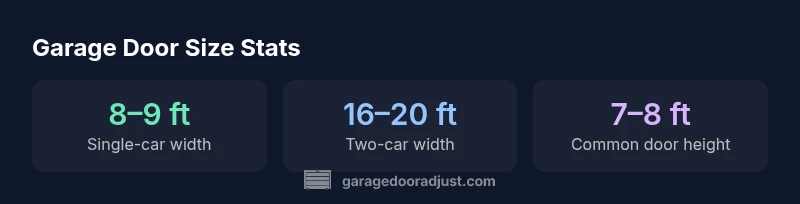
What sizes do garage door come in? If you're asking what sizes do garage door come in, standard single-car doors typically range around 8–9 feet wide with 7–8 feet in height; two-car doors commonly run 16–20 feet wide with similar heights. Custom sizes are available for nonstandard openings, but accurate measurements are essential before ordering.
Understanding Size Standards in Garage Doors
According to GarageDoorAdjust, garage door sizes are driven by vehicle width, garage opening geometry, and standard panel configurations. If you're wondering what sizes do garage door come in, the answer begins with two main categories: single-car doors and two-car doors, each with typical width and height options. The rest of this section breaks down those baselines, explains measurement considerations, and highlights when you should consider custom sizing. A door that fits poorly is not only unsightly; it can affect door balance, motor load, and overall safety. Start with the opening measurements and compare them against standard widths before deciding on insulation or panel style. For homeowners, the goal is a clean fit with adequate clearance for tracks, weather stripping, and the opener mechanism.
Common Width Options for Residential Garages
Most homes fall into two major width categories: single-car and two-car doors. For singles, standard widths typically fall in the 8–9 foot range, with some installations as narrow as 7 feet or as wide as 10 feet depending on the floor plan and garage layout. Two-car doors usually range from 16 to 20 feet wide, though they can be wider in oversized garages or commercial-adjacent residences. When shopping, stock panels and sections are designed to accommodate these typical widths, which helps reduce lead times and installation costs. If your garage has an unconventional footprint, you may need a custom-width panel system that avoids unsightly gaps and preserves motor efficiency.
Height Variations and Headroom Considerations
Height options commonly include 7 and 8 feet, with some specialty doors reaching 9 or 10 feet in tall garages. Height decisions affect not just opening clearance but also ceiling space inside the garage, as higher doors generally require longer tracks and different torsion spring configurations. Before you order, measure headroom (space above the door to the ceiling) and analyze whether your current opener and mounting bracket can accommodate a taller panel. Proper height helps ensure smooth operation, reduces wind resistance, and improves insulation performance by enabling a tighter seal at the top of the opening.
Custom Sizes and Nonstandard Openings
If your opening is nonstandard—whether unusually narrow, wide, tall, or irregular in shape—custom sizing is often the only feasible path. Custom doors may involve more rapid quotes but offer the best fit for aesthetics and performance. Be prepared to discuss panel count, insulation options, and hardware compatibility with your installer. Nonstandard sizes might require specialty tracks, longer springs, or reinforced headers, which can add to installation time and cost. Always verify that the chosen door can be mounted with your existing opener or plan for a compatible new opener.
How to Measure Your Opening Before Ordering
Accurate measurements save time and prevent ordering mistakes. Start by measuring width at three points: top, middle, and bottom, and record the smallest measurement as your opening width. Do the same for height: measure floor-to-header at the left, middle, and right sides, using the smallest value. Check for floor slope, wall irregularities, and any obstructions near the opening. Note the headroom distance (the space between the top of the door and the ceiling) and the jamb depth on each side. Finally, measure the track path and ensure there’s adequate space for the hardware and safety sensors. When in doubt, use a professional survey to confirm dimensions before finalizing specs.
Matching Size to Vehicle, Driveway, and Use Case
Door width should account for your vehicle width plus clearance on each side—typically at least 3–6 inches of side clearance per side for easy entry and exit. If you regularly move long items through the driveway or park a pickup with wide mirrors, you may prefer a wider door even if your vehicle fits within the smallest standard. Consider future needs as well: a family growing into larger vehicles or adding a second car may justify upgrading to a wider door slot now. Space around the door, including driveway width and entry clearance, also influences which standard size will be most practical.
Insulation, Materials, and Size: What Matters
Size decisions interact with insulation and panel material. Heavier doors (such as fully insulated steel or polyurethane) may require stronger tracks and heavier-duty springs, especially on wider openings. If you live in a climate with extreme temperatures, a larger door with higher insulation R-values can reduce energy loss, but it may also demand more robust hardware. In contrast, non-insulated doors are lighter and cheaper but provide less thermal resistance. When sizing, balance the cost of higher-end materials with the expected energy savings and the available headroom for installation.
Planning for Replacements, Upgrades, and Future-proofing
If you anticipate growth in vehicle size or home expansion, plan for a door size that accommodates future needs. A retrofit can be more complex if you need to adjust the opening to fit a larger panel system. In many cases, it's wiser to install a door with a slightly larger width than strictly necessary and adjust the frame with trimming or weatherproofing. Always consult a licensed installer to verify structural compatibility, alignment, and opener compatibility before purchasing a replacement door. This proactive approach saves time and reduces the risk of operational issues later.
Quick Checklist for sizing accuracy
Before finalizing your order, perform a quick in-person measurement check: confirm opening width at multiple heights, verify headroom clearance, inspect side jambs for plumb, and compare to your chosen door’s recommended mounting height. Use a level to test whether the header is square and ensure the tracks align with the door’s top edge. A precise fit reduces wind lift, improves insulation, and extends the life of the opener.
Conclusion: Practical Sizing Takeaways
Sizing a garage door correctly is foundational to reliable operation and long-term performance. The GarageDoorAdjust Team recommends starting with standard sizes when possible, but never skip precise measurements—especially for nonstandard openings or modified garages. With careful planning, you can choose a size that balances fit, function, and energy efficiency.
Next Steps for Homeowners
If you’re still unsure about the right size, schedule a professional consultation to confirm opening dimensions and discuss customization needs. Bring measurements, vehicle widths, and driveway layout to the appointment for a precise recommendation. This approach minimizes rework and ensures your new door works seamlessly with your opener and weather sealing.
Typical garage door size ranges by type
| Door Type | Typical Width | Typical Height | Notes |
|---|---|---|---|
| Single-car standard | "8-9 ft" | "7-8 ft" | "Common residential size; fits most sedans" |
| Two-car standard | "16-20 ft" | "7-8 ft" | "Ideal for most two-vehicle garages" |
| Tall or wide custom | "21-24 ft or wider" | "7-8 ft" | "Nonstandard openings; may require special hardware" |
Got Questions?
What is the most common garage door width for a single-car garage?
For most homes, the common single-car width falls in the 8 to 9 feet range. If you have narrower driveways or larger vehicles, a 7 or 10-foot option may be considered. Always verify the available clearance before ordering a new door.
Most single-car garages use doors about 8 to 9 feet wide; check your opening to confirm the exact fit.
Do garage doors come in standard heights?
Yes. The most common residential heights are 7 and 8 feet, with taller options available for oversized garages. Height affects headroom, track length, and the compatibility with openers and weather seals.
Common heights are 7 or 8 feet; taller options exist if you need more space or taller vehicles.
Can I install a door wider than my opening?
In most cases, you should not force a wider door into a smaller opening. You can resize framing, adjust tracks, or select a door that fits within the existing opening. Consult a professional to avoid structural issues.
No—the door should fit your opening. If not, you’ll likely need resizing or a custom option.
Do I need a professional to size and install a garage door?
Professional sizing and installation are highly recommended. Improper sizing or misaligned tracks can lead to safety hazards and reduced door life. A licensed installer can verify measurements and ensure proper balance and opener compatibility.
Yes. Professionals ensure the door fits, seals, and operates safely.
Are there size options for commercial or nonresidential garages?
Commercial doors often vary widely and may require larger widths, higher clearances, or specialized hardware. Work with a contractor to specify dimensions, wind loads, and operational requirements for your building.
Commercial doors vary a lot—consult a pro to match your building’s specs.
“Sizing a garage door correctly is foundational to reliable operation and long-term performance. The GarageDoorAdjust Team recommends starting with standard sizes and verifying every dimension before ordering; customization should align with your opening.”
Quick Summary
- Start with standard sizes to simplify ordering.
- Measure opening width, height, and headroom carefully.
- Choose size based on vehicle width plus clearance on both sides.
- Nonstandard openings require custom options or professional measurement.
- Balance door size with insulation, materials, and hardware for best performance.