How Wide Is a Garage Door? A Practical Guide to Standard Widths and Measurements
Learn standard garage door widths, how to measure your opening accurately, and why width affects fit, insulation, and opener compatibility for a safe, reliable residential setup.


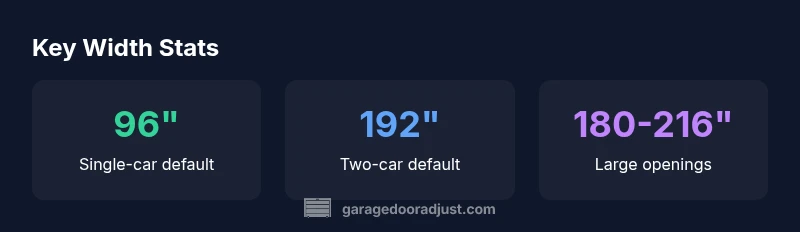
For residential garages, the most common width is 96 inches (8 feet) for a single-car opening, while a standard two-car opening is 192 inches (16 feet). Openings wider than 216 inches (18 feet) are less common and usually custom. Measure your jambs precisely to avoid ordering a door that won’t fit.
Understanding Garage Door Width
Width is the horizontal measurement of the opening your garage door must cover. For homeowners planning a replacement, the width determines the door style, track system, and even the opener compatibility. In many regions, the most common single-car opening is 96 inches wide, but variations exist depending on the builder, era of construction, and whether the garage was customized for oversized vehicles. According to GarageDoorAdjust, width is the first dimension you should confirm before ordering or installing a new door, because an incorrect width can cascade into fit problems and operational issues. This metric, combined with height, affects roofing clearance, the amount of headroom required for safe operation, and how your door senses and interacts with its opener. A correct measurement ensures reliable operation and reduces the risk of damage during opening and closing.
Standard Widths by Opening Type
Most residential garages fall into a few broad width categories. A standard single-car door is commonly 96 inches wide, typically paired with a 7-foot or 7-foot-6-inch tall opening. For two-car garages, you’ll often see a single wide door around 192 inches wide, though two side-by-side 8-foot doors (each 96 inches wide) are also common in some homes. Some garages use wider openings to accommodate larger vehicles or to provide more space for interior storage, with common wider widths ranging up to about 216 inches for especially broad openings. It’s important to note that availability varies by manufacturer and regional building practices. This section helps you plan, but always verify with your local contractor or door dealer for exact options in your area.
How to Measure Your Opening Accurately
Begin by removing any trim or weatherstripping that could skew your measurement. Measure the clear width at three points: left jamb, center, and right jamb, then record the smallest width. This ensures you’ll have enough space for the door panels and tracks. Also measure interior framing width from inside edge to inside edge at the same points. If you have a garage with an irregular frame or bowed walls, take multiple measurements and note the minimum and maximum values. Finally, measure the opening height from the floor to the header to ensure you’re not ordering a door that is too tall for your ceiling clearance. Accurate width measurement protects against ordering a door that won’t fit and helps ensure the opener’s travel limits are set correctly.
What the Width Means for Operation and Fit
Width determines how smoothly the door tracks align with the vertical rails and whether the door will clear the jambs without rubbing. A door that is too narrow can bind on one side, while a door that is too wide may not seal properly against weatherstripping. If the opening width doesn’t match the door you’re purchasing, you’ll face installation delays, potential frame alterations, and possible warranty complications. A precise width also affects insulation performance and sound dampening, as a correctly sized door fits snugly against the weather seal and allows the door’s insulation core to perform as engineered. Understanding width helps you choose the right model, whether you’re aiming for an energy-efficient insulated door or a budget-friendly standard option.
Special Scenarios: Nonstandard Openings and Custom Solutions
Some homes feature nonstandard openings due to quirky architecture, previous renovations, or tall vehicles requiring more headroom. In these cases, you may encounter oversize widths beyond the typical 8-foot, 9–10 foot, or 16-foot formats. Custom doors and custom-sized tracks exist, but they come with longer lead times and higher costs. If you anticipate a nonstandard width, consult a garage door professional early in the planning process. They can assess header integrity, wall framing, and the possibility of widening the opening, or propose a premium custom door solution that matches your exact dimensions.
Tools, Safety, and Best Practices
Before you measure or purchase, gather basic tools: a tape measure, a level, and a friend to help hold the tape to prevent sagging. Wear eye protection if you’re removing trim or weatherstripping. When measuring, document all three width points for both the opening and the framed cavity. If you discover any obvious structural concerns—cracked studs, bowing walls, or damaged header—stop and seek professional advice. For accuracy, re-check your measurements after 24 hours to account for seasonal shifts in the building. By planning carefully, you’ll reduce installation surprises and help ensure the door operates safely and quietly.
Quick Reference: Sizing and Replacement Guidelines
Keep these guidelines in mind: (1) default to 96 inches for a standard single-car opening; (2) plan for 192 inches for the common two-car opening; (3) if your measurements fall outside these ranges, consult a pro for a custom or altered solution; and (4) always verify the header and track clearance during a replacement project. This quick reference helps homeowners avoid costly missteps and ensures a reliable, long-lasting door system.
Typical width options and their common installation contexts
| Door Width (in) | Door Type | Typical Install Context |
|---|---|---|
| 96 | Single-car standard | Common for one-vehicle garages, standard height |
| 108-120 | Tall/oversized single-car or small two-car opening | Where taller vehicles or wider space is needed |
| 192 | Two-car standard (single wide) | Common for two-vehicle garages |
Got Questions?
What is the most common garage door width?
The most common single-car width is 96 inches (8 feet) and 192 inches (16 feet) for standard two-car openings.
Most common widths are 96 inches for a single car and 192 inches for a standard two-car opening.
Can I install a wider door than my opening?
Widening the opening is a major structural job that typically requires a professional; you may need to modify framing and supports.
Widening openings is a big job that usually needs a professional for structural changes.
How do I measure width in an irregular opening?
Measure at three points (left, center, right) and note the smallest clear distance; check for bowed jambs.
Measure at three points on either side and in the center to get the true width.
Are there standard widths for insulated doors?
Insulated doors follow standard widths but may vary in thickness; always check the product specs for your model.
Insulated doors usually come in standard widths, but thickness varies by model.
What safety checks should I perform before replacing a door?
Inspect the opening for damage, ensure tracks are clean, and disconnect power to the opener; call a pro if there are structural concerns.
Check the frame and tracks, and shut off power to the opener before starting.
“Width is the first dimension you must confirm before ordering or installing a new door; an incorrect width will affect track alignment, insulation, and opener operation.”
Quick Summary
- Measure the opening accurately before ordering a door
- Most single-car openings are 96 inches wide
- Two-car openings are commonly 192 inches wide
- Wider or nonstandard openings may require custom solutions
- Nonstandard openings benefit from professional assessment