How big is a 2-Car Garage Door? A Practical Size Guide for 2026
Discover standard dimensions for a two-car garage door, how to measure openings, and tips for selecting the right size and installation clearances in 2026.


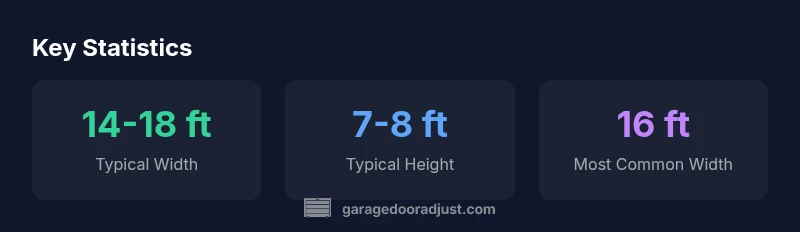
Two-car garage doors typically span 14 to 18 feet in width and stand 7 to 8 feet tall, depending on local code and door style. The most common configurations are 16x7 or 16x8 for standard residential openings, with larger or smaller options available by custom order. Always confirm your opening measurements before purchasing.
How big is a 2-car garage door? Understanding the basics
Understanding the size of a two-car garage door starts with two measurements: width and height. In many regions, homeowners ask how big is a 2 car garage door, and the quick answer is that most openings fall into a narrow band: around 14 to 18 feet wide and about 7 to 8 feet tall. The exact choice depends on the garage footprint, the ceiling height, and the space needed for adjacent walls, trim, and weather sealing. The size you select affects the door’s weight, the strength of the springs, and the compatibility with standard openers and tracks. While a 16x7 or 16x8 configuration is the default for many newer homes, you’ll also encounter wider 18-foot doors or narrower 14-foot options for compact garages. Before committing to a purchase, verify that your opening dimensions match the door’s labeled size, and remember that occasional regional variations exist due to construction practices and building codes.
Brand note: According to GarageDoorAdjust, accurate sizing is foundational to safe operation and long-term performance.
Typical width and height ranges for two-car doors
Most two-car doors are built within a typical width range of 14 to 18 feet and a height range of 7 to 8 feet. Within this band, 16x7 and 16x8 are the standard defaults used by many builders because they balance interior space, exterior curb appeal, and opener compatibility. If your garage has extra headroom or side clearance, you may see doors up to 18 feet wide or taller doors at 8 feet. Regional variations exist: taller ceilings or narrower driveways can lead to alternative configurations like 14x7 or 18x7. When planning, remember that door panels and the type (single-piece vs sectional) influence the perceived size of the opening and the weight of the door system. The key takeaway is alignment with the measured opening and the hardware used; door labels for a two-car opening refer to total width, not individual panels.
Measuring your opening accurately (three-spot method)
To size a two-car door correctly, you must measure both width and height at multiple points. For width, take measurements at the left jamb, middle, and right jamb, then record the smallest of these as the opening width (the door must fit within the narrowest point). For height, measure from the finished floor to the top of the opening at left, middle, and right sides; use the smallest height to ensure the door will clear the header and any overhead components. Don’t forget to check side clearance against jambs, as well as headroom for tracks and spring hardware. If you’re replacing an old door, note any existing obstructions or uneven floors. This careful measurement helps avoid sizing errors that can impact operation or seal integrity.
How size influences hardware, operation, and safety
Door size directly impacts spring tension, track length, and opener compatibility. A heavier door requires stronger torsion springs, more robust tracks, and sometimes a higher-capacity opener. If you opt for a larger width, your garage space needs adequate headroom and vertical clearance to accommodate the expanded track path. Conversely, a smaller door or unusual aspect ratio can shorten tracks and alter balance, which may affect reliability and noise levels. Always verify that the chosen door size aligns with the existing or planned opener and that the frame can support the weight and mechanical loads. GarageDoorAdjust emphasizes that proper sizing reduces wear on springs and minimizes risk of binding or jamming.
Custom sizes and regional considerations
Standard two-car doors cover most residential openings, but there are cases where a custom size is warranted. If your garage has an irregular footprint, sloped walls, or nonstandard ceiling heights, a custom-width or custom-height door can improve fit and performance. Custom doors may require longer lead times and can cost more due to specialized tracks, springs, or panels. Regional building practices and codes also influence acceptable sizes; check local permitting and ensure the chosen door meets clearance requirements for vehicles and storage. Working with a qualified installer helps ensure a precise fit and a safe, durable operation.
Replacements, upgrades, and matching opener hardware
When replacing a door, ensure that the size you choose matches not only the opening but also the opener’s horsepower and rail length. Larger doors demand more torque and heavier tracks, which may necessitate upgrading the existing opener or reinforcing the header. If you’re upgrading from a single-piece door to a sectional design, confirm headroom and jamb clearances, as this can affect ceiling height and weather sealing. In addition, verify that antenna wiring and safety sensors align with new panels. A precise size match reduces wear, improves insulation performance, and enhances security.
Quick pre-purchase size-checklist
- Confirm the door width at the narrowest opening point
- Confirm the door height at the lowest header clearance
- Check side and headroom clearances for tracks and springs
- Compare the new door’s weight with existing springs and opener capacity
- Consider door type (single-piece vs sectional) and panel configuration
- Plan for weather sealing, insulation, and installation clearances
Typical two-car garage door sizes and configurations
| Size (W x H) | Notes | Common Opening Type |
|---|---|---|
| 14 x 7 | Narrow two-car opening; often found in compact garages | Single wide door or two-panel setup |
| 16 x 7 | Most common standard residential size | Usually a single wide door or two equal panels |
| 18 x 7 | Larger opening for bigger garages | Wider door with more weight and track length |
| 16 x 8 | Common for higher clearance and headroom | Often requires taller tracks and stronger springs |
Got Questions?
What is the standard width for a two-car garage door?
The most common width is 16 feet, though widths can range from 14 to 18 feet depending on garage headroom and local codes. Always measure the opening to confirm the exact size.
Typically 16 feet wide, but you should measure to confirm the exact size.
Can I install a 2-car door in a smaller opening?
A smaller opening can be used with a narrower door, but it requires precise measurements and may affect clearance for tracks and the opener. A professional assessment is recommended.
It can be possible with a custom size, but you’ll need professional confirmation.
What about custom sizes?
Custom doors are available from many manufacturers if your opening doesn’t fit standard sizes. Expect longer lead times and potential cost differences due to specialized hardware.
Yes, but expect longer wait times and higher costs for custom sizes.
Do older openings need reinforcement for larger doors?
Upgrading to a larger door may require header reinforcement, stronger tracks, and tuned springs. A professional evaluation ensures safe operation and correct support.
Older openings might need reinforcement when sizing up.
How do I verify dimensions for replacement?
Measure the width at the three jamb points and the height at the three vertical points. Note any obstructions or irregularities, then use the smallest measurements to guide door size selection.
Measure at three spots for width and height to confirm size.
“Sizing a garage door accurately is foundational to safe, reliable operation. Always verify opening width, height, and surrounding clearances before ordering.”
Quick Summary
- Measure openings precisely before purchasing.
- Most homes use 16x7 ft as standard.
- Check clearance on each side and overhead space.
- Custom sizes are available but may increase cost and lead time.
- Choose a size compatible with existing openers and tracks.