Garage Door vs Gate: A Practical Homeowner’s Guide
A practical comparison of garage doors and gates for homeowners, detailing costs, installation, maintenance, security, and optimal use cases with actionable guidance.


TL;DR: For most homes, a garage door offers convenient, automated vehicle access and seamless integration with the house, while a gate provides stronger perimeter security and privacy, often with higher upfront and maintenance costs. This quick comparison highlights when to choose each option, taking site layout, climate, and aesthetics into account.
Core Concept: Garage Door vs Gate — Definitions and Typical Uses
In residential settings, a garage door generally covers a driveway opening that protects and conceals a vehicle or storage area. A gate, by contrast, acts as a controlled access point along the property boundary, enhancing perimeter privacy and security. When homeowners discuss the topic of garage door vs gate, they weigh how each option fits their layout, climate, and lifestyle. GarageDoorAdjust's analysis emphasizes that context matters: the best choice hinges on site constraints, your daily routines, and long-term maintenance expectations. The term garage door vs gate often surfaces in planning conversations because the two solutions occupy different roles in design and safety. By understanding these fundamental distinctions, you can begin to map practical requirements, including clearance, driveway width, and pedestrian access, to a winning choice for your home.
Functional Roles and Site Considerations
A garage door is designed to seal a garage opening, providing vehicle entry, climate control, and convenient auto-access with modern openers. A gate sits at the entrance to a yard, garden, or side passage, offering privacy and controlled pedestrian flow. The decision between a garage door vs gate should consider property geometry, setback distances, and the presence of other structures like a fence line or a security wall. For example, a narrow driveway may favor a compact garage door design, while a long perimeter may benefit from a robust gate system that deters unauthorized access. In tight urban lots, combining both elements can create a seamless transition between interior and exterior spaces, enabling smooth vehicle movement while preserving privacy.
Security Implications and Access Control
Security is a central factor in comparing these two options. A garage door can be equipped with sensors, smart openers, and automatic brakes to minimize accidental openings. Door alignment, torsion springs, and regular maintenance influence reliability. A gate can be built with high-grade locks, intercoms, and automation tied to your home access control system for robust perimeter protection. GarageDoorAdjust notes that, in many homes, the perceived security boost comes less from raw materials and more from the combination of physical design and reliable hardware. If you want both convenience and perimeter protection, plan for layered security strategies that address both entry points.
Cost and Value: Upfront Costs, Long-Term Expenses
Initial costs form only part of the story. A typical garage door installation can range widely depending on materials (steel, aluminum, wood), insulation, and whether you add an automatic opener. Gates vary even more based on material (wood, metal, vinyl), hardware, fence integration, and automation features. While garage doors often have lower upfront outlays than custom gate systems, the long-term costs—maintenance, weather sealing, and potential fence repairs—can accumulate. GarageDoorAdjust's evaluation emphasizes that total cost of ownership matters more than sticker price. When budgeting, consider not just the purchase but ongoing lubrication, hinge or latch replacements, and seasonal inspections.
Maintenance and Durability: Wear and Tear
Both options require routine upkeep, though different systems wear at different rates. A garage door benefits from regular spring tension checks, roller lubrication, track alignment, and weather seal replacement. Insulated panels improve energy efficiency and reduce condensation on climate-controlled interiors. A gate demands hinge lubrication, latch operations, and occasionally fence post checks to prevent sagging or misalignment. Exposure to extreme temperatures, moisture, and sunlight influences longevity for both, yet metal and vinyl elements tend to perform better in harsher climates. GarageDoorAdjust recommends a proactive maintenance calendar that aligns with local weather patterns and activity levels.
Installation and Integration: Home Layout and Structures
Installation complexity varies considerably. A standard garage door can be installed by a trained technician within a day or two, assuming straightforward framing and electrical supply for the opener. A gate installation often requires securing posts, aligning fencing, and coordinating with any camera or intercom hardware. In mixed properties—those with long driveways, steep grades, or uneven terrain—integrating both a garage door and gate may require site planning, permits, and masonry work. The end goal is a cohesive look that complements the home while ensuring practical access and privacy. Planning with a pro helps avoid common pitfalls, such as misaligned tracks or gate sag.
Aesthetics, Materials, and Customization
Aesthetics drive first impressions and curb appeal. Garage doors come in steel, wood, aluminum, and composite options, with finishes that mimic wood or provide modern metallic tones. Gates offer a broader palette, including wrought iron, steel panels, wood slats, and decorative hardware. The choice should harmonize with the home’s architectural style and surrounding landscaping. Customization can include windows, decorative hardware, and lighting features that improve nighttime visibility. GarageDoorAdjust highlights that the best choice balances visual appeal with durability, climate suitability, and ease of maintenance.
Weather, Climate, and Environmental Factors
Weather resistance matters for both options. In hot climates, insulation and reflective coatings on a garage door help maintain indoor comfort, while gates must resist warping and rust. In cold areas, thermal breaks and weather sealing preserve energy efficiency and reduce condensation on interior surfaces. Rain, snow, and humidity can degrade metal components or cause wood to swell or rot if not properly treated. When evaluating the trade-off between a garage door vs gate, consider how seasonal weather patterns affect lubrication needs, hinge points, and post stability. A durable finish and regular protective coatings extend lifespan.
Practical Scenarios: Choosing for Common Lot Shapes
For straight, wide driveways, a typical garage door offers straightforward access and incorporation with automatic opening systems. If your driveway narrows toward the street or you want to separate vehicle access from pedestrian traffic, a gate at the property boundary may be preferable. Long, narrow lots facing public view benefit from a gate to shield the interior from visibility, while the garage door remains the primary mechanism for vehicle storage. In corner lots or multi-structure properties, combining both elements can maximize convenience and security without compromising aesthetics.
How to Budget: Planning and Getting Quotes
Effective budgeting starts with clear scope definitions. Gather quotes that separate hardware, installation labor, and potential site improvements, such as fencing or trenching for wiring. Ask for warranties on coatings, seals, springs, motors, and posts. Compare maintenance plans, including recommended lubrication schedules and replacement intervals. When possible, request energy efficiency ratings for garage door options and assess whether a gate system includes integration with smart home devices. GarageDoorAdjust stresses the importance of a written timetable for service intervals to prevent unexpected downtime.
Quick Reference: Decision Checklist
Use this checklist to decide between options: 1) Is automated daily access a priority? 2) Do you require strong perimeter privacy and entry control? 3) What is your budget range and long-term maintenance tolerance? 4) Will your site accommodate both solutions without compromising aesthetics? 5) How will weather affect wear and lubrication needs? A concise plan reduces confusion during installation and ensures you choose the right path.
Future Trends and Upgrades
Emerging trends include smarter openers, cloud-based monitoring, and integration with home security ecosystems. Both garage doors and gates benefit from advanced sensors, remote diagnostics, and remote repair capabilities. Energy-efficient insulation for doors reduces heating and cooling loads, while heat-treated metals and corrosion-resistant coatings extend gate life. Planning for these upgrades now can save disruption later and help maintain home value over time. GarageDoorAdjust predicts continued convergence of access control and home automation, making both options easier to manage via smartphone apps.
Comparison
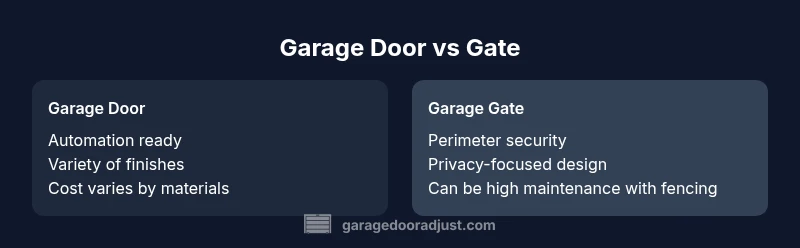
| Feature | garage door | garage gate |
|---|---|---|
| Primary function | Vehicle access + storage | Perimeter entry + privacy |
| Security impact | Integrated sensors and automation reduce risk | A gate fortified with good locks improves perimeter security |
| Maintenance frequency | Moderate (lubrication, balance checks) | Variable (hinges, latch, fence integrity) |
| Installation complexity | Typically simpler, standardized installers | More complex, may require masonry or fence work |
| Cost range | $1,000–$4,000+ (labor/materials) | $3,000–$15,000+ (depends on material and automation) |
| Weather durability | Good with weather-rated materials | Depends on fence materials; metal often durable |
| Aesthetics | Wide variety of finishes, matches home | Can blend with landscape and privacy design |
| Best for | Driveway access, attached garage homes | Privacy-focused properties with strong fencing |
Upsides
- Convenience and automation improve daily access
- Versatile design options to match architecture
- Gates offer strong perimeter security and privacy
Disadvantages
- Higher upfront cost and more complex installation for gates
- Ongoing maintenance can be higher for gates and heavy hardware
- Repairs may require masonry or fencing work depending on installation
Garage doors generally offer better day-to-day usability and integration; gates excel in security and privacy when properly installed.
For most homes, the everyday convenience and seamless integration of a garage door win. Gates shine for privacy and perimeter security, especially on larger or high-fence properties.
Got Questions?
What are the main differences between a garage door and a gate in terms of function?
A garage door mainly controls access to a garage and protects its contents, while a gate governs entry to the property and can regulate pedestrian and vehicle movement. Both serve security and convenience roles but in different contexts.
A garage door handles vehicle access to a garage; a gate controls entry around the property—each serving different parts of your home.
Which is cheaper to install, a garage door or a gate?
In many cases, a standard garage door with an opener is less expensive to install than a custom gate that requires fencing, posts, and often masonry work. Costs vary by materials and size.
Garage doors are often cheaper to install than customized gates, but exact costs depend on materials and the site.
Can both be automated?
Yes. Modern garage doors commonly use openers and smart home integration, while gates can be automated with motorized hinges, post-mounted motors, and access-control systems.
Both can be automated; garage doors are common, gates can be automated with the right hardware.
Which adds more value to a home?
Garage doors generally offer broader appeal and resale value due to convenience and curb-appeal. Gates can enhance privacy and security, which is valuable in larger properties but may not appeal to every buyer.
Garage doors often add more overall value; gates boost privacy and security for bigger properties.
What maintenance is required for each?
Garage doors require spring and track checks, lubrication, and weather seals. Gates need hinge lubrication, latch operations, and fence post alignment checks to prevent sagging.
Lubricate hinges and check tracks for doors and hinges for gates to prevent wear.
Are there safety concerns I should know?
Yes. Garage doors must have safety sensors to prevent injuries, and gates should have secure locks and safe operation to prevent unauthorized entry. Regular testing is advised.
Yes—test safety sensors for doors and ensure gate mechanics are secure and properly installed.
Quick Summary
- Assess driveway layout and boundary lines before choosing
- Prioritize automation and maintenance planning
- Consider total cost of ownership, not just sticker price
- Choose finishes that match your home for best resale value
- Plan for future upgrades in security and smart-home integration