Install a 16 ft Garage Door: A Complete How-To Guide
A homeowner-friendly guide to diagnosing, sizing, and installing a 16 ft garage door. Learn measurements, safety, tools, step-by-step installation, maintenance, and when to hire a pro.


With this guide, you’ll diagnose, install, or repair a garage door 16 ft wide. You’ll confirm fit, safety, and hardware needs, then follow a clear, step-by-step process. Gather the listed tools, understand common pitfalls, and plan for about 2-4 hours of hands-on work. The GarageDoorAdjust team designed this plan for homeowners, backed by GarageDoorAdjust Analysis, 2026.
Why a 16 ft garage door size matters
The width of a garage door directly affects clearance, wind resistance, and overall balance of the system. A standard two-car garage frequently uses a 16 ft door, which impacts the choice of tracks, springs, and an opener. Getting the size right reduces the chance of binding, misalignment, or wear that shortens the door’s lifespan. According to GarageDoorAdjust, homeowners who choose the right 16 ft configuration experience fewer service calls and smoother operation over the productive life of the door. When you plan for a 16 ft door, you also plan for the space around the door opening—headroom, side room, and enough ceiling clearance for safe operation of an overhead opener. Thoughtful sizing helps balance load, ensures proper weather sealing, and improves insulation performance in varied climates.
Key components of a 16 ft sectional door
A 16 ft garage door typically uses sectional panels that roll along vertical and horizontal tracks. The main components include the garage door sections, torsion or extension springs, rollers, hinges, bottom seal, weatherstripping, tracks, and an automatic opener (if used). The door’s weight and spring type determine tensioning requirements and safety considerations. Understanding these parts helps homeowners diagnose misalignment, unusual noises, or slow operation. The balance between springs and tracks is essential for safe retirement of the door at open and closed positions, and regular inspection can prevent expensive repairs later.
Pre-installation planning and measurements
Before lifting a finger on a 16 ft door, take precise measurements of the opening: width, height, headroom, and side room. Confirm the wall framing can support the door’s weight and that there is adequate clearance for the tracks, rollers, and springs. Mark the layout with a chalk line and confirm plumb and level in multiple locations. This upfront planning reduces guesswork later and helps you order the correct door kit, hardware, and an appropriate opener. GarageDoorAdjust Analysis, 2026, emphasizes meticulous measurement as the single most important step—skipping it leads to misfit parts and unsafe operation.
Choosing a compatible opener and hardware for a 16 ft door
Your opener choice should match the door’s weight and width. Look for openers with sufficient horsepower and a rail length that accommodates a 16 ft door. Don’t overlook safety features like auto-reverse sensors and manual operation in a power outage. For 16 ft doors, multiple homeowners opt for units with longer rails and stronger torque capacity to ensure smooth, quiet operation. Always follow manufacturer guidance and verify that mounting hardware is rated for your wall structure and door weight. GarageDoorAdjust’s guidance stresses compatibility checks before buying or cutting any components.
Safety and code considerations for large doors
Working with large, heavy doors carries serious risks of pinch injuries and crush hazards. Always disconnect power when working on tracks or springs and keep a clear workspace. Use proper PPE: safety glasses, gloves, and sturdy footwear. Check local codes for ventilation, weather sealing, and door balance requirements. If your installation involves structural work or new framing, consult your local building department. The safest approach is to verify that all components meet or exceed the door’s weight and width specifications.
Tools and materials checklist (overview)
Preparing a 16 ft door project requires a curated set of tools and parts. You’ll want levels, squares, measuring tapes, and a robust drill. A helper is invaluable for lifting panels and aligning tracks. In addition, keep the right hardware: track sections, rollers, hinges, and appropriate springs. This section gives you a sense of the scope and helps you organize a project timeline. Use the list as a planning guide and cross-check against the tools/materials block to avoid last-minute trips to the store.
Step-by-step overview for a typical 16 ft installation
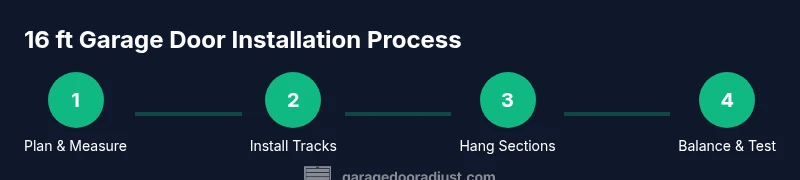
This section provides a concise, high-level view of the installation workflow. You begin by preparing the opening, mounting tracks, suspending the door sections, and attaching the spring balance system. Next you align tracks, install the weather seals, and integrate the opener if chosen. Finally, you test operation, adjust tension, and program safety sensors. A complete, step-by-step guide with detailed instructions is provided in the dedicated STEP-BY-STEP block to ensure you stay safe and organized throughout the job.
Troubleshooting common issues during installation
If the door binds, rubs, or makes unusual noises, stop and recheck the balance and track alignment. A misaligned track can cause binding at mid-travel, while improper spring tension can alter the door’s weight distribution and opener performance. Sensor misalignment can prevent the opener from functioning. Document your observations, consult the step-by-step instructions, and avoid forcing components that resist movement. Early detection saves time and reduces the risk of personal injury.
Maintenance and longevity tips after installation
Proper maintenance keeps a 16 ft door operating smoothly. Lubricate rollers and hinges, inspect weather seals, and clean tracks to prevent debris buildup. Schedule regular balance checks and listen for changes in noise or feel during operation. A proactive maintenance routine reduces wear, improves energy efficiency, and extends the door’s lifespan. Keep up with seasonal checks and address issues before they escalate into costly repairs.
When to hire a professional (limits and guidelines)
For large doors like a 16 ft installation, there are moments when a professional is the safest choice. If you encounter structural concerns, significant spring tension, or if you’re unsure about safety requirements, hire a licensed technician. A pro can verify compliance with local codes, balance the door correctly, and ensure the opener is installed with correct back-off limits and safety features. GarageDoorAdjust recommends evaluating risk factors and selecting the option that offers the best long-term safety and reliability.
Authority sources and further reading
- U.S. Occupational Safety and Health Administration (OSHA): https://www.osha.gov
- U.S. Department of Energy (Energy Efficiency and Weatherization): https://www.energy.gov
- National Institute of Standards and Technology (NIST) Safety and Compliance: https://www.nist.gov
Tools & Materials
- Tape measure (at least 25 ft)(For accurate door width, opening height, and headroom.)
- Safety glasses(Protect eyes from debris and springs.)
- Work gloves(Grip and protect hands during lifting and handling.)
- Cordless drill and bits(Drill pilot holes and drive screws; have a bit set handy.)
- Socket wrench set(Tighten brackets and hardware securely.)
- Adjustable wrench(Reach confined fasteners and adjust fittings.)
- Phillips and flat-head screwdrivers(General fastener installation and adjustments.)
- Level and square(Ensure tracks are plumb and doors align precisely.)
- Ladder (extension, tall enough for overhead work)(Safe access to tracks and header area.)
- Pry bar and hammer(Gently align components and tap fixtures in place.)
- C-clamps(Hold tracks and brackets temporarily during fitting.)
- Pliers and snips(Grip wire, trim ends, and manage springs with care.)
Steps
Estimated time: 2-4 hours
- 1
Assess space and safety
Clear the area of vehicles and obstructions. Ensure power is off at the breaker to prevent accidental operation. This initial safety check reduces accidental activation during installation and protects you from injuries.
Tip: Have a second person assist with lifting and guiding heavy sections. - 2
Measure opening and verify fit
Measure width, height, and headroom to confirm the 16 ft door will fit the opening. Record all dimensions and compare to the door kit specifications. Mismatched measurements are the leading cause of performance problems.
Tip: Double-check measurements in at least two spots to avoid taper errors. - 3
Gather tools and materials
Lay out all required tools, hardware, and safety equipment before starting. This minimizes mid-project trips and helps maintain a steady workflow. Confirm you have the correct tracks, springs, and brackets for a 16 ft configuration.
Tip: Preassemble small components to speed installation. - 4
Prepare the opening and tracks
Install the bottom brackets and vertical tracks first, ensuring they are plumb. Use a level to verify alignment; adjust shims as needed. Secure tracks temporarily to maintain position during subsequent steps.
Tip: Check for level across both vertical tracks before proceeding. - 5
Hang door sections and install hinges
Carefully lift and attach door sections to the tracks, linking with hinges as you go. Maintain balance by supporting both sides evenly and avoiding over-tightening. This step sets the door’s core structural alignment.
Tip: Work with a partner to prevent drooping sections. - 6
Install springs and balance system
Attach the spring mechanism according to the manufacturer’s instructions for a 16 ft door configuration. Springs store significant energy, so handle them with caution and use the proper tensioning tool. Do not attempt to re-tension springs without training.
Tip: If in doubt, leave spring work to a pro to avoid serious injury. - 7
Mount horizontal tracks and connect rollers
Extend tracks to the appropriate length, secure with brackets, and install rollers in the door sections. Ensure rollers run smoothly within tracks without binding. Lubricate contact points for quiet operation.
Tip: Regularly inspect rollers for wear and replace as needed. - 8
Seal bottom and weatherstripping
Install the bottom seal and weatherstripping to improve energy efficiency and keep out dust. Align seals evenly to prevent gaps that can undermine insulation or drag.
Tip: Gently compress seals during contact to avoid tearing. - 9
Install header bracket and opener (if applicable)
Attach the header bracket and set up the opener rail if you’re adding a motorized unit. Ensure the opener is aligned with the door and the rail is level. Wire connections and safety sensors should follow the manufacturer’s instructions.
Tip: Test the opener with the door up and down (manually first) before powering the unit. - 10
Balance, test, and adjust
Manually move the door to mid-travel and observe balance. If the door feels heavy on one side or sticks, re-check track alignment and spring tension. Perform a few controlled tests to confirm smooth operation.
Tip: Balance checks save wear on the opener and reduce failure risk. - 11
Program safety sensors and test cycle
If using an opener, program safety sensors according to the manual and run several test cycles. The door should stop and reverse upon obstruction. Verify auto-reverse is functioning properly.
Tip: Keep a clear zone around the door during testing. - 12
Final inspection and cleanup
Inspect all fasteners, ensure doors stop in closed and open positions, and clean the work area. Confirm that weather seals are intact and that the door operates quietly without binding.
Tip: Document any unusual sounds or movements for future maintenance.
Got Questions?
Is a 16 ft garage door the right size for a two-car garage?
Most two-car garages use a 16 ft wide door, which fits standard openings but requires proper framing and hardware. Measure your opening to confirm clearance and confirm your chosen kit matches the width. Consider insulation and weather seals for climate control.
For many two-car garages, a 16 ft door is the standard fit. Always confirm your opening measurements first.
Can I install a 16 ft door myself?
A DIY installation is possible for experienced homeowners with the right tools and safety precautions. This is a large project that includes heavy lifting and springs under tension, so weigh the risk and consider hiring a professional for the spring system and opener if uncertain.
It's doable if you have the tools and experience, but springs can be dangerous.
Do I need a permit for installing a new garage door?
Permit requirements vary by location. Check with your local building department to confirm whether a permit is needed for the installation, especially if you modify structural framing or replace a large door. Always follow local codes for safety and compliance.
Check with your city or county building department to be sure.
What horsepower opener is recommended for a 16 ft door?
For a 16 ft door, a opener with sufficient torque is recommended, commonly 1/2 to 3/4 horsepower depending on weight. Refer to your door kit’s specifications and ensure the opener can lift the total door weight safely.
Look at the manufacturer's guidance on horsepower and weight ratings.
How do I balance a new 16 ft door after install?
Balancing a large door requires verifying track alignment and proper spring tension. Lift the door manually to ensure even movement, adjusting springs or tracks as needed to prevent binding and ensure easy operability.
Make sure it moves evenly and doesn’t stick in the middle.
What maintenance is recommended after installation?
Schedule regular lubrication of moving parts, check weather seals, and inspect tracks for debris. Annual or semi-annual checks help prevent wear and prolong the life of the 16 ft door system.
Keep it clean, lubricated, and aligned for best results.
Watch Video
Quick Summary
- Plan measurements before buying parts
- Follow safety steps to prevent injuries
- Balance and track alignment are critical for smooth operation
- Use the right opener rated for a 16 ft door
- Test sensors and safety features after installation