16 ft Garage Door: Install, Repair, and Maintain
Learn how to install, diagnose, and maintain a 16 ft garage door with expert guidance, safety tips, and practical steps you can follow at home. Includes sizing, opener choices, insulation, and troubleshooting.


This guide helps homeowners install, diagnose, and repair a 16 ft garage door. You’ll learn how to measure openings, choose materials, select a compatible opener, and safely perform maintenance. Whether you’re replacing a panel or installing a new door, follow the step-by-step approach to ensure safe, long-lasting operation.
Understanding the 16 ft garage door size and what it means for your home
A 16 ft garage door is a common width for two-car garages, balancing opening width with structural requirements. When a door spans 16 feet, you’ll typically see two 8-foot panels or four 4-foot sections in sectional designs. This width influences track length, spring tension, and opener horsepower. According to GarageDoorAdjust, selecting the right width reduces binding, improves balance, and simplifies installation. You’ll also consider height, panel material, and insulation to maximize energy efficiency and curb appeal. In short, 16 ft is a practical, versatile standard that supports a range of door materials and opener setups while keeping your garage accessible and secure.
Planning and measuring a 16 ft opening
Accurate measurement is the foundation of a successful installation. Start by measuring the width of the opening at three points (top, middle, bottom) and recording the smallest measurement. Do the same for height at the left, center, and right edges. Check for square corners by measuring diagonals across the opening; they should be within a few millimeters of each other. If your opening isn’t square, you’ll need to adjust framing before proceeding. Also assess clearance above the door—ceiling height, header space, and any obstructions in the track path. These steps prevent binding and ensure smooth operation once the door is installed.
Materials and insulation options for a 16 ft door
Door panels come in steel, aluminum, wood, and fiberglass, each with pros and cons for durability and maintenance. Steel doors with polyurethane or polystyrene insulation offer good energy efficiency and lower maintenance. Wood doors provide classic aesthetics but require ongoing sealing and painting. For a 16 ft width, choose panels that tolerate wind load and fit your insulation goals. Insulated doors reduce heat transfer, lower energy bills, and help keep your garage comfortable year-round. GarageDoorAdjust recommends pairing an insulated door with an appropriate weather seal to minimize drafts and moisture intrusion.
Opener choices and compatibility for a 16 ft door
The opener must safely manage the door’s weight and spring system. For a 16 ft door, a 1/2 HP to 3/4 HP residential opener is typical, though heavier panels may warrant higher horsepower. Belt drives tend to be quieter than chain drives, which is beneficial in attached garages. Ensure the opener’s rail length accommodates the total door height and track configuration. Don’t forget safety features like auto-reverse sensors and manual operation in case of power outages. A properly matched opener improves reliability and reduces the risk of damage during operation.
Safety considerations and code compliance for large doors
Large doors present higher risks during installation and adjustment, especially when torsion springs are involved. Always disconnect power to the opener when working on the door and wear protective gear. Verify that spring systems are rated for your door’s weight and width, and avoid adjusting springs without professional training. Local building codes may require specific fasteners, brackets, and safety devices. If in doubt, consult a licensed technician to ensure compliance and personal safety. The emphasis should be on controlled, deliberate steps rather than rushed work.
Maintenance and troubleshooting for a 16 ft door
Regular lubrication of moving parts, including tracks, rollers, and bearings, reduces wear and noise. Check track alignment and tighten mounting screws if the door appears to sag or bind. Inspect weather seals for cracks or gaps and replace as needed to prevent drafts and moisture. If the opener intermittently stops or the door doesn’t close fully, check safety sensors, limit switches, and the opener’s wiring. Routine maintenance extends life and improves performance.
Cost considerations and budgeting for a 16 ft door project
Budgeting a 16 ft door project depends on materials, insulation, labor, and whether you are replacing panels, tracks, or the entire assembly. Costs vary with door material choice, insulation level, and whether a new opener is included. Focus on long-term value: better insulation, sturdier hardware, and a reliable opener reduce long-term maintenance. The GarageDoorAdjust team notes that investing in quality materials and professional installation often yields safer operation and fewer future repairs.
Tools & Materials
- Tape measure(Measure opening width and height; record minimums)
- Safety glasses(Protect eyes during lifting and drilling)
- Work gloves(Grip and hand protection)
- Ladder or step stool(Access tracks and header area)
- Cordless drill with bits(Drive screws and install hardware)
- Wrench set(Tighten bolts on tracks and brackets)
- Level(Ensure tracks are plumb)
- Pry bar(Remove old components safely)
- Hammer(Seat hardware and adjust components)
- Silicone sealant(Weatherproofing at seal edges)
- Lubricant (white lithium grease)(Lubricate moving parts)
- Caulk gun(Apply sealant neatly)
- Replacement rollers/brackets(On hand for wear and replacement)
- Torque wrench (optional)(Precise spring tension adjustments)
Steps
Estimated time: 2-4 hours
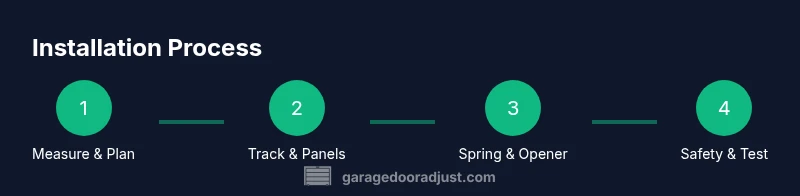
- 1
Prepare workspace and measure opening
Clear the area, remove debris, and confirm opening dimensions. Use the tape measure to verify width, height, and square-ness by checking diagonals. Correct any misalignment before proceeding.
Tip: Double-check measurements at multiple points to prevent future binding. - 2
Remove existing hardware or old door
Safely disconnect power to the opener, then detach any existing tracks, rollers, and brackets. Keep fasteners organized for reinstallation. Watch for sharp edges and springs that may be under tension.
Tip: Take photos during removal to reference when installing the new system. - 3
Install new tracks and center hinge brackets
Mount vertical tracks plumb on both sides of opening and secure with brackets. Install center hinge brackets and ensure tracks are level and aligned with the opening.
Tip: Use a level and shims as needed to maintain 90-degree track alignment. - 4
Hang door sections and install rollers
Lift and attach the first sections to the tracks, then secure rollers into track stops. As you add sections, keep the door balanced and prevent misalignment that could pinch fingers.
Tip: Enlist a second person to help handle heavy sections safely. - 5
Install torsion springs and safety devices
Consult the door’s manufacturer torque specs and install springs accordingly. Attach safety cables or devices per code. Do not attempt to adjust springs without training.
Tip: If you’re unsure, hire a licensed technician to handle spring work. - 6
Install opener and test operation
Mount the opener, connect to power, program safety sensors, and set travel limits. Test the door for smooth operation, reversing on contact with obstructions, and proper closing behavior.
Tip: Run multiple cycles at low speed to verify reliability before regular use. - 7
Final adjustments and weather sealing
Trim any excess panel height, apply weather seals, and seal joints with silicone where needed. Recheck alignment and re-torque fasteners after first few cycles.
Tip: Inspect weather seals for gaps and replace damaged ends promptly.
Got Questions?
Can I install a 16 ft garage door myself?
A homeowner can, but a 16 ft door involves heavy lifting and precise spring alignment. For safety and code compliance, many homeowners choose professional installation, especially when springs or torsion systems are involved.
You can, but it’s safer to hire a pro for a 16 ft door because of heavy lifting and springs.
What opener horsepower is typical for a 16 ft door?
For most residential 16 ft doors, a 1/2 to 3/4 horsepower opener is standard. Heavier panels may require more power, and belt drives are usually quieter than chains.
Most 16 ft doors use a 1/2 to 3/4 HP opener, with belt drives being quieter.
Do I need insulation for a 16 ft garage door?
Insulated doors improve energy efficiency and comfort. Choose polyurethane or polystyrene insulation with a favorable R-value based on your climate and budget.
Insulation helps keep the garage warmer in winter and cooler in summer; pick polyurethane or polystyrene for best results.
What maintenance is essential for a 16 ft door?
Lubricate moving parts, check track alignment, and inspect weather seals regularly. Address occasional noises or sticking promptly to prevent wear.
Regular lubrication and alignment checks keep a 16 ft door operating smoothly.
How long does installation typically take?
Installation can take several hours depending on site conditions and whether a full replacement or panel upgrade is performed. Allow time for safety checks and testing.
Expect several hours for a full install, with extra time for safety checks.
What safety steps should I take before starting?
Disconnect power to the opener, use protective gear, and never work under a door that’s unsupported or without proper spring handling knowledge.
Turn off power to the opener and wear safety gear before you start.
Watch Video
Quick Summary
- Measure opening precisely before ordering parts
- Choose insulation level to match climate goals
- Use the right opener and ensure safety features
- Schedule professional help for spring work
- Test thorough safety features after installation