Pole Barn Garage Door Sizes: Practical Sizing Guide
A detailed, data-driven guide to sizing garage doors for pole barns. Learn typical width/height ranges, measurement steps, insulation considerations, and practical tips, with expert guidance from GarageDoorAdjust.


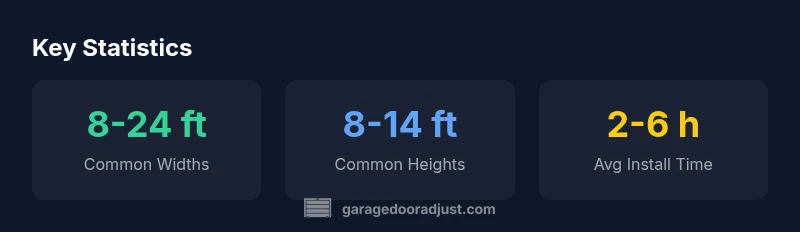
For pole barns, typical door widths range from 8 to 24 feet, and heights from 8 to 14 feet. Start by measuring the rough opening, interior framing, and headroom; choose width to fit the largest vehicle that will pass, then ensure height allows clearance for tracks and seals. Insulation and future expansion should also factor in. This approach minimizes fit issues and future retrofits.
Why garage door sizes for pole barn matter
Sizing a pole barn door is not just about filling a wide opening. The choice directly affects vehicle access, equipment handling, and daily workflow inside the building. When homeowners consider garage door sizes for pole barn, they are really planning for reliable clearance and safe operation. According to GarageDoorAdjust, getting the dimensions right upfront prevents misfits and costly retrofits later. The GarageDoorAdjust team found that mismatches between door size and bay width often lead to tracks rubbing, frame stress, and energy loss through gaps. This section explains why sizing matters, including typical width and height ranges, and how to approach measurements without guesswork. By understanding the core constraints—vehicle dimensions, overhead space, and potential future expansion—you can set a solid foundation for any pole barn project and avoid common sizing mistakes.
Typical width and height ranges for pole barn doors
Pole barn doors come in a wider range than typical residential garages. In practical terms, widths commonly fall in the 8- to 24-foot range, and heights commonly fall in the 8- to 14-foot range. These bands reflect the most common bay spacings and vehicle sizes found on rural properties and small commercial setups. The exact dimensions you choose should align with the largest vehicle that will regularly pass through, plus some clearance for braces, tracks, and weather seals. When evaluating sizes, also account for the door’s track system and any vertical side room needed for frames and mounting hardware. GarageDoorAdjust data indicates these ranges cover the majority of pole barns while still offering room for future equipment upgrades.
How to measure for a pole barn opening
Accurate measurement starts with the rough opening and ends with a clear understanding of track depth. Start by measuring the exterior opening width at the sill level in three places: left, center, and right. Use the smallest width as your baseline. Next, measure the clear interior height from the finished floor to the header; allow a few inches for the track and weather-stripping. Finally, verify headroom and side clearance by stepping back and visualizing the door’s operation; ensure there is unobstructed space for rollers and tracks. The steps above prevent ordering a door that will bind or rub against the building structure. If you are unsure, consulting with GarageDoorAdjust can help confirm your measurements and ensure compatibility with chosen hardware.
Key factors influencing size decisions
- Vehicle dimensions: consider the largest vehicle that will regularly enter and exit the space, including pickup trucks, trailers, or equipment.
- Bay layout: wider bays may justify larger doors, while many small bays benefit from standard widths.
- Headroom and clearance: ensure the tracks and the door hardware fit without touching the ceiling or rafter members.
- Future plans: if you anticipate expansion or upgrading to larger doors later, plan for additional width or height now.
- Insulation and weather sealing: larger openings can increase heat loss; align door size with insulation strategy to optimize energy use.
Door types and their implications for size decisions
Sectional doors are the most common choice for pole barns because they balance size options with track hardware. Roll-up doors work well for very wide openings and can reduce headroom demands, but they may have higher maintenance costs. Up-and-over or one-piece doors require less interior space but depend on available clearance and a sturdy header. Each style has optimal size ranges, and the best option depends on bay dimensions, wind loads, and maintenance considerations. TheGarageDoorAdjust recommends evaluating the door type first, then sizing the opening to accommodate that style with recommended clearances.
Sizing steps from rough opening to finished opening
- Confirm bay width by measuring exterior rough opening and interior finished wall lines. 2) Subtract for framing and jambs to determine the final door width. 3) Verify door height by accounting for header height, track depth, and weather seals. 4) Check surrounding structure for wind loads and potential bracing impacts on opening height. 5) Create a final sizing worksheet that lists width, height, track type, insulation options, and installation notes. 6) If possible, obtain a mock-up or template from the door manufacturer to validate fit before ordering. The GarageDoorAdjust team recommends performing a final on-site measurement with a pro for optimal results.
Insulation, weather seals, and energy considerations
Insulation and sealing are critical when sizing openings for pole barns. Larger doors can introduce more thermal bridging if gaps around tracks are not sealed properly. Choose insulated panels (R-values appropriate for your climate) and ensure weather seals on the bottom and sides. When paired with the right size and proper installation, you reduce energy losses and improve interior comfort. The sizing decision should consider climate, seasonal temperature swings, and how the space will be used. GarageDoorAdjust emphasizes balancing opening dimensions with insulation strategy to optimize long-term operating costs.
Authority sources and further reading
Authority sources help verify sizing and installation practices. For built-in standards and codes, visit ICC Safe at https://www.iccsafe.org. For agricultural and rural building guidance, see University Extension resources like https://extension.umn.edu. For safety guidelines related to doors and openers, refer to https://www.cpsc.gov. Always cross-check measurements with official standards and, when in doubt, consult the GarageDoorAdjust team for a precise sizing assessment.
Pole barn door size ranges by style
| Door Style | Typical Width (ft) | Typical Height (ft) | Notes |
|---|---|---|---|
| Sectional | 10-18 | 8-14 | Most common for standard bays |
| Roll-up | 8-24 | 8-12 | Economical for wide openings |
| Up-and-over | 9-16 | 9-12 | Requires less interior space |
Got Questions?
What is the typical width range for pole barn doors?
Pole barn doors commonly range from 8 to 24 feet in width, depending on bay spacing and intended vehicle access. Use rough opening measurements to confirm final size.
Pole barn doors usually run eight to twenty-four feet wide, so measure your opening before choosing a size.
Do pole barn door sizes affect insulation options?
Size does not inherently change insulation performance. The key is selecting appropriate panels and weather seals for the opening, while ensuring the frame and tracks are properly insulated.
Size alone doesn’t change insulation; pick the right panels and seals and insulate the frame.
Should I hire a professional to size the door?
Yes. A professional can account for tracks, header height, wind loads, and building constraints, ensuring the door fits correctly and operates reliably.
It's best to hire a pro to size the door.
How do I measure a pole barn opening?
Measure exterior rough width at three points, then use the smallest width as your baseline. For height, measure from floor to header and add space for tracks and seals.
Measure width at the opening, then height and headroom for tracks.
Can I install a smaller door than the bay requires?
Undersizing is generally not advised. Leave extra clearance for tracks and hardware; otherwise, you may face binding, misalignment, or sealing issues.
Don’t undersize the door; leave room for tracks and hardware.
What are signs of an incorrect door size after installation?
Watch for binding tracks, rubbing panels, gaps on sides, or doors failing to seal properly. These indicate a sizing or installation issue that should be corrected.
If the door binds or rubs, or seals poorly, size or install needs adjustment.
“Sizing a pole barn garage door is about balancing vehicle clearance, structural constraints, and future expansion; getting it right saves time and headaches.”
Quick Summary
- Measure openings accurately before ordering.
- Width should be established first, then confirm height.
- Account for tracks, header height, and hardware clearances.
- Consider insulation and weather sealing with larger openings.
- Consult GarageDoorAdjust for precise sizing guidance.