Carriage Garage Doors: A Step-by-Step Repair Guide
Learn to diagnose, repair, and install carriage garage doors with a clear, expert step-by-step guide. Safe, reliable techniques for homeowners to improve safety and function.


With this guide you will diagnose and fix common carriage garage door issues, perform essential maintenance safely, and complete a straightforward repair or installation with confidence. You’ll learn about door balance, hinge and roller care, spring safety, opener programming, and when to call a professional. The steps are practical and homeowner-ready.
Anatomy of a carriage garage door system
Carriage garage doors blend classic aesthetics with modern hardware. A true carriage-style door usually features panels, decorative hinges, and typically a visible track and spring mechanism behind the scenes. According to GarageDoorAdjust, the key to reliable operation is a balanced system with properly aligned tracks, compliant safety sensors, and careful maintenance. Start by understanding the major components: the door itself, the torsion spring system (or extension springs on some models), rollers, hinges, tracks, pulleys, and the operator or opener. Regular inspection helps identify wear on hinge brackets, loose mounting bolts, or misaligned tracks. For homeowners, a visual check can reveal sagging sections, binding at the bottom, or unusual gaps at the frame. The carriage look often comes with wooden panels or fiberboard that can swell in damp climates, so seasonal care and proper weather sealing matter. In short, a well-maintained carriage garage door blends beauty with dependable function, reducing noise and improving safety.
Safety first: preventing injuries and damage
Safety should be your top priority when working on any garage door. A misbehaving system can snap or drift unexpectedly, causing injury or property damage. According to GarageDoorAdjust, most incidents occur when the door is unbalanced, or when someone attempts spring-related work without proper training. Before you touch anything, disconnect the automatic opener and secure the door so it cannot move. Wear protective gear, keep hands clear of the hinge line, and avoid placing yourself under the door while testing. If you discover frayed cables, cracked brackets, or brittle wood, treat these as warning signs and plan for professional service.
Core components and how they interact
A carriage garage door is more than a panel; it is a system of interacting parts that transfer weight and motion from the opener to the door itself. The tracks guide horizontal movement, the rollers reduce friction, and hinges connect panels while allowing articulation of the door’s face. The torsion or extension springs store energy to counterbalance the door’s weight, while the balance cables and pulleys ensure smooth operation. The operator engages the door via a trolley or rack-and-pinion mechanism. When one part wears or goes out of alignment, others compensate, leading to noisy operation or binding. Understanding these relationships helps you diagnose symptoms—such as slow movement, sticking at the bottom, or excessive gap at the jamb—without guessing.
Tools and materials overview
Having the right tools makes the job safer and faster. Essential items include eye protection, a sturdy ladder, a basic hand tool set, and a can of garage-door lubricant. For minor fixes you may also need replacement rollers or hinge brackets. Keep rags handy to wipe tracks and a marker to note alignment points. Remember: only use silicone- or lithium-based lubricants on metal parts; avoid heavy grease on nylon rollers. If you encounter springs or high-tension components, stop and consult a professional. (This section provides a high-level overview; detailed tools list is in the dedicated Tools & Materials block.)
Step-by-step diagnosis approach
Start with a systematic check: observe the door at rest, listen for unusual noises, and note where any binding occurs. Confirm the door’s balance by lowering from halfway and letting it sit; a properly balanced door should stay put. Move to the tracks and rollers, looking for dents, debris, or misalignment. Test the safety features by triggering the opener and verifying that the door reverses on contact. Document any findings and compare them to your prior maintenance notes to identify patterns over time.
Checking balance and tracks
Balance is the heart of reliable operation. With the door closed, check that the bottom edge is level across the full width. If you notice sagging on one side, inspect the hinges and brackets for looseness and tighten as needed. Examine each track for straightness; a bent track can cause binding and accelerated wear. For hinged panels, ensure that the gaps between panels are consistent and that fasteners are secure. If you find significant misalignment or damage, do not force the door; seek professional alignment services to prevent further harm.
Lubrication and hardware care
Regular lubrication reduces friction and noise and extends component life. Apply a light silicone-based lubricant to the rollers, hinges, and the contact points on the tracks. Wipe away excess lubricant to prevent dust and grit from sticking. Avoid lubricating nylon rollers directly with heavy grease, which can cause sticking. Wipe down lubricated surfaces to remove dust and inspect for dry patches that indicate insufficient lubrication.
Safety sensors and opener interactions
Safety sensors align with a beam across the doorway opening. Clean the sensor lenses and verify that they respond when you place an object in the beam. If your opener continues to run without contact, reset the opener’s programming per the manufacturer’s instructions and re-test. Always ensure the emergency release handle is accessible and functioning; this provides a safe manual operation path if power is interrupted. If the sensors or opener show persistent errors, consult the manual or a professional.
Common problems and practical fixes
Common symptoms include slow opening/closing, unusual noises, and doors that stop mid-travel. Start by confirming tracks are straight and free of obstruction, then verify balance and spring health with non-destructive tests. If you hear grinding, the issue may be a worn roller or bearing. Loose hardware often causes rattling; tighten bolts and brackets as needed. If the door appears to rub on the frame, realign tracks and re-seat rollers. For persistent problems, especially those involving springs or cables, call a pro rather than attempting risky repairs.
Installation considerations for carriage doors
When installing or upgrading a carriage door, ensure the rough opening matches the door size and that the frame is plumb. Consider weather sealing, insulation options, and whether you will use a manual or automatic opener. Heavier doors require robust torsion springs and bracketing, so plan for professional assistance if you’re not experienced with high-tension systems. Always follow the door manufacturer’s guidelines for installation torque, hardware placement, and safety testing after installation.
Maintenance plan and seasonal care
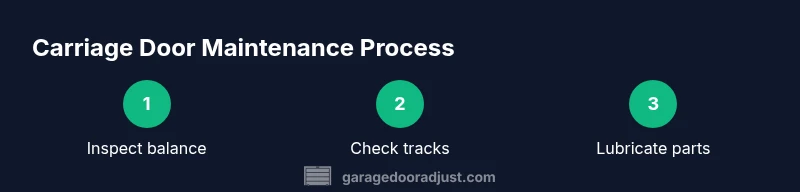
Establish a simple maintenance calendar that fits your schedule. Perform a visual inspection monthly, lubricate moving parts every few months, and schedule a professional inspection annually to verify spring tension, track alignment, and safety features. Keep a basic log noting dates, observed issues, and corrective actions. A consistent routine reduces the likelihood of sudden failures and extends the life of your carriage garage door.
Quick-start troubleshooting checklist
Use this rapid reference when you’re short on time: check for loose bolts, ensure tracks are clean and straight, verify the door remains balanced, test safety sensors, and confirm the opener is functioning correctly. If you still encounter issues after these checks, consult the installation manual or contact a professional for a detailed inspection.
Tools & Materials
- Safety goggles(Protect eyes from debris and spring tension)
- Work gloves(Protect hands; improve grip)
- Stepladder(Stable platform for reach and access)
- Socket wrench set(Bolts on hinges, brackets, and hardware)
- Screwdriver set (Phillips & flat-head)(Screws on hinges, brackets, and operator hardware)
- Lubricant (silicone-based for metal)(Apply to tracks, rollers, hinges; avoid excess)
- Rags/paper towels(Clean surfaces before lubrication)
- Marker or tape(Mark alignment points and reference locations)
- Replacement parts (optional)(Only if you plan to swap worn rollers or brackets)
Steps
Estimated time: 1 hour 30 minutes to 2 hours
- 1
Prepare workspace and safety gear
Clear the area, lay a clean mat, and put on eye protection and gloves. Set the ladder on a stable surface and ensure the door is in a safe position before you begin.
Tip: Keep the opener unplugged or power off to prevent accidental movement. - 2
Disconnect power to the opener
Unplug the garage door opener from the outlet or switch off the circuit. This prevents the door from moving unexpectedly while you inspect or work on components.
Tip: If you must operate the opener later, re-enable power only after you have confirmed it is safe to test. - 3
Inspect door balance visually
With the door closed, check that the bottom edge is level across the width and that no side sags are present. If you notice imbalance, plan to adjust later or call a pro.
Tip: Do not attempt to force a door that clearly drags or hangs unevenly. - 4
Check tracks, rollers, and hinges
Look for dents, debris, or misalignment. Ensure rollers rotate freely and that hinge screws are snug without over-tightening.
Tip: Wipe tracks clean before lubrication to reduce grit buildup. - 5
Lubricate moving parts
Apply a light silicone-based lubricant to the rollers, hinges, and contact points on the tracks. Wipe away excess to prevent dust accumulation.
Tip: Avoid over-lubricating; excess can attract dirt and impede movement. - 6
Test safety features and sensors
Operate the opener and observe that the door reverses on contact with an object. Clean the sensor lenses if the beam is misaligned.
Tip: If sensing is inconsistent, re-check the alignment and clean sensor surfaces. - 7
Tighten mounting bolts and brackets
Check all mounting hardware for tightness and re-align tracks if necessary. Ensure mounting points are secure but avoid overtightening.
Tip: Use a torque-friendly approach; overly tight bolts can strip threads. - 8
Document findings and plan next steps
Record what you observed, what actions you took, and whether a professional service is needed for springs or major repairs.
Tip: Keep notes for future maintenance and warranty validation.
Got Questions?
What defines a carriage garage door?
A carriage garage door emulates traditional carriage-house styling with raised panels, decorative hinges, and modern hardware. It combines classic aesthetics with today’s safety and operation standards.
A carriage garage door looks like an old carriage house but uses modern hardware for safety and smooth operation.
Can I adjust spring tension myself?
Spring tension adjustments are hazardous and should be performed only by a trained technician. Incorrect handling can cause serious injury or door failure.
Spring tension is dangerous; don’t try to adjust it yourself. Call a professional for any spring work.
How often should tracks and rollers be lubricated?
Lubricate tracks and rollers every few months or when you notice stiffness or noise. Avoid over-lubrication which can attract dirt and hamper movement.
Lubricate every few months if you hear stiffness or noise, but don’t overdo it.
What safety features should I test regularly?
Test auto-reverse functionality and the photoelectric sensors. Clean lenses and ensure the emergency release works properly.
Test safety sensors and reversal to ensure the door stops safely when needed.
When should I call a professional?
If you notice persistent misalignment, frayed cables, unusual noises, or if springs are involved, stop and contact a technician.
Call a professional if there are persistent issues or any signs of spring or cable trouble.
What maintenance schedule is recommended?
Perform a monthly visual check, lubricate moving parts every few months, and schedule a yearly professional inspection to verify safety and operation.
Keep to a regular checkup and maintenance routine, including annual professional inspection.
Watch Video
Quick Summary
- Inspect balance and safety features monthly
- Keep tracks clean and tracks aligned for smooth operation
- Lubricate moving parts and inspect hardware regularly
- Call a professional for spring-related work or major repairs