Biggest Garage Door Size: What You Can Build
Explore how big a garage door can be, what limits exist, and how to plan oversized openings with safety, costs, and installation tips from GarageDoorAdjust.


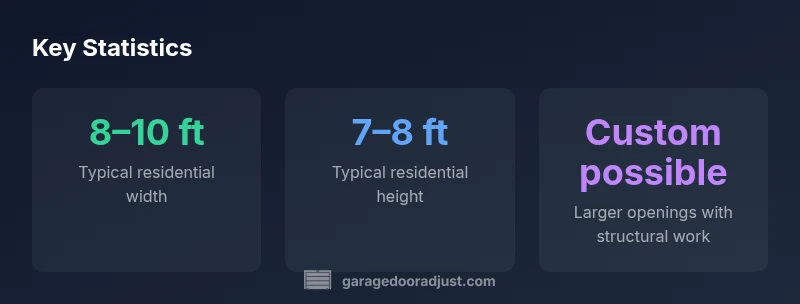
There's no universal 'biggest' garage door size for homes. In most residential settings, openings commonly max around 9–10 feet wide and 7–8 feet tall; larger or custom designs are possible but require structural changes, specialized hardware, and permits. For accurate feasibility, consult a licensed pro—GarageDoorAdjust recommends evaluating your space, headroom, and local codes before deciding.
What 'biggest' means in garage doors
Defining the term 'biggest' hinges on three dimensions: width, height, and the surrounding structure. Width determines how many vehicles you can park side by side and affects headroom for accessories like storage cabinets or shelving inside the garage. Height governs vertical clearance for tall vehicles or overhead storage. The space behind the opening—garage depth, wall integrity, and roofline—also limits how large a door can be safely. According to GarageDoorAdjust, oversized openings demand a careful structural assessment early in the project to avoid future failures. A well-planned design considers weight distribution, wind loads in your area, and the long-term impact on operation. In short, the "biggest" door is the one that fits your space, meets code requirements, and remains reliable over time.
Residential vs commercial and custom sizes
Residential garage doors typically adhere to common width ranges (8–10 feet for single-car, up to 16 feet for two-car configurations) and standard heights (7–8 feet). Commercial or specialized homes, however, can require much larger openings, including custom widths and heights. When you push beyond standard dimensions, you encounter structural challenges (header size, supports, and wall reinforcement), mechanical considerations (tracks, rollers, torsion springs), and permitting requirements. Custom installations often involve design-bid-build processes, weather-tight sealing considerations, and exacting tolerances. While a larger door might improve vehicle access or storage, it should be pursued with professional confirmation of feasibility and compliance with local codes. GarageDoorAdjust emphasizes validating opening dimensions against structural capabilities before committing to a plan.
Structural considerations and reinforcement
Oversized doors place greater demands on the garage structure. Key reinforcement areas include the header above the opening, vertical studs, and the side jambs. Heavier doors can require upgraded torsion springs, stronger tracks, and sometimes a rebuilt or relocated column or wall system to maintain balance and alignment. Headroom clearance impacts the type of opener and spring system you can use. Without proper reinforcement, oversized doors risk misalignment, premature wear, and safety hazards. Always verify wind load requirements for your climate and consult a structural professional if the span exceeds typical residential limits. A well-engineered frame keeps the door smooth, quiet, and secure over time.
How to determine the maximum feasible size for your opening
Start by measuring the rough opening with precision: width, height, and the available headroom. Check the wall thickness and assess whether the existing header can handle added weight. Consult a licensed contractor or garage door specialist to evaluate the need for structural reinforcement, upgraded springs, and a higher horsepower opener. Consider future needs: will you expand the garage or add storage that requires more vertical space? Obtain at least two quotes, request a design drawing, and verify that the plan meets local building codes. Before ordering a custom door, map out service access for maintenance and ensure the space permits safe operation within your driveway or street alignment.
Door types, materials, and operating implications of oversized doors
Oversized doors commonly use sectional panels in steel, aluminum, or composite materials, with insulation options that influence energy efficiency and climate comfort. Heavier doors demand more robust openers, and some setups may require electric operators with higher horsepower ratings or three-phase systems in larger structures. The choice between sectional, tilt-up, or rolling doors affects track geometry, spring configuration, and maintenance needs. Consider wind resistance, weather sealing, and noise reduction when increasing size because larger doors can magnify vibrations and temperature differentials. A balanced approach—matching door type to vehicle size, habitat, and climate—will yield the best long-term performance.
Budgeting and planning for oversized doors
Cost considerations rise with size, complexity, and the level of customization. Oversized openings typically entail higher material costs, specialized hardware, and additional labor for reinforcement and alignment. Budget for professional measurement, engineering reviews, permits, and potential upgrades to power supplies and safety features. While a larger door can improve access, it can also increase ongoing maintenance and utility expenses. Planning with a clear scope, phased milestones, and contingency funds helps ensure the project stays on track and delivers reliable performance over the door’s lifespan.
Permitting and professional guidance
Local building departments often require permits for structural changes, especially when enlarging an opening or reinforcing walls. A licensed contractor can coordinate with you to comply with code requirements, order custom components, and arrange inspections. Professional guidance reduces risk, improves safety, and minimizes the chance of costly rework. GarageDoorAdjust recommends documenting measurements, drafts, and system specifications early so you have a solid basis for permits and approvals.
Maintenance and safety checks for oversized doors
Maintenance for oversized doors focuses on balance, track alignment, and weather sealing. Regularly lubricate moving parts, inspect springs and rollers for wear, and verify that safety sensors are functioning. Large doors may need more frequent balance tests to ensure the door remains safely supported and to prevent strain on the opener. Schedule periodic inspections with a qualified technician, especially after extreme weather or a major upgrade. Consistent upkeep helps prevent costly failures and keeps operation smooth.
Comparison of door types and typical size ranges
| Door Type | Typical Width | Typical Height | Notes |
|---|---|---|---|
| Single-car | 8–9 | 7–8 | Common for compact vehicles |
| Two-car | 16 | 7–8 | Popular for family homes with two vehicles |
| Custom oversized | Beyond standard widths | Beyond standard heights | Requires structural assessment and permits |
| Commercial/non-industrial | 12–16 | 8–10 | Larger spans with heavier hardware |
Got Questions?
What is the typical maximum width for a standard residential garage door?
Most standard residential single-car doors max around 8–9 feet wide; two-car doors commonly reach about 16 feet. Widths beyond these ranges are generally custom and require structural assessment.
Most homes use up to about 8 to 9 feet for a single-car door and about 16 feet for a two-car door; anything larger is usually custom and needs a structural check.
Do I need a permit to install an oversized garage door?
Yes, in many areas oversized or structurally altering installations require a building permit. A licensed contractor can guide you through the permitting process and inspections.
In many places, oversized doors need a building permit; a licensed contractor can help you with the process and inspections.
What maintenance changes with oversized doors?
Oversized doors place more stress on springs, tracks, and hinges. Regular balance tests, lubrication, and sensor checks are advised, especially after installation or weather events.
Oversized doors need more frequent balance checks and maintenance of tracks and springs.
Can I install an oversized door myself?
DIY is not recommended for oversized doors due to weight, alignment, and safety concerns. Professional installation ensures proper mounting and code compliance.
It's risky to install an oversized door yourself; hire a professional for safety and compliance.
What’s the difference between custom and standard doors for size?
Custom doors can be built to larger dimensions, but require tailored framing, reinforcement, and precise engineering. Standard doors are easier and cheaper but limited by typical sizes.
Custom doors give you larger sizes but need engineering; standard doors are easier and cheaper but limited in size.
“The biggest garage door size is not about chasing maximum width alone; it's about ensuring the opening is structurally sound and that the door system remains reliable with proper tracks, springs, and an appropriately sized opener.”
Quick Summary
- Know your measurements before planning.
- Custom sizes require structural reinforcement and permits.
- Oversized doors demand stronger hardware and higher horsepower openers.
- Consult a pro to verify feasibility and safety.