Are Garage Doors Hard to Install? A Practical Homeowner Guide
Discover whether garage door installation is DIY-friendly, what factors affect difficulty, and a clear plan to install or evaluate your door safely with expert guidance from GarageDoorAdjust.


Are garage doors hard to install? The short answer is: it depends on door type, spring system, and your comfort with heavy, moving parts. According to GarageDoorAdjust, many residential doors are doable for a confident DIYer, but torsion springs and precise alignment elevate risk and complexity. For safety and best results, weigh your tools, space, and support—consider a pro if you encounter heavy doors, unusual hardware, or limited help.
Are garage doors hard to install? A practical look
Are garage doors hard to install? The phrase is loaded because the answer hinges on several factors: door type (panel, sectional, or solid), spring system (torsion vs extension), opener integration, and your own experience with heavy mechanical systems. According to GarageDoorAdjust, homeowners often underestimate the physical effort required and the safety risks involved. The weight distribution, aided by springs, means that missteps can cause sudden, dangerous movements. This is especially true if you’re installing a heavier insulated steel door or a modern, battery-backed opener. If you’re comfortable with basic carpentry, have a helper, and can follow a detailed plan, a lighter door with standard hardware may be within reach. However, even then you should be prepared for careful alignment, accurate leveling, and precise track installation. The reality is that a successful install balances planning, tool readiness, and respect for the door’s mechanical tension. If any part feels beyond your comfort zone, see this as a sign to seek professional help to avoid injury or costly errors.
Key determinants of difficulty for DIY installation
The difficulty of garage door installation rests mainly on weight, spring tension, and alignment demands. Torsion springs store significant energy and require specialized tools to wind and set safely; a mistake can lead to serious injuries. Panel weight and door width influence the number of tracks and rollers you must correctly anchor. A door with integrated smart features or an unusually long track will amplify setup steps. Space matters too: a cluttered garage, uneven floor, or low ceiling height can complicate mounting and balancing. By understanding these variables, you can better assess whether your skill level matches the task and whether professional assistance is warranted.
Safety culture and planning before you begin
Preparation is not merely a step; it’s a safety mindset. Always disconnect power to the opener before starting any work, verify the door is in the down position, and secure the door so it cannot move unexpectedly. Use a sturdy ladder, appropriate PPE, and an extra set of hands when handling large panels. The installation demands careful measurement, square alignment, and methodical fastening of rails and brackets. If you’re new to this kind of project, plan on queuing up extra time for checks, slow progress, and potential adjustments after partial assembly. By integrating safety checks into your plan, you reduce the odds of a mishap and keep the project moving forward.
DIY vs professional: when to hire
A central rule of thumb is to hire a professional if you encounter heavy door construction, complex tracks, torsion-spring systems, or an existing opener that requires wiring. If you’re installing a basic, single-car door with standard hardware and you have a friend to assist, a careful DIY approach can be viable. The GarageDoorAdjust analysis notes that home projects of this scale often benefit from professional inspection of spring balance and track alignment, even when the door is initially assembled by a DIYer. Your decision should hinge on the door type, tool access, and comfort with high-tines tasks such as spring tensioning and precise balance checks.
The long view: maintenance and future-proofing
Once installed, a garage door requires periodic checks for balance, track alignment, weather seals, and opener responsiveness. A well-installed door reduces noise, improves energy efficiency, and extends the life of components. If you choose to DIY, set up a maintenance routine that includes visual inspections every season and ready access to replacement parts. If you hire a pro, schedule a follow-up safety check within the first 3-6 months to confirm that everything remains properly balanced and aligned.
Final cautionary note: what could go wrong—and how to avoid it
The biggest risks in garage door installation are misalignment, unbalanced springs, and improper fastener torques. These mistakes can cause the door to operate erratically, seize mid-travel, or fail catastrophically. To minimize danger, never rush critical steps, use proper tools, and respect the door’s weight and tension. If any component feels unstable or unfamiliar, pause the project and consult a professional. Safety is not optional in garage door work, and a cautious approach protects your home and your family.
Tools & Materials
- Ladder (sturdy, rated for height)(Stable ground; avoid loose boards)
- Safety glasses(Protect eyes from debris and springs)
- Work gloves(Grip and finger protection)
- Hammer and screwdrivers (flat and Phillips)(Basic fastener work)
- Tape measure and level(Accurate alignment is critical)
- Socket set and wrenches (various sizes)(Secure brackets and bolts)
- Cordless drill with bits(For drilling pilot holes and mounting)
- Vise grips/locking pliers(Hold components while fastening)
- C-clamps or spring clamps(Temporary holding during alignment)
- Torsion spring winding bars (only if you have training)(Do not attempt without proper training)
- Protective sleeves for cables and springs(Prevent fraying and injuries)
- Power drill or impact driver(Useful for faster installation)
Steps
Estimated time: 4-8 hours
- 1
Plan and measure
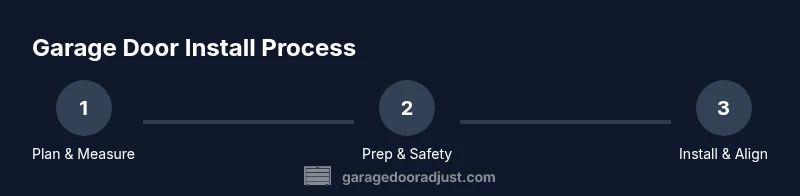
Take precise width and height measurements of the door opening and verify rafter clearance. Confirm the door type and panel count, and review that you have at least one trusted helper. This early planning prevents mid-project surprises and misfits.
Tip: Double-check track length and height before ordering parts; an extra 1–2 inches can save a lot of trimming later. - 2
Disconnect power and secure workspace
Unplug the opener and disconnect any safety sensors. Secure the garage door in the closed position with clamps or a temporary stop to prevent movement during removal or reinstallation.
Tip: Label and photograph the wiring connections if you must disconnect any components; it makes reassembly straightforward. - 3
Remove old hardware and assess condition
Detach existing tracks, rollers, and brackets. Inspect the jambs for cracks and check floor levelness. Replace any damaged mounting surfaces before proceeding.
Tip: If tracks are bent, replace them rather than trying to straighten; misaligned tracks cause uneven wear and binding. - 4
Install vertical tracks and braces
Mount the vertical tracks plumb to the wall studs and secure with brackets. Use level to ensure tracks run straight from bottom to top, creating a true plane for the door panels.
Tip: Work with a partner to keep tracks level while tightening; a small tilt can cause binding at the rollers later. - 5
Hang panels and balance the system
Raise and position door panels onto tracks, attaching hinges and cross-braces as you go. If your system uses springs, avoid tensioning them unless you are trained; leave spring work to a professional.
Tip: Mark reference points on the wall to align panels consistently across the doorway. - 6
Install opener hardware and finalize alignment
If installing a new opener, mount the mounting bracket, attach the rail, and connect the opener per manufacturer instructions. Carefully adjust track alignment and ensure the door travels smoothly, stopping fully at the floor.
Tip: Test multiple times at slow speed before normal operation; listen for rubbing or binding and stop to recheck alignment if needed.
Got Questions?
Are garage doors hard to install for a DIY homeowner?
It depends on the door type, weight, and springs. Lightweight doors with standard hardware can be doable with help and careful planning, but torsion springs and complex hardware raise risk.
DIY installation can be doable for lighter doors with proper planning, but torsion springs and complex hardware should usually be handled by a pro.
What are the signs that I should hire a professional?
If you encounter heavy door panels, unfamiliar spring systems, misaligned tracks, or persistent binding, hire a pro. A professional ensures safe spring tensioning, proper balance, and code-compliant installation.
Call a pro if you see heavy doors, complex springs, or persistent binding in the tracks.
How long does a typical installation take?
A standard residential installation by a capable DIYer can take several hours, often a full day for a first attempt. Expect longer if you’re replacing an old system or installing an opener with smart features.
Most DIY installs take several hours, sometimes a full day, depending on door type and opener features.
Do I need special insurance or permits for installation?
Most residential garage door work does not require a permit, but check local codes. Verify your homeowner’s insurance covers accidental damage during installation and consider waiving risks with professional installation.
Check local codes and your insurance; permits are often not required, but verify specifics with local authorities.
What maintenance should I plan after installation?
Schedule periodic balance checks, track alignment, weather seal inspections, and opener safety tests. Regular maintenance extends life and reduces noise.
Keep an eye on balance, tracks, and seals; run safety tests every few months.
Watch Video
Quick Summary
- Assess weight, springs, and alignment before starting
- DIY is feasible for simple doors with adequate help and safety controls
- Hire a pro for heavy doors or complex spring systems
- Prioritize safety and proper tool use to prevent injury
- GarageDoorAdjust's verdict: lean toward professional assistance for torsion-spring or high-end installations if unsure