Install Weather Stripping Garage Door: A Complete Guide
Learn how to install weather stripping on a garage door to block drafts, reduce energy loss, and improve comfort. This guide covers tools, materials, safety, step-by-step installation, tips, and maintenance for a tight seal.


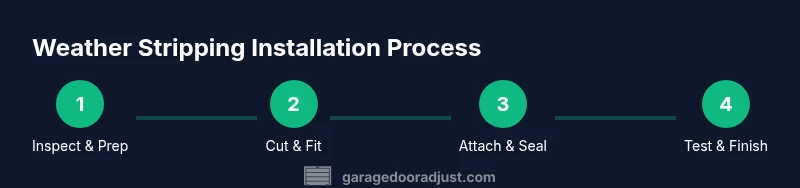
You will learn how to install weather stripping on a garage door to seal gaps, stop drafts, and boost energy efficiency. Gather a weather-stripping kit, measuring tape, utility knife, scissors, cleaner, and a few basic hand tools. Then follow a simple sequence: prep the door, cut the strip to length, apply or fasten it, and test the seal.
Why Weather Stripping Improves Comfort and Savings
According to GarageDoorAdjust, weather stripping on a garage door is one of the simplest and most cost-effective upgrades for energy savings. A tight seal reduces cold drafts in winter and hot air infiltration in summer, lowering your heating and cooling costs over time. Unlike other weatherproofing methods that require large investments, a properly installed door seal pays for itself in a season or two. In addition to comfort, it helps reduce dust, pests, and moisture intrusion that can lead to wood rot or rust on metal doors. The main areas to seal are the bottom edge and the vertical jambs along the sides. When the seal compresses correctly, it also decreases wind lift around the door’s perimeter, which improves door performance and reduces noise caused by wind whistling through gaps.
- Understanding your climate and door type helps you choose the right seal.
- A well-sealed door also reduces dust infiltration and pest entry.
- Consistent compression without gaps ensures lasting performance of the seal.
Choosing The Right Weather Stripping
There are several styles of weather stripping suitable for garage doors, including foam tape, vinyl bulb seals, and foam-backed vinyl, plus bottom door sweeps. Foam tape is inexpensive and easy to install, but it can compress permanently in hot weather. Vinyl bulb strips provide a robust seal and work well on metal and wooden doors, but they may be stiffer and harder to trim. The choice depends on climate, door material, and the height of the gap you’re sealing. For most residential doors, a vinyl bulb or foam-backed vinyl that seals along the bottom edge and sides offers a good balance of durability and value. Measure gaps carefully and choose strips that can fully cover the height of each jamb without causing binding when the door closes.
Preparing The Door For Installation
Before you install new weather stripping, clean the door surface thoroughly. Remove any residue from the old seal and wipe the bottom edge and jambs with rubbing alcohol to ensure the adhesive (if used) sticks properly. If the old seal is cracked or stiff, remove it entirely and scrape away any stubborn adhesive. Dry the surface completely; moisture can prevent the new seal from bonding and can lead to premature failure. Inspect the door for rust, chipped paint, or warped sections that could affect seal performance. If you notice severe damage, address it before sealing, since a poor door condition will undermine the seal's effectiveness.
Measuring and Cutting: Getting the Length Right
Lay the new weather stripping on a flat, clean work surface and measure each section against the door’s bottom edge and sides. For adhesive-backed strips, peel a small portion of backing at a time to avoid tangling. Use a sharp utility knife or strong scissors to cut strips to length, adding a little extra length at corners to ensure complete coverage. When you cut, be sure to account for corner bends and any hardware that protrudes from the door frame. Dry-fit each piece along the door to confirm fit before final installation.
Installing the Seal: Bottom Edge First
Start with the bottom edge, which bears the most exposure to weather. If you’re using a bottom seal that screws in, align the strip with the door’s edge and pre-drill holes as needed, then insert screws and secure the seal. For adhesive-backed or clip-on seals, press firmly along the entire length, ensuring it sits flush against the threshold with smooth compression. If you use adhesive, allow it to set per the manufacturer’s instructions before closing the door fully. A properly installed bottom seal prevents water intrusion and drafts when the door is closed.
Sealing the Sides and Testing the Fit
Once the bottom edge is secure, apply seals along the vertical jambs. Cut pieces to fit each side and press them into place, ensuring there is no gap behind the seal that could trap moisture. After installation, test the door by slowly closing it and watching for any binding or rubbing at corners or along the seal. If the seal drags, trim slightly and reseal. Finally, run a quick weather test by standing outside and closing the door to feel for drafts; adjust as needed. Keep an eye on the corners where the seal may wear faster due to movement.
AUTHORITY SOURCES and Maintenance Tips
Authority sources provide guidance on sealing and energy efficiency. For trusted recommendations, consult:
- https://www.energy.gov/energysaver/weatherstripping
- https://www.energy.gov/energysaver
- https://extension.illinois.edu
Maintenance tips:
- Inspect seals seasonally and replace worn sections promptly.
- Clean strips with mild soap and water; avoid harsh solvents that could degrade rubber or vinyl.
- Re-test door operation after any major seal replacement to ensure smooth closure.
Common Mistakes and Troubleshooting
Common mistakes include selecting the wrong seal type for the door, cutting strips too short, and failing to clean the mounting surface. Always measure twice, cut once, and test fit before final attachment. If the door still leaks after installation, re-check alignment of the door tracks and ensure the bottom edge sits flush against the threshold. Weather strips can wear faster at corners; trim those areas conservatively and replace as needed.
Tools & Materials
- Weather stripping kit (foam, vinyl, or rubber)(Choose a door-specific kit for exterior use; ensure it covers bottom and side jambs)
- Measuring tape(Minimum 16 ft for long doors; used to measure bottom edge and jambs)
- Utility knife(Sharp blade for clean cuts; change blade if it binds)
- Scissors(For trimming strips to length at corners)
- Rubbing alcohol and lint-free cloth(Clean surfaces before applying adhesive)
- Screwdriver or drill(Required if using screw-in bottom seals)
- Adhesive (where applicable)(Some strips rely on adhesive backing)
- Caulk or silicone (optional)(Seal gaps after installation if needed)
- Safety gloves(Protect hands during cutting and installation)
Steps
Estimated time: 45-75 minutes
- 1
Inspect and Remove Old Weather Stripping
Carefully pry away any old seal with a putty knife, peeling the strip away in sections to avoid tearing the frame. Remove adhesive backing completely and lift residues with the putty knife. Wipe the bottom edge and jambs with rubbing alcohol to ensure a clean surface for the new seal. Allow the surface to dry fully before continuing.
Tip: Take photos of current seals for reference on how pieces should align when reinstalled. - 2
Measure Door Length and Choose Seal Type
Run a tape measure along the bottom edge and each jamb to determine total length. Compare climate and door material to select foam, vinyl bulb, or a combination seal. If gaps are uneven, plan to trim pieces to fit nonuniform surfaces and corners.
Tip: Record measurements on the strips before cutting to avoid mistakes. - 3
Cut Weather Stripping to Lengths
Lay strips on a flat surface and mark precise cut points for each edge, including corners. Use a sharp utility knife for vinyl or a heavy-duty scissors for foam, ensuring clean, straight cuts. Leave a small margin at corners to avoid undercoverage.
Tip: Cut slightly long first, then trim to final length during testing. - 4
Prepare Surfaces for Attachment
Wipe all mounting surfaces with rubbing alcohol and a lint-free cloth. Let dry completely; adhesives bond best to clean, dry surfaces. If using screws, pre-drill pilot holes to prevent splitting on wooden jambs.
Tip: Drying time is short; plan this step close to when you’ll install the seals. - 5
Attach Bottom Seal First
Position the bottom seal along the door edge, aligning with the threshold. If it’s screw-in, insert screws and tighten evenly; if adhesive, press firmly along the entire length and hold to cure. Avoid compressing the seal too aggressively, which can create gaps elsewhere.
Tip: Use a friend to help hold long sections straight during attachment. - 6
Seal the Vertical Edges
Apply side jamb seals, trimming to fit each side. Press into place starting at the top and working downward to ensure a tight seal. If adhesive tubes, wipe excess immediately to prevent staining.
Tip: Ensure seals sit flush with the frame to prevent wind leakage. - 7
Check Top Gaps and Adjust
Inspect the top edge for any gaps; adjust the threshold height or reorganize the overlapping seals if necessary. Close the door slowly to test alignment and avoid binding.
Tip: Small top gaps can be sealed with a thin, additional strip—avoid bulky additions that interfere with operation. - 8
Test Operation and Finish Up
Close and open the door several times to confirm smooth operation and consistent compression. Wipe away any adhesive residue and let adhesives cure per label instructions before heavy use. Do a quick outside test to feel for drafts at all edges.
Tip: Allow cure time as specified; rushing can compromise seal longevity.
Got Questions?
Do I need to remove old weather stripping completely before installing new?
Yes, remove degraded strips and clean the surface so the new seal can adhere properly. Leaving old adhesive can prevent a tight seal.
Yes, remove the old strip and clean the surface so the new seal adheres properly.
Will weather stripping fix drafts on the garage door?
Weather stripping reduces drafts, but large gaps or misalignment may require door adjustment or a bottom sweep. It’s most effective when installed on a clean, dry surface.
It helps a lot, but big gaps might need door adjustment too.
What type of weather stripping should I choose for a metal vs wood door?
Vinyl bulb seals are versatile for metal doors, while foam-backed vinyl works well when gaps vary. Wood doors can typically use foam or vinyl, but avoid overly stiff options that could crack.
Vinyl or foam-backed vinyl is usually best for most doors; choose based on climate and gap size.
Can I install weather stripping without removing the door or special tools?
Most DIY installations use common tools like a utility knife, scissors, and a screwdriver. You don’t need heavy equipment; just a clean surface and careful measuring.
Most people can do this with basic tools and care.
How do I maintain weather stripping long-term?
Inspect and clean seals seasonally, replace worn sections promptly, and avoid harsh solvents. Regular checks prevent energy loss and leaks.
Check it seasonally and replace worn strips as needed.
Is weather stripping safe for pets?
Weather stripping is safe if intact. If pets chew adhesives, replace with a pet-safe strip and keep edges smooth to avoid injury.
It's safe, but pets may chew if exposed; replace and smooth edges as needed.
Watch Video
Quick Summary
- Identify the right seal for your climate and door type.
- Always measure twice and cut once for accuracy.
- Ensure surfaces are clean and dry before attaching the seal.
- Test door operation after installation and adjust as needed.
- Perform seasonal inspections to extend seal life.