Bottom Weather Stripping for Garage Doors: Install & Maintain
Learn to diagnose, select, install, and maintain the bottom weather stripping for your garage door. A practical, step-by-step guide to reduce drafts, save energy, and extend door life with safe, homeowner-friendly tips.


Install or replace bottom weather stripping on your garage door to seal drafts, reduce energy loss, and improve comfort. This guide shows how to assess wear, choose the right seal, measure, and install safely, with step-by-step actions and safety tips. By the end, you'll know when to replace, how to fit a tight seal, and how to test performance for rainy and snowy seasons.
Why bottom weather stripping matters for garage doors
A well-sealed bottom weather stripping for garage doors is more than just a draft stopper. It reduces heat loss in cold months and limits cooling loss in warm months, which can translate to lower utility bills and a more comfortable garage space. This is especially important for attached garages where interior climate interacts with the living areas. The GarageDoorAdjust team emphasizes that a properly installed bottom seal can also limit dust, pests, and moisture intrusion that can lead to rust, mold, or corrosion on the door hardware. According to GarageDoorAdjust, investing a little time in selecting and installing the right seal pays off with noticeable comfort gains and energy savings over time.
In practical terms, you’re looking at sealing gaps along the door’s bottom edge where the door meets the floor or the threshold. Even small gaps can channel cold air under the door, making a roomier garage feel drafty. The seal should compress slightly when shut but not so much that it impedes full closure. The right seal will also accommodate normal floor irregularities, while providing a continuous barrier that keeps wind-driven rain and snow from sneaking underneath. A good bottom seal is a simple, low-cost upgrade that yields high returns in energy efficiency and occupant comfort. GarageDoorAdjust’s guidance highlights how a properly fitted seal remains effective across seasons, reducing the need for frequent resealing.
Before you start, note that weather conditions and floor type matter. A seal that works well on a concrete floor might behave differently on a sealed epoxy surface or carpeted threshold. In all cases, start with clean edges, take precise measurements, and choose a seal that can form a consistent contact along the entire width of the door. This careful approach minimizes wasted material and ensures a longer-lasting seal.
Signs you need to replace bottom weather stripping
Gaps along the door edge visible from the garage interior suggest worn seals. You might feel drafts near the bottom when the door is closed, especially on windy days. Dampness or musty odors near the door seam can indicate moisture intrusion, which can lead to rust on hardware and framing rot over time. The seal itself may appear cracked, curled, compressed, or torn—these are all clear indicators that replacement is due. If you notice noise or increased wind noise when the door closes, the seal could be no longer providing a tight seal. Routine seasonal checks are an easy way to catch deterioration before it undermines energy efficiency. The GarageDoorAdjust team recommends inspecting the bottom seal at least twice a year, as wear can progress gradually and go unnoticed until drafts become obvious.
Styles of bottom weather stripping
Bottom seals come in several styles, and the best choice depends on door type, floor surface, and climate. Common options include vinyl T-shaped bulbs that compress at the floor, fin-style seals that glide along the threshold, foam or pile seals for affordability, and rubber or vinyl blends designed for heavy weather. T-style bulb seals provide a strong seal with simple compression and are ideal for smooth, level floors. Fin seals offer a low-friction surface that reduces wear on the door edge. Foam weatherstripping is inexpensive and easy to cut but may compress over time in high-traffic areas. When selecting a style, consider floor irregularities, door height, seal thickness, and your local climate. The GarageDoorAdjust guidance emphasizes choosing a durable material rated for your seasonal conditions to minimize maintenance.
Also consider the installation hardware: some bottom seals rely on adhesive backing, while others are installed with screws or a track-based retention system. Adhesive-backed options are quick to install but may require more surface prep to ensure a good bond. Track-based seals often provide superior stability in high-traffic garages but require precise trimming and fit.
How to choose the right material and size
Start by measuring door width and the height of the bottom edge to determine seal length. Most seals can be cut to length with a sharp utility knife or scissors, but plan for a precise fit to avoid gaps at corners. Choose a material that matches floor conditions: rubber or vinyl for concrete floors with occasional moisture, foam for dry floors, and pile or brush-type for dusty environments that require more filtration. Climate matters too; in snowy regions, a more robust seal reduces cold drafts and scraping from snow buildup. Ensure the seal can compress to form a tight seal when the door closes without dragging on the floor. If your door has an uneven threshold, you may need a wedge or ramp-style profile to maintain contact along the full width.
Finally, assess compatibility with your door type. Sectional doors with heavy springs may experience slight movement and require a flexible seal that tolerates door movement without gaps. The overall goal is a seal that remains in contact across the width of the door and survives seasonal expansion and contraction without cracking.
Preparation: measuring and cleaning the bottom edge
Begin by cleaning the bottom edge of the door and the threshold area to remove dust, oil, and debris. A clean surface improves adhesive bonding for foam or adhesive-backed seals and ensures a straight line for trimming. Use a mild degreaser, then rinse and dry thoroughly. Take precise measurements of the door width and the height of the bottom edge; subtract a small amount (e.g., 1/8 inch) for the final cut to ensure a snug fit. If your door has irregularities, mark the plan with a pencil line that follows the contour so when you trim, you preserve a straight, even edge. This careful prep prevents gaps caused by uneven ends and ensures a more durable installation.
Identifying the type of floor surface—concrete, epoxy, or vinyl—helps you decide whether to add a ramp or edge trim to maintain contact during closure. Finally, lay out your chosen seal material and confirm you have cutting tools calibrated for accurate length.
Step-by-step overview (high-level)
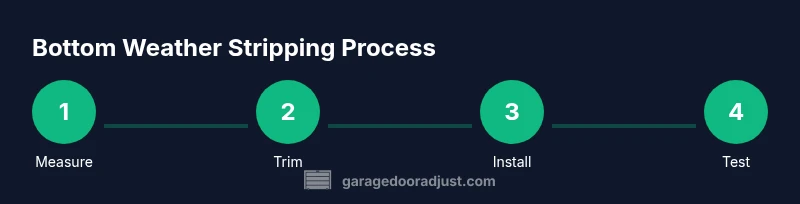
- Assess door and seal options, and decide on the best bottom seal type for your climate and floor.
- Gather tools and materials, and prepare the door for seal installation by cleaning the bottom edge.
- Trim the new seal to exact length and align it with the door edge.
- Install the seal using the chosen fastening method (adhesive, screws, or track retention) and ensure ends are flush.
- Test closure, observe contact along the full width, and adjust as needed.
- Perform a final test in typical seasonal conditions to confirm the seal is effective.
This high-level roadmap will guide your hands-on installation, while Step-by-Step below provides precise instructions.
Install the replacement weather stripping
With the door edge clean and edge line prepared, place the new seal along the bottom, starting at one corner and working toward the other. If using adhesive-backed foam or rubber, peel away backing gradually and press firmly along the entire length to avoid air pockets. For screw-in or track-retained seals, align the guide grooves and secure ends first, then work toward the center, ensuring consistent compression without gaps. Cut the seal ends at a 45-degree angle for a clean finish, and ensure the seal ends align with the door frame corners to avoid curling or lifting. Finally, seal the ends with a thin layer of weather-resistant sealant if recommended by the manufacturer to prevent moisture intrusion at joints.
Take care to avoid over-compressing the seal; too tight a fit can hinder door closure or cause premature wear. After installation, wipe away any residue and let adhesives cure if required by the product. If you notice the seal dragging on the floor, trim slightly and re-test.
Finishing touches: test and adjust for a perfect fit
Close the door slowly and inspect the contact along the entire bottom edge. Look for light leaks along the sides and corners, and re-check that the seal is level and flush with the floor. If you observe gaps at corners, you may need to trim the seal ends or add corner gaskets to seal hard-to-reach spots. Perform a weather test by running a gentle breeze or using a flashlight to inspect for light penetration under the door. A well-fitted bottom seal should show minimal light and no noticeable drafts when the door is fully closed. If you still feel drafts after initial testing, recheck adhesive bonding, seal material compatibility, and door alignment.
Maintenance and common mistakes
Routine checks are essential: inspect the seal every season for signs of wear, cracking, or compression failure. Keep the seal clean and free of debris to maintain adhesion and performance. Replace worn seals promptly to maintain energy efficiency. Common mistakes include selecting an overly soft foam that compresses too quickly, choosing a seal that’s too thick for the gap, or failing to align the seal squarely with the door edge. Incorrect trimming can create sharp ends that peel away; always cut ends at an angle for a clean edge. Finally, avoid installing heavy-duty rubber in a climate where UV exposure or temperature swings cause cracking; select a UV-stable formula for longevity. By following these maintenance practices, you’ll maximize performance and extend the life of your door hardware.
Tools & Materials
- Bottom weather stripping kit (seal type: vinyl T-style, fin, or foam)(Choose based on door type and floor; ensure length matches door width)
- Measuring tape(Measure width and bottom edge height accurately)
- Sharp utility knife or scissors(For trimming seal to length)
- Cleaner/degreaser(Prepare surface for adhesive bonding)
- Rubbing alcohol or isopropyl wipe(For final wipe-down before applying adhesive)
- Masking tape(Protects areas during adhesive cure and helps align ends)
- Caulking or sealant (if recommended by seal manufacturer)(Weatherproof seal at ends or corners)
Steps
Estimated time: 60-90 minutes
- 1
Assess seal type and measure
Measure the door width and bottom edge height. Decide on a seal style that matches your floor condition and climate. Confirm you have enough length to cover the entire width with a small overlap at each end.
Tip: Double-check measurements with a second pass to prevent costly trimming mistakes. - 2
Remove old seal and clean edge
If there is an existing seal, carefully remove it without gouging the door edge. Clean the edge and any adhesive residue with a degreaser and allow it to dry completely.
Tip: Warm adhesive with a hair dryer briefly for easier removal if needed. - 3
Trim the new seal to length
Mark the required length on the new seal and cut it with a sharp knife or scissors. Use a straightedge to keep a clean, even cut.
Tip: Trim ends at a 45-degree angle for a seamless fit into corners. - 4
Install the seal
Position the seal along the bottom edge, start at one corner, and work toward the other. If adhesive, press firmly and evenly; if screw-in, align with guides and secure ends first.
Tip: Avoid stretching the seal; let it sit relaxed against the edge for a snug fit. - 5
Seal ends and corners
Ensure ends meet the door frame with minimal gaps. Apply sealant at joints if recommended to prevent moisture intrusion.
Tip: Check that the seal ends are flush and not curled outward. - 6
Test closure and adjust
Close the door slowly and inspect for light leaks and drafts. Re-adjust if gaps remain along the sides or corners.
Tip: Test with a flashlight or a breeze test to simulate wind-driven rain.
Got Questions?
Do I need to replace side weatherstripping along with the bottom seal?
If you notice gaps along the sides or doors feel drafty, replacing both bottom and side weatherstripping improves overall seal quality. However, start with the bottom edge as it has the most direct contact with the floor and is the most common source of drafts.
If you feel drafts along the sides, consider replacing the side weatherstripping as well. Start with the bottom, then address the sides if drafts persist.
What types of bottom weather stripping are available and which should I choose?
Common options include vinyl T-style bulbs, fin seals, foam, and pile. The best choice depends on your door type, floor condition, and climate. For high-traffic garages, a durable rubber or vinyl option with good compression is typically preferred.
There are several options like vinyl bulbs, fin seals, and foam. Pick based on door type and climate; durable rubber or vinyl lasts longer.
Is this a DIY-friendly project or should I hire a pro?
Many homeowners can complete a bottom seal replacement as a DIY project with the right tools and careful measurement. If your door shows imbalance, unusual spring noise, or there is structural damage, consult a professional.
Yes, it’s usually DIY-friendly if you follow the steps and stay safe. If there are door balance concerns, call a pro.
How long should bottom weather stripping last before replacement?
Lifespan varies by material and climate, but inspect seals annually and replace when wear, cracking, or compression is evident. Regular checks help maintain energy efficiency.
Inspect annually and replace when you see wear. Regular checks keep energy savings steady.
Are there safety concerns I should watch for during installation?
Avoid working near springs and the door’s moving parts. Disconnect any powered openers during work and keep hands clear of the door track. If you notice any unusual door movement, stop and seek professional help.
Don’t mess with springs. Disconnect the opener and keep hands clear. If the door moves oddly, get a pro.
Watch Video
Quick Summary
- Inspect seal wear twice a year for best results
- Choose the right material for your climate and floor type
- Accurate measurement prevents gaps and returns on investment
- Proper trimming and flush installation yield a tighter seal
- Test under real conditions to confirm performance