Manual Garage Door vs Automatic: A Thorough Comparison
An analytical guide comparing manual garage doors with automatic openers, covering installation, maintenance, safety, costs, and daily usability to help homeowners choose wisely.


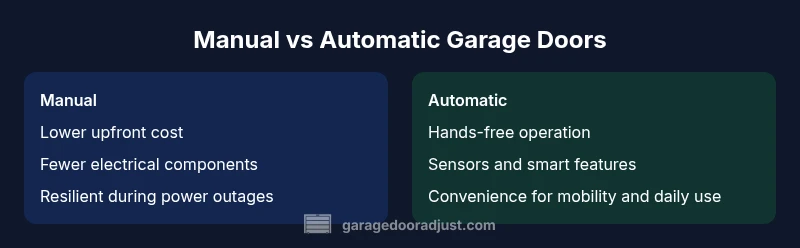
Manual garage door vs automatic: the choice hinges on convenience, cost, and reliability. Manual doors are simple, cheaper upfront, and resilient during power outages; automatic openers offer hands-free operation, smarter controls, and faster access but require ongoing maintenance and electrical considerations. This comparison highlights where each option shines and where trade-offs appear.
The Core Tradeoffs Between Manual Garage Door vs Automatic Systems
Choosing between a manual garage door and an automatic system is not a single-number decision. It is a balance between upfront affordability, daily convenience, long-term maintenance, and resilience to outages. Homeowners should frame the choice around five core criteria: upfront cost, ongoing operating costs, safety and accessibility, maintenance burden, and reliability under varying conditions. According to GarageDoorAdjust, many homeowners underestimate how the convenience of automation can improve daily routines while overlooking the potential for additional service needs and component failures. A thoughtful comparison reveals that manual doors shine when the budget is tight and there is little need for frequent or rapid access, whereas automatic systems excel in households that value convenience, mobility assistance, and controlled access. This article expands on each criterion with practical examples, checklists, and decision rules you can apply today.
How a Manual Garage Door Operates
Manual doors rely on the simple physics of counterbalance springs, tracks, rollers, and a door panel that moves along a guided path. When you pull the door, your effort counteracts the weight, and the springs do the heavy lifting. Advantages of this setup include minimal electrical dependence, fewer moving parts, and typically lower upfront costs. Drawbacks are clear: the door can be heavy, requires physical effort, and may be harder to operate from a standing position or in poor weather. Emergency release levers exist precisely for power outages or mechanical jams, ensuring you can still access the garage without a powered opener. Maintenance focuses on lubrication, hinge and roller wear, and track alignment. For some households, that simple design is perfectly adequate and highly reliable over time.
How an Automatic Garage Door Opener Works
Automatic openers use a motor, a rail, and a chain or belt drive to lift and lower the door, controlled by remotes, wall switches, or smart devices. Sensors detect obstacles to prevent injury, and a reversing mechanism protects people and objects. Benefits include hands-free operation, consistent lifting effort, and convenient integration with home automation. Maintenance shifts toward the opener components: belt or chain tension, limit switches, track alignment, and sensor calibration. Power backup options can improve resilience, but they add another layer of complexity. When evaluating automatic systems, consider compatibility with existing doors, the door’s weight class, and the available headroom and garage depth, as these factors strongly influence performance and longevity.
Reliability and Failure Modes Across Both Systems
Both setups have failure modes, but they differ in nature. Manual doors can fail through binding, spring wear, or worn tracks, which reduce ease of operation and raise safety risks if the door weighs more than expected. Automatic openers introduce hardware dependencies—motor failures, worn gears, misaligned sensors, and communication issues with remotes or apps. Regular inspections help catch wear early, and preventative maintenance can mitigate common problems. The key takeaway is that each system trades simple resilience for convenience, and proactive maintenance largely offsets most vulnerabilities. In practical terms, a homeowner who prioritizes reliability may accept a bit more effort with a manual door, while someone who values daily ease will tolerate periodic servicing of an automatic opener.
Safety Standards and Compliance to Watch For
Garage doors must meet safety standards designed to prevent injuries. Key elements include auto-reverse functionality, properly functioning sensors, and secure locking mechanisms. Whether manual or automatic, ensure tracks are free of obstructions, springs are within design tolerance, and hardware is secured. Modern codes emphasize testing the auto-reverse mechanism and sensor alignment at installation and periodically thereafter. For families with children or pets, these safety features are not optional extras but essential protections. Regulatory bodies and safety organizations provide guidelines and checklists that homeowners can use during DIY projects or when coordinating with technicians. Keeping safety front and center reduces the likelihood of injury and equipment damage over time.
Installation Space, Fit, and Hardware Considerations
Door size, track layout, and headroom determine whether a particular door can be operated safely as manual or with an opener. Manual doors generally require less clearance and fewer components, simplifying installation. Automatic systems demand a secure mounting point for the rail and a stable electrical supply, along with space for the opener’s motor and gearing. Consider ceiling height, door weight, and the door’s backstory—older doors may require reinforcement before adding an opener. Careful measurement and compatibility checks with the door’s springs and hardware prevent mismatches that lead to excessive wear or failure. A well-matched system, installed by a qualified technician, delivers the longest lifespan and most predictable performance.
Maintenance Burdens and Typical Lifespan
Maintenance expectations differ by system. Manual doors emphasize periodic lubrication, hinge and roller replacement, and track alignment to sustain smooth operation and safety. Automatic openers shift maintenance toward motor wear, drive components, sensor calibration, and occasional belt or chain replacement. The door itself often governs lifespan; the springs, cables, and track hardware carry the heavier wear load. Understanding your environment—vibration, temperature swings, moisture, and usage frequency—helps predict maintenance needs and schedule timely interventions. A proactive maintenance rhythm reduces the chance of sudden failures and keeps both manual and automatic doors performing reliably for years. Garage Door Adjust suggests creating a simple maintenance calendar and documenting service visits for future reference.
Cost Thinking: Upfront, Long-Term, and Hidden Expenses
Cost considerations extend beyond the sticker price. Manual doors typically have lower upfront costs and fewer components that can fail, but may incur higher labor costs during installation in some cases due to weight handling. Automatic openers involve higher initial investment, plus ongoing costs for energy usage, occasional part replacements, and potential service visits tied to motor or sensor components. Over time, energy efficiency, frequency of use, and maintenance habits influence total cost of ownership more than the initial price alone. Homeowners should weigh the expected daily convenience against the probability of component wear, service cycles, and backup solutions for outages. A disciplined approach helps prevent sticker shock and aligns choices with long-term household goals.
Noise, Vibration, and User Experience
Noise and vibration influence daily life but differ in origin. Manual doors may generate creaks or grinding if hardware becomes stiff, but they lack motor noise since no power is required. Automatic openers introduce motor hum and gear whine, which varies by drive type and installation quality. Vibration depends on track alignment and door balance; well-balanced doors with properly lubricated components minimize disruptive vibration. User experience also includes convenience in opening a garage door during inclement weather or with hands full. For households prioritizing quiet operation, a well-tuned automatic opener with a soft-start feature can be a meaningful improvement, provided that regular checks mitigate misalignment and sensor issues.
Security, Access Control, and Modern Features
Automatic systems enhance security through rolling codes, remote access, keypad entry, and the ability to monitor usage via apps. They also offer manual override options for safety and reliability. Manual doors are simpler and potentially less vulnerable to electronic failures, but they require disciplined security practices, such as robust locks, solid door panels, and careful storage of manual release mechanisms. When evaluating options, consider the value of smart home integration, remote control, and incident alerts against the risk of cyber or mechanical failures. A thoughtfully configured system balances convenience with strong security awareness and reliable mechanical performance.
Decision Guide: Matching Your Home, Budget, and Routines
The final decision should align with your daily routines, climate, and power reliability. If you frequently access the garage, live with mobility challenges, or value hands-free operation, an automatic opener is often a better fit—especially when paired with a backup power solution. If budget is tight, you rarely use the space, or you want maximum resilience to outages, a manual door delivers straightforward reliability with fewer points of failure. Use a simple checklist: assess power availability, test door balance, estimate installation complexity, and compare long-term maintenance expectations. By mapping these factors to your home and lifestyle, you can choose with confidence rather than guesswork.
Authority Sources and Practical Takeaways
Authority sources provide a grounded framework for your decision. Key references include CPSC safety guidelines on garage door auto-reverse protection and safe operation, general safety and maintenance best practices from trusted industry sources, and energy-use considerations for home equipment. While exact models and prices vary, the underlying principles remain consistent: prioritize safety, maintain balance and alignment, and implement a plan that fits your daily life and budget. Practical takeaway: document every inspection, test the auto-reverse regularly, and choose the option that best supports your routines without compromising safety. GarageDoorAdjust’s overall guidance emphasizes a balanced, data-informed approach that weighs both upfront costs and ongoing maintenance needs.
Comparison
| Feature | Manual Garage Door | Automatic Garage Door |
|---|---|---|
| Operation Method | Manual physical lift and balance | Motorized lift with remote/inputs |
| Upfront Cost | Lower upfront | Higher upfront |
| Maintenance Frequency | Simple, periodic lubrication | Sensor checks, drive maintenance, occasional part replacement |
| Power Outage Performance | Operates without power | Requires power; battery backups possible |
| Safety Features | Basic safety in hardware | Auto-reverse, sensors, and locking options |
| Smart Features | None or basic accessories | Full smart-home integration |
| Noise Level | Lower motorless noise | Motor and drive noise may be present |
| Reliability Over Time | Fewer moving parts, predictable wear | More components, potential electronic failures |
| Best For | Budget-conscious homes, those with reliable power | Frequent use, accessibility needs, mobility concerns |
Upsides
- Offers flexible choices for budget and usability
- Manual options are straightforward with fewer electrical dependencies
- Lower long-term maintenance exposure for some manual systems
- Clear, simple installation without smart features can be faster in some cases
- Provides resilience during power outages for manual doors
Disadvantages
- Noisy or heavy operation with high physical effort for some manual doors
- Automatic options require ongoing maintenance and potential part replacements
- Long-term costs can rise with frequent use and sensor failures
- Electrical components introduce failure modes and potential compatibility issues
- Smart features add complexity and require periodic updates
Automatic doors win for daily convenience in most homes; manual doors excel when budget, power reliability, and minimal maintenance are priorities.
Choose automatic if you value hands-free operation and smart integration, provided you’re prepared for periodic maintenance. Opt for manual if upfront cost and outage resilience are most important and you’re comfortable with manual operation.
Got Questions?
Which is cheaper upfront, manual or automatic?
Manual doors typically have a lower upfront price due to fewer components and no motor. Automatic openers require a higher initial investment for the motor, tracking, and safety sensors. Your long-term costs depend more on maintenance and use than the initial price.
Manual doors usually cost less at purchase, but automatic openers offer long-term convenience depending on usage and maintenance.
Will a manual door still work during a power outage?
Yes. In most cases, a manual door can be operated without electrical power, either by the user directly lifting the door or by using a manual release. Automatic openers may provide battery backup, but reliability during outages depends on the backup system and installation.
Manual doors work during outages; automatic openers depend on backups.
Are automatic openers safer than manual doors?
Automatic openers include safety features such as auto-reverse sensors that detect obstructions and prevent the door from closing. Manual doors rely on careful operation and hardware maintenance to stay safe. Both require regular checks to maintain safety.
Automatic openers add safety features, but you must maintain them.
Can I convert a manual door to automatic?
In many cases you can convert a manual door to automatic with a compatible opener and reinforcement if needed. A professional assessment is recommended to ensure door balance and track alignment meet safety standards.
Yes, many doors can be upgraded, but get a pro to check balance and reinforcement.
What maintenance does a garage door need?
Maintenance typically includes lubrication, tension checks, spring and track inspection, and sensor calibration for automatons. Regular inspections help catch wear early and prolong door life.
Regular lubrication and balance checks keep doors running smoothly.
Do automatic doors affect home insurance or require permits?
Impact on insurance varies by policy and region. In some cases, professional installation and accessory features may require permits. Check local regulations and verify with your insurer and installer.
Check local rules and your insurer; permits may apply in some areas.
Quick Summary
- Assess daily use and power reliability before deciding
- Manual doors favor simplicity and cost; automatics favor convenience
- Factor ongoing maintenance into total cost of ownership
- Ensure safety features are tested and maintained regularly
- Consider future needs like mobility or smart-home integration when choosing