Manual vs Electric Garage Door: In-Depth Comparison
An objective, in-depth comparison of manual versus electric garage doors, covering operation, safety, maintenance, costs, and installation to help homeowners choose the right system.


Overview: manual vs electric garage door
Choosing between a manual vs electric garage door starts with understanding how each system works and what daily life looks like. The term manual vs electric garage door captures the core difference: human-powered operation versus motor-assisted opening and closing. For homeowners, the decision influences reliability, maintenance, and long-term cost. According to GarageDoorAdjust, the majority of homes benefit from some level of automation, especially in high-traffic garages. In this block we define both options and set the stage for deeper comparisons that follow, including safety, energy use, and installation considerations.
This article uses the keyword manual vs electric garage door to anchor the discussion and ensure homeowners understand practical implications alongside theoretical trade-offs.
How a manual door works
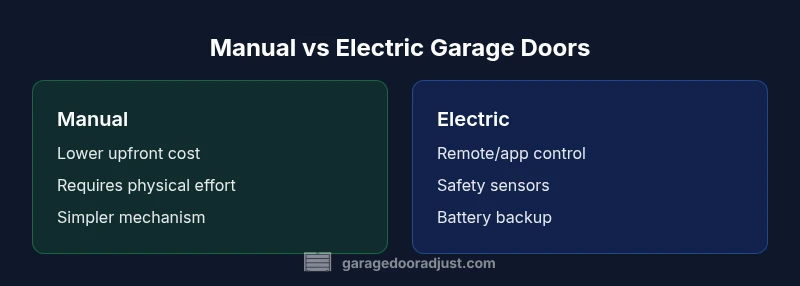
A manual garage door relies on springs, tracks, and counterweights to balance weight. Typical setups use torsion or extension springs connected to a door panel that glides along vertical tracks. The door is lifted by hand, and a handle or lever provides leverage. Because there are fewer moving electrical parts, a manual door generally has lower ongoing energy costs and simpler maintenance, but it also depends on physical effort and the strength of the springs over time. Regular inspection of springs, cables, and rollers is essential to ensure safe operation and avoid sudden failure.
Understanding the mechanics helps homeowners anticipate maintenance intervals and potential upgrades when choosing between manual and electric configurations.
How an electric door works
An electric garage door uses a motorized opener connected to a drive system—chain, belt, or screw. When you press a remote, keypad, or smartphone app, the opener engages, lifting and lowering the door along the same tracks. Electric systems include safety sensors that reverse the door if an obstruction is detected, and most models offer battery backup for power outages. The trade-off is higher upfront cost and more components that can require maintenance, but the convenience and accessibility can be worth it for many homeowners. Understanding the drive types helps you choose reliability and noise profiles that fit your garage.
This block emphasizes the practical differences in operation between manual vs electric garage door setups.
Convenience and daily use
For many households, convenience is the deciding factor. An electric garage door opens with a touch of a button or a voice prompt, can be integrated with smart home routines, and offers keyless entry and remote control. This reduces bending and heavy lifting, which is especially beneficial for seniors or family members carrying groceries or tools. However, convenience comes with the responsibility of keeping the opener maintained, replacing worn belts or chains, and ensuring the safety features remain functional to protect children and pets.
In the context of the keyword manual vs electric garage door, automation often translates to significant daily time savings and less physical strain over the door’s lifetime.
Safety features and security considerations
Electric doors bring a suite of safety features that manual systems typically lack, such as photoelectric sensors, auto-reverse when an obstacle is detected, and secure mounting that reduces accidental injury. Manual doors can be perfectly safe when properly balanced and lubricated, but they rely on user vigilance for safety. Security considerations include rolling-code remotes and keypad access for electric doors, which can help prevent unauthorized entry. Regardless of type, never bypass safety mechanisms; regular testing ensures sensors, springs, and tracks perform as intended.
This is a critical area to consider when evaluating the differences between manual vs electric garage door configurations.
Maintenance and lifespan
Manual garage doors almost always have fewer moving parts than electric systems, translating to lower maintenance in many cases. That said, balance should be checked, cables inspected, and rollers lubricated to reduce wear. Electric doors require more regular maintenance: lubricating moving components, inspecting the opener's drive system, and testing safety sensors. Over time, springs wear, tracks can become misaligned, and rollers wear. A well-maintained system can last many years, but neglect accelerates wear. The choice between manual and electric influence maintenance scheduling and part replacement strategies.
Regular maintenance routines help prolong life for both options, and homeowners should factor in maintenance labor or service costs when weighing the total cost of ownership.
Costs, maintenance, and energy usage
Upfront costs for manual doors are typically lower because there is no motor or opener to install. Electric doors incur higher upfront costs due to the opener, installation work, and possible reinforcement needs. Long-term energy use for an electric opener is usually modest and easily absorbed into household budgets. Spare parts for both types are generally available, but labor costs can vary. GarageDoorAdjust analysis shows that homeowners who use their garage door multiple times daily often experience greater perceived value from an electric system when factoring in reduced physical effort and time saved, versus the ongoing maintenance burden.
In the manual vs electric garage door debate, energy usage is typically a secondary consideration, but the decision can hinge on how often the door is opened and the local electricity cost.
Installation considerations and space needs
Installing an electric garage door opener requires a power source, wiring, and consideration of ceiling space for the opener rail. Manual doors require solid tracks and balanced springs, but there is no electrical requirement. In tight garages or spaces with limited headroom, a wall-mounted opener or a low-profile model may offer better fit. Professional installation is often recommended for electric openers to ensure proper alignment, safety sensor placement, and remote control programming. If DIY, follow manufacturer instructions carefully and ensure electrical codes are adhered to.
This block also highlights how the chosen approach, whether manual vs electric garage door, affects mounting options and garage aesthetics, especially in smaller spaces.
Common myths and misconceptions
A frequent myth is that manual doors are inherently safer than electric ones because there is no motor. In reality, modern electric doors include safety sensors and braking mechanisms that can improve safety when used correctly. Another misconception is that manual doors require less maintenance because they are simpler; practical maintenance—such as ensuring springs stay balanced and tracks are clean—applies to both types. Finally, some homeowners assume electric doors are louder; modern belt-drive openers can be very quiet, and choosing the right model matters more than the ground truth of manual vs electric garage door type.
Scenarios and lifestyle fit
If a garage serves a single active household with frequent access and mobility considerations, electric doors often deliver the best balance of convenience and safety. For hobbyists who only open the door occasionally, or homes on a tight budget where every dollar matters, a reliable manual door can meet basic needs without ongoing energy costs. Families with accessibility needs will usually benefit from electric operation, while rural properties with unreliable power may face outages and require backup practices. Weigh usage patterns, climate, and power reliability when deciding between manual vs electric garage door options.
Troubleshooting quick checks
If the door won’t move, first check the control switch or remote battery. For electric doors, listen for the opener motor sound—absence of sound may indicate a power or safety sensor issue. If a manual door is heavy to lift, inspect springs and tracks for balance issues rather than applying extra force. Regular lubrication of hinges, springs, and rollers reduces friction and wear. Never attempt to adjust torsion springs yourself; these are high-tension components requiring professional service. In all cases, ensure the safety features operate correctly and call a professional if you are unsure.
Final considerations and next steps
The decision between manual vs electric garage door ultimately comes down to how you weigh convenience, safety, and cost. Inspect your garage layout, power availability, and your tolerance for maintenance when choosing. For most homeowners, a motorized electric door offers superior daily usability, especially with kid-friendly safety features and remote access. If upfront cost, simplicity, and a power-free option are more important, a well-balanced manual door remains a solid choice. The next step is to evaluate installers, compare drive types (chain, belt, screw), and test compatibility with any existing tracks and sensors. With careful planning, your garage door solution will support efficient daily life for years to come.
mainTopicQuery e.g.