Garage Door Electric Opener: Install, Repair & Maintain
Comprehensive homeowner guide to diagnosing, installing, repairing, and maintaining a garage door electric opener. Learn safety, wiring, remote programming, and preventive care for reliable operation.


This guide helps homeowners select, install, and troubleshoot a garage door electric opener, with safety steps, remote programming, and maintenance routines. You’ll learn to diagnose common issues and perform essential repairs or upgrades, all while prioritizing safety and efficiency. The steps here are designed for DIY-friendly scenarios and informed decisions about upgrades when needed.
Understanding the Garage Door Electric Opener Landscape
The garage door electric opener connects your door to modern convenience, but there are several variables to consider before you buy or install. Drive types include belt, chain, and screw, each with its own balance of noise, speed, and load handling. Belt drives are the quietest and ideal for attached garages, while chain drives are rugged and cost-effective for busy households. Screw drives remain pocket-friendly and compact but can be louder on certain setups. When evaluating openers, start with door weight, track length, and ceiling height, then consider features like battery backup and compatibility with remote controls or smart-home ecosystems. Safety components—auto-reverse sensors, manual release, and correct wiring—are non-negotiable for everyday use. As you navigate options, prioritize a system that aligns with your door’s balance and your noise tolerance. According to GarageDoorAdjust, choosing the right garage door electric opener starts with door type, balance, and usage patterns.
In addition to drive type, pay attention to horsepower. Most residential doors perform well with 1/2 HP units, but heavy doors or long tracks might benefit from higher horsepower. A properly selected opener reduces strain on the motor and prolongs life. Also factor in back-up power for outages and compatibility with existing remotes or smart home setups. Finally, ensure the chosen opener is designed for the door you own, with correct rail length and mounting requirements. This is critical to avoid binding, misalignment, or premature wear and tear.
Choosing the Right Opener for Your Garage
Selecting the right garage door electric opener starts with understanding door size, weight, and the environmental conditions of your garage. The horsepower rating matters: most standard residential doors operate well with 1/2 HP, but larger doors or high-use environments may demand 3/4 HP or higher. Drive type affects noise and maintenance—belt drives minimize sound especially over living spaces, chains offer robust performance but generate more noise, and screw drives balance space constraints with efficiency. Ceiling height and track length influence mounting options and compatibility with existing tracks. Battery backup is a practical feature for power outages, and smart features—app control, status alerts, and remote operation—can improve convenience when paired with compatible devices. Always verify compatibility with your current door balance and track geometry. The key is pairing the opener to your door’s weight and the garage’s acoustic requirements to achieve reliable operation and long-term durability.
Safety Features, Codes, and Compliance
Safety is the cornerstone of any garage door electric opener project. Essential features include auto-reverse sensors, a manual release mechanism, and secure wiring that meets electrical codes. The automatic reversal function must reliably stop and reverse when the door encounters an obstruction, and sensors should be aligned within the manufacturer’s specified tolerance. Regularly testing the auto-reverse function and reversing force settings helps prevent injuries and property damage. If you’re replacing an old unit, ensure the new opener complies with current standards, and install the safety sensors at the correct height and distance from the floor. Handling exposed wiring or modifying the electrical supply should be performed with the power off and in accordance with local electrical codes. The GarageDoorAdjust Team emphasizes safety checks and adherence to manufacturer guidelines to minimize risk during installation.
Installation Considerations: DIY vs Hiring a Pro
Installing a garage door electric opener can be a solid DIY project for those with basic electrical and carpentry skills, but it involves heavy lifting, precise alignment, and high-tension components. If your door is heavy, taller than standard, or uses a torsion spring system, a professional installation minimizes the risk of improper balancing, track misalignment, or sensor failure. Before you begin, evaluate your ceiling height, the availability of joists for mounting, and your comfort with wiring and programming steps. A pro can ensure correct rail alignment, secure mounting, and proper wiring to minimize future problems. For straightforward installations—such as standard doors in typical garages—a careful, step-by-step approach with the right tools is often feasible. The key is to follow the manufacturer’s instructions precisely and stay within the safety guidelines.
Troubleshooting Common Issues
If your opener won’t respond to the wall control or remotes, start with basic power checks and the battery status of wireless remotes. Verify that the circuit breaker is on and there is power at the outlet. If the door won’t open or close completely, inspect the tracks and disconnects, ensuring the door is balanced and there are no obstructions. Sensor alignment problems are a common cause of failure; ensure the safety beams face each other directly with no obstructions. If the unit hums but the door doesn’t move, check the belt or chain tension and ensure the trolley is properly engaged. For intermittent operation or delayed responses, reprogram remotes and confirm the learn button sequence. Regular inspections of hardware, straps, and anchor points can prevent most issues before they become major repairs.
Maintenance and Preventive Care for Longevity
A proactive maintenance routine extends the life of a garage door electric opener. Lubricate moving components such as tracks, rollers, and hinges at intervals to reduce friction and noise, using manufacturer-approved lubricants. Keep the tracks clean and free of debris, and inspect the door balance at least twice a year—an imbalanced door can stress the opener and shorten its life. Check the safety sensors for alignment and cleanliness; misalignment can cause false reversals. Test the auto-reverse feature monthly and adjust the force settings per the owner’s manual. Periodic inspection of wiring, hardware, and mounting brackets helps catch wear before it fails. By pairing regular maintenance with mindful usage, you’ll improve reliability and preserve performance.
Smart Features and Integration Options
Modern garage door openers offer smart connectivity, remote access, and status alerts that you can integrate with home automation platforms. When evaluating smart features, ensure compatibility with your existing Wi-Fi network and devices. Some openers support direct app control, voice assistants, and remote monitoring, while others rely on separate hubs. If you’re upgrading, verify whether the new model supports remote programming, battery backup, and security features like rolling codes to prevent signal interception. Always update firmware when available and follow best practices for securing home networks. The GarageDoorAdjust Team notes that thoughtful integration of smart features can improve convenience, but never compromise safety or reliability.
Quick Diagnostic Checklist
- Confirm power and receptacle are active; verify circuit breaker is on.
- Inspect door balance by disconnecting the opener and testing manual lift; a balanced door is essential for safe operation.
- Check rail alignment and tightening of mounting screws; uneven rails cause binding and wear.
- Test safety sensors and auto-reverse; misalignment is a common failure cause.
- Reprogram remotes and test operation from multiple locations; ensure consistent performance.
- Review manufacturer instructions for torque, force, and travel limits to avoid overworking the motor.
Tools & Materials
- Safety glasses(Protect eyes from debris and sharp edges during installation)
- Work gloves(Protect hands and improve grip)
- Cordless drill/driver with bits(For mounting brackets and rail screws)
- Tape measure(Precise mounting locations and track length)
- Level(Keep rail and tracks square for smooth operation)
- Stepladder(Secure, stable height for ceiling work)
- Pliers and adjustable wrench(Wiring work and hardware adjustments)
- Voltage tester(Verify power is off before wiring sensors)
- Wire nuts and electrical tape(For sensor wiring and low-voltage connections)
- Mounting brackets and hardware(Hardware provided with the opener kit)
- Extension cord (as needed)(Temporary power if an outlet is not nearby)
Steps
Estimated time: 90-120 minutes
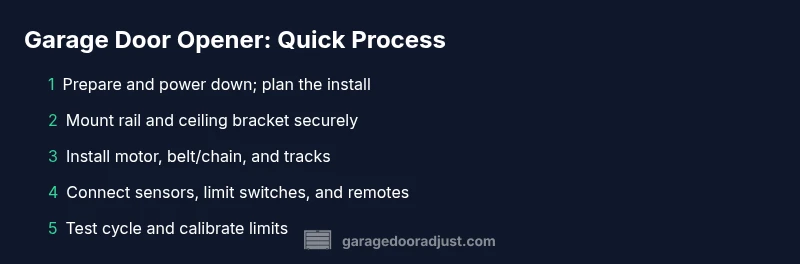
- 1
Power down and prepare
Unplug the existing opener and cut power to the circuit if safe. Clear the workspace and clamp the door to prevent movement. Review the door type and ensure you have the right opener model for your setup to avoid misalignment.
Tip: Have a second person assist during handling; doors can shift unexpectedly. - 2
Detach existing mechanism
Remove the emergency release and disconnect the lift arm from the trolley. Save hardware for reuse if appropriate. Confirm no residual tension remains in the spring area before proceeding.
Tip: Keep all fasteners organized by type and size to prevent mix-ups. - 3
Mount the header bracket and rail
Position and secure the header bracket to the ceiling joist at the correct height. Align the rail along the door opening, ensuring the end of the rail sits flush with the header. Use a level to verify straightness before tightening.
Tip: Do not overtighten; overtightening can crack mounting surfaces or misalign the rail. - 4
Install the opener motorcycle on the ceiling
Lift and hang the motor unit using the mounting hardware provided. Ensure the unit is centered and secure, supporting the weight in multiple points. Double-check that the rail is square to the door before connecting the drive mechanism.
Tip: Have a helper assist with lifting; motors can be heavy and awkward. - 5
Connect drive belt/chain and align track
Attach the belt or chain to the trolley and ensure proper tension. Check that the track is parallel to the door and the trolley moves smoothly along the rail without binding. Avoid kinks in the belt or chain during installation.
Tip: Test movement at a slow pace before powering the system. - 6
Wire safety sensors and limit switches
Connect safety sensors and wire the limit switches according to the manufacturer’s diagram. Mount sensors at the correct height and ensure an unobstructed path between beams. Power up and read error codes if they appear.
Tip: Use a voltage tester to verify live wiring and never bypass safety systems. - 7
Program remotes and test cycle
Program the remotes using the learn button and test a full cycle from both inside and outside the garage. Verify auto-reverse and ensure the door stops only on the sensor when obstructed. Recheck safety sensor alignment after initial testing.
Tip: Keep a remote in your car and another in a known location for convenience.
Got Questions?
What is the typical lifespan of a garage door opener?
With proper maintenance, a residential opener typically lasts several years. Watch for signs like slow operation, unusual noises, or failure to reverse. Regular lubrication and sensor checks help extend life.
With proper maintenance, expect several years of service. Look for slow operation, odd noises, or failure to reverse as signs you may need service.
Can I install a garage door opener myself?
Yes, for standard doors and straightforward setups. For heavy doors, high ceilings, or torsion spring systems, consider hiring a professional to ensure safety and proper alignment.
Yes, you can install it yourself if the setup is straightforward, but for heavy doors or complex installations, a professional is safer.
What horsepower rating should I choose?
Most home garages perform well with 1/2 HP, while larger or heavier doors may benefit from 3/4 HP. Match the motor to door weight and usage.
Most doors use 1/2 HP; heavier doors may need more power. Match motor to the door weight.
How do I pair or program remotes?
Use the opener's learn button and follow the remote manufacturer’s instructions. After pairing, test from multiple locations to confirm reliability.
Press the learn button on the opener, then follow your remote’s instructions. Test from inside and outside the garage.
What safety features are essential?
Auto-reverse sensors and properly calibrated force limits are essential. Regularly test the auto-reverse and keep sensors clean and aligned.
Auto-reverse sensors and proper force limits are essential. Test them monthly and keep sensors clean.
Can I integrate a smart opener with existing hardware?
Yes, but only with compatible models. Check for Wi-Fi, app support, and security features like rolling codes before upgrading.
Smart features work with compatible models. Verify Wi-Fi, app support, and security features before buying.
Watch Video
Quick Summary
- Verify opener compatibility with door weight and track.
- Prioritize safety features and sensor testing.
- Program remotes and test in multiple locations.
- Perform regular maintenance to extend life.
- Make informed DIY choices—call a pro for complex setups.