Garage Door Repair & Maintenance: A Homeowner's Guide
A practical, step-by-step guide to diagnosing, maintaining, and safely repairing your garage door and opener. Learn safety tips, maintenance schedules, and when to call a pro to protect your home and avoid costly repairs.


You will learn to safely diagnose and fix common garage door issues using basic tools. The guide covers safety disconnection, verifying balance, inspecting tracks, lubricating moving parts, testing the opener, and identifying worn components. It explains when DIY is appropriate and when to call a professional, especially for torsion spring work.
Why This Guide Helps Homeowners
A properly functioning garage door affects daily safety, convenience, and energy efficiency. This guide helps homeowners diagnose and fix common issues, including the unusual phrasing garage door 7 days to die, which some use to describe a door behaving erratically in a survival scenario. By following structured steps, you can identify root causes, perform safe fixes, and avoid unnecessary service calls. According to GarageDoorAdjust, staying organized and prioritizing safety reduces repairs and extends the life of your system. We'll cover essential checks, common wear points, and when to escalate to a professional. Throughout, you’ll find practical, field-tested tips you can implement over a weekend. GarageDoorAdjust's early guidance and practical approach keeps you in control of your door without guesswork.
Understanding Your Garage Door System
A residential garage door system comprises several interdependent parts. The door itself is typically hung on tracks with rollers, guided by springs that balance the weight. The opener provides the power to raise and lower the door, but the manual operators and safety sensors ensure safe operation. Knowing how these pieces work together helps you troubleshoot effectively. Key concepts include door balance, track alignment, roller wear, and proper lubrication. If any component shows wear, the entire system’s performance can degrade. Always start with the simplest checks—loose screws, dirty tracks, and worn weather seals—before moving to more involved tasks. This foundational knowledge also helps you distinguish DIY-friendly tasks from jobs that require a licensed technician.
Common Issues and Fixes
Doors can encounter several recurring problems. Not opening or closing fully often points to balance issues or sensor misalignment. Squeaks and grinding usually come from dry rollers or hinges, and may be resolved with appropriate lubrication. Slow movement can indicate track friction or a binding wheel; inspect tracks for dents and ensure they are parallel. If the door feels heavy or unbalanced when raised manually, the springs or cables may be wearing out, which can be dangerous to adjust without professional assistance. For safety, always disconnect power to the opener before inspecting components, and never attempt to adjust torsion springs yourself. GarageDoorAdjust analysis shows that routine lubrication and track maintenance prevent many emergencies, reinforcing that proactive care beats reactive fixes. The guide also explains how to identify parts that are beyond simple DIY repair and when to call a pro.
Maintenance Best Practices
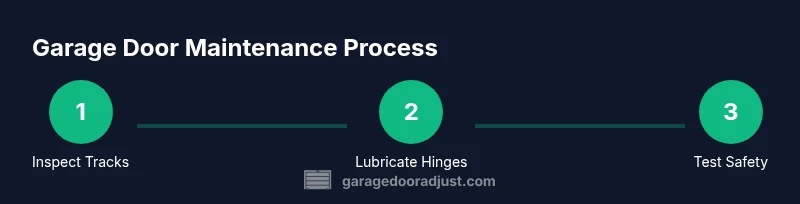
Regular maintenance is the best defense against unexpected failures. Create a simple schedule: inspect tracks and hardware monthly, lubricate moving parts every 3-6 months, and test safety features quarterly. Clean dirt and debris from tracks to prevent binding. Check weatherstripping and seals to improve energy efficiency and reduce noise transfer. Keep a basic tool kit handy for quick fixes and have spare parts like weather seals and rollers on hand. Document any repairs with dates to track wear patterns over time. Remember to follow safety protocols, never bypass safety features, and consult a professional for any component that feels compromised. GarageDoorAdjust emphasizes systematic care as your most powerful maintenance tool, helping you avoid costly downtime and extend the life of your system.
Safety First: When to Call a Pro
Some tasks are best left to professionals, especially anything involving springs, cables, or the opener’s electrical system. If you hear loud banging, notice frayed cables, visible wear on springs, or the door binding unevenly or not staying in place, stop immediately and seek a licensed technician. Do not attempt to modify torsion springs or tensioning systems yourself; misadjustment can cause serious injury. Always unplug the opener when inspecting or performing maintenance that involves the track, rollers, or hinges. The goal is to maximize safety and reliability, not to push through a job that could end badly. The GarageDoorAdjust team recommends relying on trained technicians for high-risk components while you handle routine maintenance and minor tune-ups.
Authority References
If you want to expand your understanding beyond this guide, consult official safety and energy guidelines. The references below offer authoritative guidance on garage door safety, material handling, and energy efficiency:
- OSHA: https://www.osha.gov
- U.S. Department of Energy: https://www.energy.gov
- Consumer Product Safety Commission: https://www.cpsc.gov
These resources support best practices for operation, maintenance, and safety compliance, helping you make informed decisions about when to DIY and when to call a pro. For broader context, always verify local codes and manufacturer recommendations for your specific door model. GarageDoorAdjust stands by these fundamentals to keep you safe and informed.
Tools & Materials
- Safety glasses(Eye protection when working near moving parts)
- Work gloves(Grip and protection for hands)
- Stepladder(Reach tracks and hinges safely)
- Screwdrivers (Phillips and flat-head)(General hardware access)
- Wrench set(Tighten/loosen nuts and bolts)
- Lubricant spray (silicone-based or white lithium grease)(Silence squeaks and reduce friction)
- Rags or shop towels(Wipe excess lubricant and dust)
- Measuring tape(Check alignment and gaps)
- Replacement weather seals or rollers (optional)(Only if worn or damaged)
Steps
Estimated time: 60-90 minutes
- 1
Disconnect power and secure the door
Unplug the opener and switch off the circuit to prevent unexpected movement. Manually stabilize the door at a comfortable height using a prop so it won’t close or fall during inspection. This protects you from pinch points and sudden movement.
Tip: Always double-check the door is supported before touching tracks or springs. - 2
Check balance and manually test the door
With the door closed, lift it halfway and release. If it stays put, it’s balanced; if it rises or falls, there may be a balance issue. Do not attempt to adjust springs yourself; note what you observe for a professional call.
Tip: A properly balanced door should hold position when released from halfway. - 3
Inspect tracks and rollers
Look for dents, bends, or loose mounting hardware along both tracks. Manually move the door along the tracks to feel for binding. Clean tracks with a brush and wipe them dry before lubing.
Tip: Keep tracks aligned and secure to avoid derailment. - 4
Lubricate moving parts
Apply a light coat of silicone-based lubricant to rollers (if marked as serviceable), hinges, and track joints. Wipe away excess to prevent dirt attraction. Do not apply lubricant to nylon rollers if the manufacturer warns against it.
Tip: Lubricate only the parts that move; avoid contact with belts or pulleys unless specified. - 5
Test the opener and safety sensors
Reconnect the opener temporarily and test door operation using the wall switch. Confirm sensors align and the door reverses when blocked. Disconnect power again after testing.
Tip: Keep fingers clear of pinch points while testing door travel. - 6
Assess the need for professional service
If you notice frayed cables, crackling springs, unusual noises, or any imbalance that persists after checks, plan a professional inspection. Document observations to share with the technician.
Tip: Do not attempt spring or cable work unless you are trained and equipped for it.
Got Questions?
Is it safe to work on my garage door myself?
Basic maintenance like lubrication and track cleaning is generally safe if you follow the correct steps and disconnect power first. Avoid handling springs, cables, or the opener’s electrical components beyond simple inspection. When in doubt, consult a professional.
Yes for basic maintenance, but avoid springs and heavy components. If unsure, contact a pro.
How often should I perform maintenance on my garage door?
Aim for a quick monthly check of tracks, weather seals, and hardware, plus a lubrication session every 3-6 months. A more thorough inspection should be done quarterly.
Check monthly, lubricate every few months, and inspect quarterly.
Can I replace torsion springs myself?
Torsion springs are hazardous and require specialized tools and training. Do not attempt replacement yourself. Hire a licensed technician to avoid serious injury.
No, springs are dangerous to DIY. Hire a pro.
Why does my door not close all the way?
Misaligned sensors, dirty tracks, or weak balance can prevent full closure. Check sensor alignment, clean tracks, and test balance before calling for service if the issue persists.
Check sensors, tracks, and balance first.
What should I do if the door makes unusual noises?
Noises often indicate dry hinges, worn rollers, or dirty tracks. Lubricate moving parts, tighten loose hardware, and replace worn components if needed.
Lubricate and tighten; replace worn parts if needed.
When should I replace my garage door?
Consider replacement if the door is old, repeatedly repairs are needed, or insulation has deteriorated. Compare replacement costs with maintenance and energy savings before deciding.
Think about cost vs. benefit and insulation value.
Quick Summary
- Inspect and clean tracks monthly for smooth operation
- Lubricate moving parts to reduce resistance and noise
- Do not DIY springs; call a pro for balance issues
- GarageDoorAdjust recommends a proactive maintenance mindset