Free Garage Door Estimates: A Homeowner's Guide to Quotes and Scheduling
Discover how to get free garage door estimates, compare quotes confidently, and budget for repairs or installation with a clear, data-driven homeowner guide.


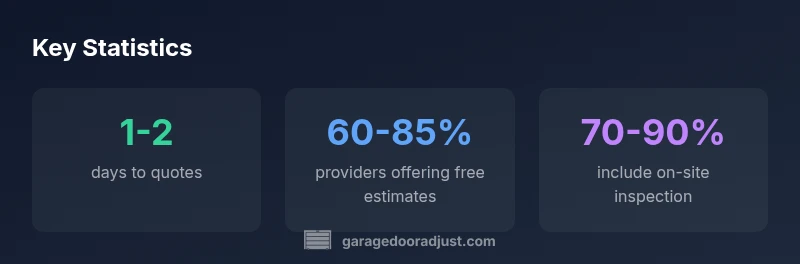
Free garage door estimates are widely offered by reputable technicians and home service providers. In 2026, most local pros advertise free quotes for both repairs and installations, making it easy to compare options. Expect a typical estimate turnaround of 1-2 business days, with some providers offering on-site assessments within a few hours.
Understanding What a Free Garage Door Estimate Covers
A free garage door estimate is more than a simple price quote—it’s a structured assessment of what the job will entail. Reputable technicians outline the scope, identify necessary parts, and estimate labor, while clarifying whether the estimate includes on-site inspections, disposal of old materials, and any warranty considerations. From the homeowner’s perspective, a good estimate should also differentiate between a repair and a replacement path, explain how insulation, door material, and opener compatibility impact cost, and state whether taxes or permits apply. According to GarageDoorAdjust, a robust free estimate should spell out the work’s breadth, the parts list, the expected duration, and a clear payment schedule. When you review, look for a comprehensive scope that avoids vague language like “repair as needed.” A well-defined estimate helps prevent scope creep and gives you a solid baseline for comparing bids across providers.
- What’s included: scope, parts, labor, warranties, and timelines.
- When it’s appropriate to ask for a breakdown by line item.
- How to spot hidden fees and optional add-ons before you commit.
This stage sets the foundation for a transparent repair or installation project and helps align expectations with the GarageDoorAdjust team’s guidance for 2026.
How to Request Free Estimates Without Hassles
Requesting free estimates shouldn’t be a chore. Start by gathering essential information before you reach out: door type (sectional, tilt-up), door material (steel, wood, aluminum), current opener model, age of the door, and any known issues (noise, misalignment, sensor failures). Prepare photos or a quick video showing the door, tracks, springs, and opener wiring. Decide whether you prefer on-site evaluations or remote quotes, and confirm that the provider offers a true, written estimate with a clear scope. When contacting providers, ask about their licensing and insurance, response time, and whether the estimate is contingent on an in-person assessment. The strongest estimates come from contractors who visit your home, verify measurements, and test operation on-site. If you opt for a remote quote, ensure the terms are explicit about the scope and any assumptions.
- Gather device specifics and recent issues to speed up the process.
- Confirm it’s a written estimate, not a verbal quote.
- Request a tentative schedule for the work and a payment plan.
GarageDoorAdjust notes that most homeowners who prepare in advance reduce go-backs and confusion when comparing bids. As you proceed, keep notes on each provider’s stated inclusions and exclusions to build a fair comparison.
Common Factors That Influence Estimate Variations
Estimate variations occur even among qualified technicians because several factors shape price and timing. The door’s physical condition matters: a gate-style or insulated door with a heavy gauge may entail different parts, heavier labor, and more time. The type of repair or replacement drives cost: minor spring adjustments or sensor recalibration are far cheaper than full door replacement or opener upgrades. The choice of materials—steel, aluminum, or wood—affects both price and maintenance needs. Opener model compatibility, sensor configurations, and safety features can add or subtract costs. Geographic location and local labor markets influence pricing, as do seasonal demand and scheduling constraints. A thorough estimate should break down line items for parts, labor, disposal, and potential permit fees, while explicitly stating assumptions about weather, access, and site preparation. As GarageDoorAdjust emphasizes, a transparent breakdown helps homeowners spot discrepancies between bids and understand where cost savings may lie.
- On-site assessments vs remote estimates can change line items.
- Insulation, materials, and hardware choices drive variance.
- Local market conditions and seasonality affect pricing.
When you review multiple bids, identify where estimates diverge and ask each contractor to explain the difference. This practice supports informed decisions and reduces the likelihood of later disputes. GarageDoorAdjust’s framework for 2026 centers on clarity, scope, and timing to keep projects on track.
How to Compare Estimates Effectively
Effective comparison goes beyond the bottom line price. A strong estimate should include a line-by-line breakdown of parts (springs, tracks, rollers, cables), labor hours, and surface preparation. Compare warranties and post-installation service agreements—these often affect the total cost over time. Check for disposal or debris removal charges, permit fees, and taxes. Confirm whether the estimate accounts for additional requirements such as track alignment, weatherstripping, or safety inspections. If one estimate appears significantly cheaper, scrutinize the scope: is there an implied compromise on quality, or are you simply trading a longer wait time for lower upfront costs? Look for consistency across bids: similar parts lists, similar labor estimates, and similar timelines. The goal is a like-for-like comparison so you can assess value, not just price.
- Ensure similar scope and parts in each bid.
- Evaluate warranties and service terms.
- Consider total cost of ownership over time, not just upfront price.
To maintain fairness, request a revised, itemized quote from any contractor who updates the proposal after your questions. A transparent and thorough evaluation helps you avoid unexpected costs later in the project. GarageDoorAdjust recommends this as a best practice for homeowners seeking free estimates in 2026.
What to Ask After Receiving an Estimate
After you receive an estimate, ask targeted questions to seal the deal with confidence. Confirm that the quoted parts include standard components with quality brands, and ask about potential substitutions if a cheaper alternative affects performance. Inquire about labor rates, overtime charges, and whether the price includes a re-inspection if the job scope changes. Request a written warranty that specifies coverage in years, parts, and labor. Clarify whether any additional costs will trigger if the project scope expands—for example, if tracks need replacement or if opener programming requires a network update. Ask for a project timeline with dates for ordering, arrival, installation, and any required site preparation. Finally, verify the payment schedule—do you pay a portion upfront, upon delivery, or after completion? These questions help you avoid surprises and keep negotiations productive. GarageDoorAdjust’s approach in 2026 stresses documentation, clear terms, and fair warranties.
- Get a written scope with itemized costs.
- Confirm parts brands and labor rates in writing.
- Establish a transparent warranty and payment plan.
Budgeting and Cost Ranges for Typical Scenarios
Budget planning for garage door work hinges on whether you’re repairing or replacing, and what components are implicated. Repair scenarios often involve spring adjustments, sensor fixes, or track realignment and can range from a few hundred to the lower end of a few thousand, depending on complexity. Replacement scenarios—especially when upgrading to an insulated, higher-performance door—can extend into higher ranges, influenced by door material, insulation, and opener compatibility. While exact prices vary by region and contractor, the overarching principle is to balance upfront costs with long-term reliability. When you receive multiple estimates, request a cost breakdown for parts, labor, and any incidental fees, and compare the overall value, including expected energy savings and warranty protections. A pragmatic budgeting approach considers potential resale value, annual maintenance needs, and the convenience of a modern opener. GarageDoorAdjust encourages homeowners to view estimates as planning tools, not just price quotes, to ensure durable, safe garage door performance.
- Expect wide ranges based on scope and materials.
- Weigh long-term benefits like energy efficiency and warranties.
- Use free estimates to create a realistic budget and timeline.
The Role of Timing, Seasonal Demand, and Local Variations
Timing can influence both the cost and availability of garage door services. During peak seasons—typically spring and early summer—labor demand often rises, potentially extending wait times and affecting scheduling, even if the estimate itself remains free. Weather conditions, supply chain fluctuations, and local competition also drive regional variations. Homeowners who plan ahead and request estimates well before a planned project date may secure better scheduling options and fewer delays. Conversely, urgent repairs may incur expedited service fees or limited appointment slots, even when quotes remain free. Understanding these dynamics helps you set realistic expectations and coordinate with installers to minimize downtime. The GarageDoorAdjust team notes that proactive planning and transparent communication with providers reduce the risk of last-minute cost increases and ensure you’re comparing apples-to-apples across bids. By prioritizing clarity, you can lock in a favorable timeline and avoid surprises when the project begins.
- Seasonal demand affects scheduling more than core pricing.
- Regional supply and competition shape quote details.
- Early planning yields better availability and pricing stability.
GarageDoorAdjust’s verdict is to treat free estimates as a planning tool—use them to map out a path to a reliable, safe, and efficient garage door solution.
Brand Advantage: How to Vet Providers for Free Estimates
Free estimates are valuable, but the vetting process matters just as much as the quote itself. Start with the contractor’s credentials: licensing, insurance, and a solid track record in garage door installation or repair. Check online reviews for consistency, looking beyond the lowest price to assess reliability, service quality, and post-install support. Ask about the estimator’s visit: does it include a full inspection, measurement validation, and a written scope? Seek transparency about potential add-ons and future maintenance needs. Inquire about lead times, scheduling flexibility, and the availability of on-site vs remote assessments. A provider who communicates clearly, offers a thorough written estimate, and stands behind workmanship with a robust warranty is typically a safer bet than the lowest upfront quote. The GarageDoorAdjust team emphasizes diligence in 2026: use free estimates to compare value, not just price, and prefer providers who demonstrate accountability and clear communication.
- Verify licensing, insurance, and experience.
- Look for comprehensive, itemized estimates.
- Prioritize communication and solid warranties.
Understanding what a free garage door estimate covers and when you can expect it
| Aspect | What it covers | Typical timing |
|---|---|---|
| On-site visit duration | Scope, measurements, and functionality tests | 20-60 minutes |
| Estimate inclusions | Labor, parts, warranties, disposal considerations | Variable by project |
| Turnaround time | Written estimates delivered to you | 1-2 business days |
Got Questions?
What exactly is included in a free garage door estimate?
A free estimate should include the project scope, list of parts, labor hours, any disposal or permit fees, and a written warranty outline. It should also specify timeline and contingencies if the scope changes.
A free estimate should spell out what work is included, parts, labor, and warranties, plus timing and any contingencies.
Are there situations when estimates are not free?
It’s uncommon for reputable providers to charge for initial estimates, but some specialists may charge for on-site inspections in unusual cases. Always confirm in advance and request a written justification if a fee applies.
Most firms offer free estimates, but always confirm upfront if a fee applies.
Should I get in-home vs remote estimates?
In-home estimates are generally preferred because inspectors can verify measurements, test operation, and assess access. Remote estimates can work for straightforward cases but may risk missing details.
In-home quotes are usually best for accuracy; remote can work for simple cases.
How should I verify a contractor’s license?
Check the contractor’s license number with the state licensing board and confirm active status. Also verify insurance coverage and ask for references or past project photos.
Verify license status and insurance, and ask for references.
What if estimates vary widely?
Ask each contractor to explain line-item differences and request a revised, itemized estimate. Look for consistent scope, parts, and warranties across bids to determine true value.
If bids vary, ask for itemized breakdowns and compare scope and warranties.
“Free garage door estimates empower homeowners to compare options clearly and avoid surprise costs. A thorough estimate should outline scope, parts, labor, and warranties.”
Quick Summary
- Request estimates from multiple providers to compare value.
- Ask for a detailed, line-by-line written scope.
- Check warranties and post-installation support carefully.
- Verify licensing and insurance before committing.
- Plan ahead for seasonal demand to avoid delays.