Garage Door Installation Quotes: A Practical Comparison
An analytical comparison of on-site versus online quotes for garage door installation, highlighting what to look for, how to read terms, and strategies to get fair, transparent pricing.


Garage door installation quotes comparison helps homeowners see how estimates differ and where costs may appear. This quick TL;DR contrasts on-site quotes with online estimates, explains what should be included, and shows how to read terms for a fair apples-to-apples comparison. According to GarageDoorAdjust, transparency and scope alignment are the foundation of a trustworthy quote.
What the phrase "garage door installation quotes comparison" actually covers
A quotes comparison is a structured review of multiple installation estimates for a single project. The goal is to judge value, not just price, by examining scope, included components, labor assumptions, material quality, lead times, and warranty terms. For homeowners, the exercise reduces the risk of surprise charges and helps ensure you're comparing like-for-like work. Start by defining clear project parameters: door type (steel, wood, or composite), insulation level, opener choice, track configuration, and whether removal of an existing door or disposal is included. The alignment of scope across quotes is essential; otherwise you might be evaluating apples and oranges. GarageDoorAdjust emphasizes that many inflated invoices stem from unclear scope or omitted permit costs, which later turn into costly add-ons. A well-structured quotes comparison should also document assumptions about hardware and finish quality so you can spot differences at a glance.
This section sets expectations for the rest of the guide and reinforces the need for a disciplined approach when you request quotes.
On-site quotes vs online estimates: core differences
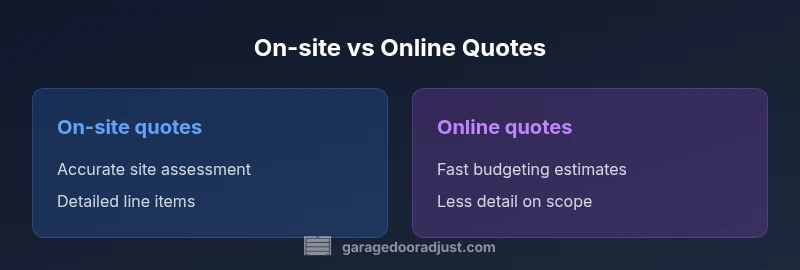
On-site quotes involve a site visit, measurements, and a discussion about exact door dimensions, track layout, and opener compatibility. This tends to yield higher accuracy and a detailed line item list. Online estimates, by contrast, are quick and convenient, often based on rough inputs and standard configurations. They are useful for budgeting but can miss critical details that affect installation complexity, such as existing track alignment, ceiling height, or building permits. The trade-off is clarity versus speed. For a homeowner aiming to lock in a reliable price, a two-step approach—start with online estimates for budgeting, then request on-site quotes for final scope and pricing—often provides the best balance. GarageDoorAdjust notes that regional variation and project specifics heavily influence whether online estimates suffice or you need a physical assessment to avoid price surprises.
What should be included in a quote: the essential line items
A high-quality quote should break down every cost component and specify inclusions. Look for: scope of work (door type, insulation, opener, tracks, springs, and hardware), site preparation needs, removal and disposal of old materials, permits, and inspections, labor hours and rates, travel or trip fees, warranty terms on parts and labor, and estimated start and completion dates. Some quotes separate materials from labor to make scope changes easier to evaluate. Ensure the quote clearly states what is not included and under what conditions changes may adjust the price. Don’t accept a single lump sum for a complex task; insist on line-item transparency so you can see how each decision affects total cost. A transparent quote reduces future friction during installation and helps you plan around downtime or scheduling constraints.
Reading the fine print: permits, warranties, and exclusions
Permits may be required by your city or county, and some installers include permit fees, while others expect you to handle them separately. Warranties on parts and labor vary—some providers cover both for a fixed period, others offer limited coverage. Read exclusions carefully, such as costs for structural repairs, modifications to existing electrical, or damage due to environmental conditions. If a quote omits permit handling, ask who will be responsible and how much it might cost. The timing of warranty activation is another nuance; ensure you understand whether coverage begins at installation or at use. Ambiguities here often become sources of friction after the sale.
How quotes are prepared and what drives cost
Quotes reflect several interplay factors: the door style and size, insulation level, decorative hardware, opener type, and whether you choose belt or chain drives. Labor complexity rises with ceiling height, headroom, and the number of tracks or torsion springs involved. Regional labor rates, permit fees, disposal costs, and the possibility of structural prep also impact totals. When quotes differ, trace the variance to a specific driver—perhaps one quote assumes higher-grade insulation or a more expensive motor. A robust quote should spell out these drivers and offer a realistic assessment of how changes in materials or features will alter price. This clarity empowers you to negotiate intelligently and decide where you’re willing to compromise.
Evaluating quotes: a step-by-step checklist
- Confirm scope parity: ensure every quote targets the same door, insulation, opener, and accessories.
- Compare line items: read each component, noting where quantities or models differ.
- Check warranties and service commitments: verify duration, what is covered, and how service calls are handled.
- Assess permits and disposal: know who pays and whether these are included.
- Look at lead times and start dates: align with your project timeline.
- Validate credentials: confirm licensing, insurance, and local references.
- Request clarifications in writing: push back on vague terms or sudden price changes.
- Seek a final on-site assessment for the preferred vendor if needed. This practical checklist helps ensure you truly compare like-for-like quotes and avoid costly misunderstandings.
Red flags in quotes and how to avoid scams
Be wary of quotes that are significantly lower than others without clear justification. Red flags include vague descriptions, missing materials, or assumptions about permit handling without explicit mention. Some installers may use aggressive introductory pricing with the plan to raise costs later through add-ons. Another warning sign is a lack of a written contract or a short warranty with limited coverage. Always request a formal proposal, verify licensing with state authorities, and check references. If a quote seems too good to be true, pause and seek a second opinion. A measured approach—comparing multiple quotes, asking for itemized breakdowns, and confirming site readiness—reduces the risk of unpleasant surprises.
How regional variation and timing influence quotes
Prices for garage door installation quotes vary by region due to labor rates, permit costs, and material availability. In high-cost markets, even standard installations may be priced higher, while rural areas might offer more competitive rates. Timing also matters: seasonal demand can affect lead times and the availability of technicians. A thorough comparison considers not just the bottom line but also the supplier’s ability to meet your timing, the quality of materials used, and the level of communication throughout the process. The goal is to choose a partner who provides transparent pricing, consistent updates, and predictable scheduling, regardless of your location.
Brand reliability signals: how to gauge trustworthiness
A solid installation quote is backed by credentials and track record. Look for licensing, insurance coverage, and a transparent policy on changes or disputes. Check customer reviews and ask for references from similar projects. Request a written scope and a staged payment schedule tied to milestones, not calendar dates. The right quote should also spell out site preparation requirements, safety considerations, and a clear plan for warranty claim handling. In this section we also highlight how to gauge a vendor’s willingness to clarify each line item, address questions promptly, and provide a predictable and repeatable installation process. A trustworthy installer communicates openly and delivers on stated commitments.
Put it into practice: a decision path for homeowners
Begin with a budgeting quote from online sources to set expectations, then arrange on-site quotes with two or three installers who meet licensing and warranty criteria. Use a side-by-side comparison to evaluate scope parity, line-item details, and after-sales support. Prioritize clarity over price, and insist on written terms before any work starts. If your timeline allows, schedule confirmatory site visits to validate measurements and confirm that the installed system aligns with safety standards. Finally, lean on reputable sources and industry guidelines to validate the chosen approach and ensure long-term reliability.
Toward a final takeaway: the importance of a structured approach
A disciplined quotes comparison yields better decisions and fewer post-install surprises. It aligns expectations, ensures critical items are addressed upfront, and provides a clear baseline for negotiation. Remember that the goal is not simply the lowest price but the best combination of quality, service, and value for your specific home and usage. By applying the steps outlined above, homeowners can navigate the garage door installation quotes comparison with confidence and minimize the risk of regret after the door is installed.
Comparison
| Feature | On-site quotes | Online quotes |
|---|---|---|
| Quote accuracy | High when measurements and site checks are performed | Typically lower accuracy without site data |
| Inclusions | Detailed scope with permits, disposal, and warranties | Estimate of materials and labor; may omit permits or warranties |
| Turnaround time | Same day to a few days after visit | Often 1–3 days or more depending on provider |
| Best for | Complex jobs, precise scope, strong accountability | Budget preliminary planning and quick budgeting |
| Risk of changes | Lower risk when scope is detailed and signed | Higher risk if scope is ambiguous |
Upsides
- Encourages detailed, apples-to-apples comparisons
- Reduces risk of hidden costs with itemized quotes
- Improves budgeting accuracy across vendors
- Builds confidence through transparent terms
Disadvantages
- On-site quotes can be slower and more expensive to obtain
- Online quotes may miss important scope details
- Regional price variation can complicate comparisons
On-site quotes provide more accurate comparison for complex installs; online estimates are useful for budgeting and screening vendors.
Choose on-site quotes for accuracy and detailed scope; use online quotes to narrow vendors and establish a budget, then verify with on-site quotes before signing.
Got Questions?
What is the main difference between on-site quotes and online quotes for garage door installation?
On-site quotes involve measurements and specifics that reflect your home’s configuration, while online quotes are quick estimates based on generic inputs. On-site quotes tend to be more accurate for complex installations but take more time to obtain. Use online quotes to get a budgeting baseline and then pursue on-site quotes for final scope and pricing.
On-site quotes include measurements and site specifics; online quotes are faster but less precise. Use online quotes to set a budget, then confirm with in-person estimates.
What should be included in a garage door installation quote?
A good quote lists the door type, insulation, opener, tracks, springs, and hardware, plus labor, permits, disposal, and warranty terms. It should also specify start dates, payment milestones, and who handles permits or inspections. If something is missing, request it in writing before work begins.
Look for a detailed line-item list including scope, materials, labor, and warranties. If anything is missing, ask for clarification before signing.
How can I ensure a quote is accurate and not a low-ball estimate?
Compare quotes with identical scope and verify that each line item corresponds to specific materials and labor. Ask for drawings or specifications, confirm permit handling, and request a signed contract. Consider having a third quote reviewed by a neutral expert if the numbers seem inconsistent.
Ensure identical scope, request specifications, and verify permits. Get a written contract to lock in price.
How long do quotes typically take to deliver?
Turnaround times vary by provider. Online quotes are often immediate or within 24–72 hours, while on-site quotes require scheduling and can take a few days depending on workload and weather conditions.
Online quotes come quickly; in-person quotes take a few days to schedule and complete.
Are permits and warranties typically included in quotes?
Permits may be included or may be the homeowner’s responsibility, depending on the contractor and locality. Warranties differ by provider and can cover parts, labor, or both for a set period. Always confirm both before agreeing to a contract.
Check who pays for permits and what the warranty covers before you sign.
Quick Summary
- Define project scope before requesting quotes
- Insist on itemized line items for all quotes
- Use online quotes for screening, then on-site quotes for final decisions
- Check permits, warranties, and exclusions
- Verify credentials and references before committing