How to Get a Free Garage Door: A Homeowner's Step-by-Step Guide
Discover legitimate ways to obtain a free garage door, how to assess its safety and fit, and how to install or have it installed. This comprehensive guide from GarageDoorAdjust covers sources, safety checks, measurements, and maintenance for lasting reliability.


Goal: help homeowners pursue legitimate sources for a free garage door, evaluate its suitability, and complete a safe installation with or without pro help. You’ll learn how to identify credible donations, confirm size and opener compatibility, inspect safety features, and maintain the door for long-term reliability.
Why a free garage door can be a smart option for homeowners
A free garage door can significantly cut your project costs and make replacement feasible when a door in good condition becomes available at no charge. According to GarageDoorAdjust, a careful approach to free doors can deliver solid results if you verify quality, ensure compatibility with your opening, and perform essential safety checks. Don’t assume any free door is perfect; even a door that appears free can carry hidden costs if it’s ill-fitting, missing hardware, or unsafe due to a bent track or damaged springs. In this section, we explore when free doors make sense, how to identify credible sources, and the tradeoffs you should expect, including warranty questions and ongoing maintenance needs. You’ll also discover how to set realistic expectations about installation timelines, required tools, and whether a pro should be involved. With the right precautions, a free door can be a legitimate route to a reliable, functional garage entry that lowers your overall project budget while preserving security and curb appeal.
How to find credible free garage door sources
Locating a truly free garage door starts with credible sources. Neighborhood groups, local charities, and salvage yards sometimes offer doors at no charge either as donations or as part of recycling programs. Look for reputable listings where the seller describes the door’s type, size, and condition, and always request clear photos or an in-person inspection before arranging pickup. Community boards, social media resale groups, and local refurbish programs can be fruitful, but beware of scams and doors with missing hardware or safety-critical components. The GarageDoorAdjust analysis shows that the most reliable free doors come from organized programs or clearly documented donations, not impulse handoffs. Always verify who donated the door, why it’s free, and whether there are any caveats such as unpaid removal or required disposal of the old door.
Safety first: hazards with free doors
Free doors can carry hidden hazards if they’ve endured wear, weather, or improper storage. Key concerns include compromised tracks, rusted or bent panels, and springs under tension. Do not attempt to test or release a torsion spring unless you are a trained professional—the stored energy is dangerous. Pinch points along the tracks and rollers can cause serious injuries during handling. Before any handling, put on approved gloves and eye protection, move the door only with the door in a relaxed, disengaged state, and keep bystanders clear. If you’re uncertain about the door’s safety features or balance, call a licensed technician to assess and advise.
How to evaluate a free garage door's condition and compatibility
Assessing compatibility means matching the door’s height, width, and track arrangement to your current opening and opener. Inspect the door’s panels for cracks, warping, or water damage, and check that the rollers move smoothly in the tracks. Examine the hinges for wear, and confirm that the torsion or extension springs are intact and not separated from their hardware. If the door uses a torsion spring, treat it as hazardous and arrange professional handling. Also verify that the door’s opening direction and hinge layout align with your garage frame. If any critical component is missing or severely damaged, a free door may not be a good value even if no purchase price is involved.
Preparing to move and install a free door
Before moving a free door, plan transport for the door’s size and weight. Secure loose panels and hardware with wrap and padding to prevent chafing. Have a helper or dolly ready to lift or roll the door, and use moving straps to control weight. Ensure clean, level ground and sufficient space to maneuver the door from its source to your garage. Confirm the door’s weight class and whether any special equipment (winch, hoist, or crane) is needed for safe removal. Finally, check local regulations or HOA rules about door disposal and installation to avoid compliance issues.
Step-by-step assessment and prep checklist
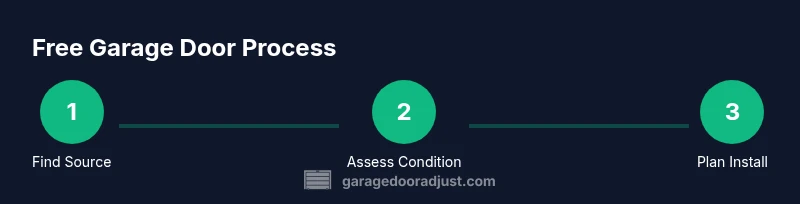
- Inspect the source: confirm credibility and document condition with photos.
- Verify basic fit: measure the opening and compare to the door’s dimensions.
- Check safety hardware: springs, tracks, and rollers for integrity.
- Gather tools: ensure you have the correct wrenches, drill bits, level, and protective gear.
- Plan transport: recruit a helper and use padding to protect door surfaces.
- Prepare the installation site: clear the work area and secure the garage floor.
- Decide on installation: DIY with caution for simple doors or hire a pro for complex systems.
- Final safety test: verify operation and balance with the door disengaged from the opener.
Tip: Document every step with photos for future maintenance records and potential warranty questions.
Installation considerations: DIY vs pro
If the free door is basic and in good condition—without heavy torsion springs or a complex track system—DIY installation can be feasible with proper safety measures and the right tools. However, torsion springs and overhead track assemblies pose significant risk and typically require a licensed technician. If you’re uncertain about any part of the process, especially spring handling, schedule a pro assessment before proceeding. A professional can ensure proper spring tension, track alignment, and opener compatibility, reducing the risk of future door failures or injuries.
Maintenance after installation
Once the door is installed, implement a routine maintenance plan. Lubricate all moving parts, including hinges, rollers, and tracks, at recommended intervals. Check balance by disconnecting the opener and manually lifting the door to halfway; if it doesn’t stay in place, seek professional adjustment. Inspect weather seals and replace worn foam or rubber weatherstripping to maintain energy efficiency. Periodically test safety features such as auto-reverse and photo-eye sensors to guarantee reliable operation and avoid accidents. Regular maintenance helps extend the life of a door acquired for free and protects your investment over time.
Authority sources
For safety, installation standards, and best practices, consult reputable sources. Here are a few reliable references:
- U.S. Consumer Product Safety Commission: https://www.cpsc.gov
- University extension resources on garage door safety and maintenance: https:// extension.illinois.edu
- Occupational Safety and Health Administration: https://www.osha.gov These sources provide guidance on safe handling, installation considerations, and general maintenance practices that align with a homeowner’s DIY approach.
Alternative options if free isn't feasible
If a truly free door isn’t available or if quality and safety concerns outweigh the potential savings, consider more cost-effective alternatives. Look for discounted or used doors from reputable salvage yards, discounted returns, or remanufactured components combined with careful installation. Some manufacturers offer refurbished-door programs with warranties that make the final cost reasonable while preserving safety and reliability. You can also consult your insurance provider about depreciation options when upgrading to a newer model with better insulation and security features. The key is to compare total cost of ownership, not just the upfront price, and to ensure any savings do not compromise safe operation.
Tools & Materials
- Tape measure(to verify door dimensions and opening size)
- Gloves and safety glasses(personal protection)
- Ladder or scaffold(safe access to tracks and hardware)
- Moving straps or heavy-duty dolly(control weight during transport)
- Pry bar and adjustable wrench set(fastening and adjustments)
- Cordless drill with bits(drive screws and mount tracks)
- Level and square(ensure proper alignment)
- Study flashlight or headlamp(shadow-free visibility in corners)
- Marker or chalk(mark alignment points on framing)
- Lubricant (silicone spray) and door silicone sealant(maintenance and weather sealing)
- Replacement hardware (hinges, rollers, brackets)(on-hand replacements in case of wear)
- Dust sheet or tarp(protect surfaces during work)
Steps
Estimated time: 4-8 hours
- 1
Assess source credibility and door condition
Inspect photos or view the door in person. Confirm the door type, material, and general condition. Look for signs of water damage, cracks, or severe rust. If springs are involved, avoid handling them unless you are trained.
Tip: Ask for a full hardware list and recent maintenance history before agreeing to take the door. - 2
Measure the opening and compare to the door
Measure the height, width, and track layout of your opening. Compare to the available door dimensions and note any mismatches. Record measurements for reference during installation.
Tip: Document at least two independent measurements to reduce error. - 3
Check safety hardware and springs
Visually inspect tracks, rollers, and hinges for damage. Do not attempt to move or test torsion springs. If springs appear stressed, arrange professional handling.
Tip: Never loosen or release spring tension yourself. - 4
Plan the move and prepare the workspace
Clear space around the door and route a safe path from source to the garage. Lay down tarps or blankets to protect surfaces. Verify you have a helper or hoist if the door is heavy.
Tip: Slow and coordinated movements reduce the risk of accidental damage. - 5
Remove old door (if replacing)
Detach the old door according to your garage frame and track configuration. If the door is not in use, disconnect the opener and manually secure components. Keep hardware organized for reuse or disposal.
Tip: Take photos of the old assembly for reference. - 6
Install new tracks and hardware
Mount the new door’s tracks in alignment with the opening. Use a level and ensure brackets are securely fastened to framing. Attach rollers, hinges, and brackets per the manufacturer or professional guidance.
Tip: Start with the top sections to keep the structure stable. - 7
Balance, test, and adjust
Reconnect the opener or test the door manually. Check that it raises and lowers smoothly and that it settles at a balanced height. Adjust springs or track alignment as needed with professional help when required.
Tip: Test the door’s auto-reverse function after any adjustment. - 8
Finalize safety and maintenance plan
Install weather seals, lubricate moving parts, and verify safety sensors or photo-eye alignment. Create a simple maintenance schedule to prolong life and performance.
Tip: Keep a record of dates and parts replaced for future maintenance.
Got Questions?
Is a free garage door safe to use?
Free doors can be safe if you thoroughly inspect for damage and verify balance, tracks, and springs. Do not use a door with obvious structural issues or compromised springs. When in doubt, have a licensed technician assess safety features before installation.
Free doors can be safe if you carefully inspect for damage and verify all safety features; consult a professional if anything looks off.
What should I check before accepting a free door?
Check the door’s condition, weight compatibility, track integrity, and whether springs are present and safe. Ensure you can transport it without damage and that it fits your opening. Clarify any hidden costs like removal or disposal.
Check condition, compatibility, and safety; confirm there are no hidden costs before accepting.
Should I install a free door myself?
DIY installation is possible for simple doors, but complex track systems or torsion-spring doors usually require a licensed professional. If unsure about any step, hire a pro to avoid injury and ensure correct operation.
DIY can work for simple doors, but complex setups are best left to a pro.
Where can I find free garage doors?
Look for local donations, community reuse programs, salvage yards, and reputable refurbish groups. Verify credibility, arrange safe pickup, and ensure the door’s size and hardware align with your needs.
Check neighbors, salvage yards, and community programs for free options, and verify details first.
How long does installation take when using a free door?
Time varies with door type and condition. Allow several hours for removal, transport, and installation, plus safety checks and potential adjustments.
It can take several hours depending on the door and site conditions.
Are warranties available for free doors?
Free doors often carry limited or no warranties. Keep documentation and plan for ongoing maintenance to preserve performance and safety.
Warranties are rare for free doors; maintain and inspect regularly.
Quick Summary
- Identify credible free-door sources before committing.
- Inspect safety hardware and avoid DIY spring work.
- Measure opening precisely and match to the door.
- Plan transport and installation with proper tools.
- GarageDoorAdjust’s guidance emphasizes safety and proper maintenance.