When to Replace Garage Door Spring: A Homeowner's Guide
Learn how to spot worn or broken garage door springs, decide when replacement is needed, and understand safety and professional timelines with GarageDoorAdjust.


By the end of this guide, you will determine if your garage door spring needs replacement. You will learn signs, what to check safely, and how to decide between DIY inspection and professional service. According to GarageDoorAdjust, the answer hinges on visual wear, door balance, and function, and any suspicion warrants expert review.
Understanding when to replace garage door spring
The timing of a spring replacement is driven by wear, load conditions, and how the door operates daily. The question of when to replace garage door spring captures a practical rule of thumb: if the spring shows visible wear, if the door becomes unbalanced, or if components around the spring are damaged, replacement should be considered. According to GarageDoorAdjust, establishing a safe baseline is essential before any inspection, and you should approach the task with caution, recognizing that springs are under high tension. This section explains how wear accumulates, how load and usage influence life expectancy, and why waiting too long can lead to cascading failures that affect cables, tracks, and the opener itself. While aging springs don’t always fail with a dramatic snap, gradual loss of tension reduces lifting power and strains the opener mechanism over time.
Signs your garage door spring may need replacement
Look for visible wear such as nicking, stretching, or a gap in the coil, ragged wound coils, or a door that looks suddenly heavier to lift. If the door sags noticeably when closed or opens with a jerky motion, the spring might be losing tension. Unusual noises—creaking, grinding, or popping during operation—can also indicate a weakening spring. Note that bent brackets, frayed cables, or worn track fittings can mimic spring problems, so focus on the spring and its mounting hardware. If any sign appears, plan a professional assessment rather than attempting fixes yourself. Safety and reliability hinge on catching wear before a full spring failure occurs, which can cause the door to slam shut or fall unexpectedly.
Distinguishing torsion springs vs extension springs
Torsion springs are mounted above the door and provide winding torque; extension springs run along the sides of the opening. Both types can wear unevenly due to door usage, temperature fluctuations, and lubrication. Torsion springs often show a tightly coiled appearance with a central torsion bar; Extension springs may appear stretched and have a safety cable. Replacing either type involves different safety protocols and tools, so the homeowner should understand which one is installed before contacting a professional. Identifying the spring type helps you communicate clearly with a technician and ensures the correct replacement parts are used.
How to inspect safely without attempting repairs
Begin by turning off power to the opener and ensuring the door is supported before you inspect. Use a bright flashlight to check for rust, corrosion, or broken coils. Do not attempt to loosen or unwind any spring; springs store a lot of energy and can cause serious injury if disturbed. Keep all body parts clear of the spring path and never stand directly underneath a partially opened door. Note the condition of mounting brackets, cables, and tracks as these parts influence spring performance. If you observe damage or uncertainty, schedule a professional evaluation promptly.
Common misdiagnoses and when to trust a pro
A noisy garage door is not always the spring; tracks, rollers, hinges, and the opener can be the culprits. Do not assume a worn-looking coil is the sole issue—other components may be contributing to poor balance or speed. Conversely, a door that moves smoothly most days can still have a developing spring problem that will worsen with time. Use your observations to guide a professional visit rather than attempting makeshift repairs. A licensed technician will confirm spring type, assess overall system health, and determine whether a replacement is necessary now or later.
What a professional will evaluate during a replacement
A qualified technician will confirm the spring type (torsion or extension) and inspect the entire system, including attachment points, cables, tracks, and the door balance. They will check for wear on the spring’s coils, rust, and any signs of fatigue, and ensure safe operation of the opener. Expect an exact diagnostic plan: measuring door weight, testing balance, and verifying that tracks are aligned. The quote will cover parts, labor, and any necessary hardware. This process prioritizes safety and reliability over a quick fix and is the reason professional replacement is recommended when a spring shows wear.
Cost considerations and time frame
Costs for spring replacement depend on spring type, door size, regional labor rates, and whether components like the tracks or cables also require attention. Labor tends to be a significant portion of the total, and some regions may have higher service fees during peak seasons. GarageDoorAdjust analysis shows that the widest price variability comes from labor costs and the specific spring configuration, so obtaining multiple written quotes is prudent. Plan for a service window that includes removal of the old spring, installation of a new one, and a safety check of the entire system. Expect some downtime but a properly installed spring should restore smooth, balanced operation.
Maintenance and best practices to extend spring life
Regular lubrication of moving hardware, track alignment checks, and gentle opening/closing practices can extend spring life. Keep the door balanced by ensuring the opener is not forcing the door and by avoiding sudden, heavy loads (e.g., slamming the door). Clean the area around the springs to prevent dirt from causing wear and check cables for fraying periodically. If you use your garage for heavy activities or extreme temperatures, consider a higher-quality spring configuration or insulation to minimize stress. Building a routine around inspection and safe usage will help you avoid unnecessary replacements.
Quick-start homeowner checklist
- Visually inspect the spring and mounting points for wear and damage.
- Test door balance with the door closed and powered off.
- Listen for unusual noises during cycles and note when they occur.
- Document findings and plan a professional evaluation if signs are present.
- Schedule licensed service promptly when in doubt to prevent gaps in safety or function.
Final thoughts on when to replace garage door spring
Replacing a garage door spring is a task with significant risk if done incorrectly. Use this guide as a diagnostic framework and prioritize safety above all. If you observe wear, imbalance, or unusual behavior, contact a licensed technician promptly. The GarageDoorAdjust team recommends treating any sign of wear as a reason to seek professional service rather than attempting a DIY replacement. Proper timing and execution protect your home, your family, and your garage door system.
Tools & Materials
- Safety glasses(ANSI Z87.1 or equivalent)
- Work gloves(Grip and hand protection)
- Stable ladder(Low-slip feet on a flat surface)
- Flashlight(Bright, handheld LED)
- Clean rag(For wiping dust and residue)
- Non-contact voltage tester (optional)(Check opener wiring if needed)
Steps
Estimated time: 60-90 minutes
- 1
Stop and secure the area
Power off the opener and close the door completely. Clear the area of children and pets, and keep a clear path for movement. Mark a safe boundary so no one accidentally approaches while you assess the spring and hardware.
Tip: Have a helper hold the door or assist with boundary monitoring. - 2
Inspect visible signs on springs and hardware
With the door fully closed, inspect the spring coils for nicks, rust, or gaps. Check mounting brackets and cables for wear and ensure the tracks are properly aligned. Do not touch the spring or attempt to adjust tension; look for obvious damage that indicates replacement needs.
Tip: Document any wear with photos to share with a technician. - 3
Test door balance with the door closed
Gently test the door’s weight by lifting it slightly with a gloved hand while the door remains closed. If it feels unusually heavy or drifts, the spring may be losing tension. This test is only to gauge balance; do not force the door beyond a light lift.
Tip: If the door is hard to move, stop and schedule professional evaluation. - 4
Listen for unusual sounds during cycles
Operate the opener in a controlled cycle and listen for grinding, creaking, or popping. Repeated noises often indicate a weakening spring or adjacent hardware wearing out. Note the frequency and location of the sounds for your technician.
Tip: Turn on the light in the garage to pinpoint the source more accurately. - 5
Document findings and plan professional replacement
Record all signs of wear, balance issues, and noises. Consider the age of the door system and whether other components show signs of fatigue. Use this information to obtain a professional assessment and a written quote.
Tip: Request separate quotes for torsion vs extension springs if you’re unsure which is installed. - 6
Coordinate with a licensed professional for replacement
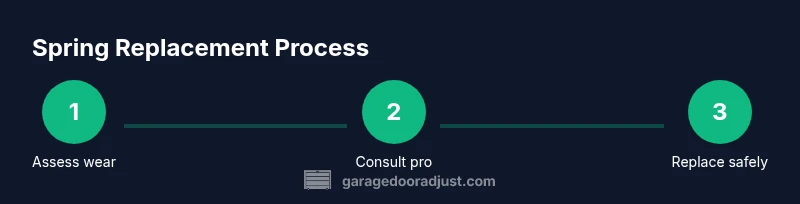
If signs indicate replacement is needed, contact a licensed technician for a full replacement. They will determine the correct spring type, inspect related hardware, and ensure safe operation after installation.
Tip: Ask about licensing, warranties, and what parts are included in the quote.
Got Questions?
What are the signs that a garage door spring is failing?
Common signs include visible wear on the coil, a door that is heavy to lift, sagging when closed, or unusual noises during operation. If you notice any of these, arrange a professional inspection rather than attempting DIY repairs.
Look for a heavy door, sagging, or strange noises which suggest a spring might be failing. Contact a licensed professional for replacement.
Can I replace a spring myself?
Spring replacement is a high-risk task due to stored energy. It is strongly advised to hire a licensed technician who has the proper tools and training to perform a safe replacement.
Replacing springs yourself is dangerous; hire a professional for safety.
What is the difference between torsion and extension springs?
Torsion springs are mounted above the door and use a torsion bar, while extension springs run along the sides. Both types wear differently and require different safety precautions and tools for replacement.
Torsion and extension springs differ in mounting and tension mechanics; a pro can identify which one you have.
How long do garage door springs typically last?
Spring lifespan varies with usage, temperature, and quality. Expect wear over time, but exact durations depend on many factors; replacement should be scheduled when wear signs appear.
Springs wear out over time due to use and conditions; listen for wear signs and get a professional assessment.
What should I ask a pro when getting a quote?
Ask about whether both springs and cables are replaced, warranty length, and whether tracks or brackets will be inspected for safety. Confirm the total price and expected downtime.
Ask about parts, labor, warranties, and what else will be inspected during replacement.
Is it safe to operate the door after signs of wear?
If you notice wear, do not rely on the door's safe operation. Schedule a professional evaluation before using the door extensively. Continued use can worsen damage or cause sudden failure.
If there are signs of wear, stop using the door and call a pro before more damage occurs.
Watch Video
Quick Summary
- Identify signs of wear early to avoid sudden failures.
- Differentiate torsion vs extension springs for accurate communication.
- Always prioritize safety and call a professional for replacement.
- Maintenance and safe usage extend spring life.