Big Garage Door Springs: Safe Inspection and Maintenance
Learn how to safely inspect and maintain big garage door springs, identify wear signs, and decide when to call a professional. This expert guide from GarageDoorAdjust helps homeowners keep doors balanced and secure.


Your goal is to safely evaluate issues with big garage door springs and decide when to call a professional. This guide outlines common failure signs, essential safety checks you can perform from the ground, and how to prepare for a service visit. Follow these practical steps and clear precautions. This approach reduces risk for homeowners.
Why big garage door springs demand respect
Garage door springs are among the most dangerous components in a typical home maintenance task. When a door weighs hundreds of pounds, the springs store significant energy. A slip in judgment can cause serious injury or property damage. According to GarageDoorAdjust, understanding the risk and approaching inspections with the right precautions dramatically lowers risk. In this section, we explore why big garage door springs deserve careful handling and what homeowners can realistically manage from the ground.
How big garage door springs work
There are two common spring systems on residential doors: torsion springs mounted above the door and extension springs located along the track. Both types store energy when the door is closed and release it to assist lifting. Torsion springs offer smoother balance and are typically more expensive to replace, while extension springs are more exposed and can pose pinch hazards. Regardless of type, proper tension is essential for safe operation and door balance. Regular checks help prevent sudden failures that might injure people nearby.
Signs of wear and failure
Look for visible wear: rust on coils, gaps between coils, stretched cables, frayed winding cones, or a door that is noticeably heavier on one side. Listen for grinding, squeaking, or popping noises during operation, especially near the springs. If you notice the door drifting when the opener is off, or a misaligned track, these can indicate compromised springs or related hardware. In any case, big garage door springs showing wear warrant a professional assessment.
Safe inspection steps homeowners can perform
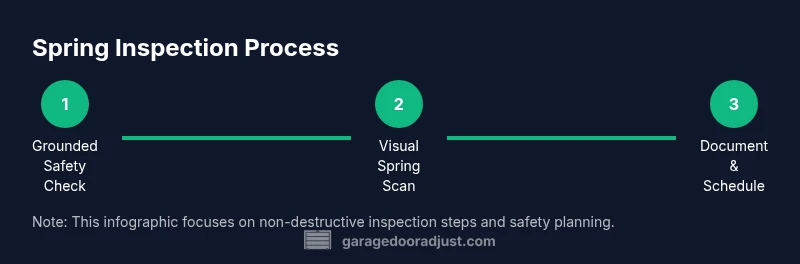
From the ground, with the opener unplugged, you can perform a basic safety check without modifying spring tension:
- Inspect the spring area for signs of rust, glazing, or gaps.
- Check track alignment, roller wear, and cable condition.
- Observe door balance by manually lifting and lowering with the opener disconnected (do not force the door).
- Document any unusual sounds or shifts with photos or video, and note the door’s weight bearing behavior.
- Avoid attempting to unwind or adjust springs yourself; this step is dangerous and should be left to pros. This approach helps you choose the right time to call a professional and provides useful information for the service visit.
When to call a professional and what to expect
If you observe signs of wear, unusual noises, or a door that feels heavy or unbalanced, schedule a pro visit promptly. A licensed technician will safely assess spring type, tension, and hardware, then replace or re-tension springs as needed. Expect the service to include inspecting mounts, cables, and tracks, testing balance, and confirming safe operation of the opener. Cost varies by door type and spring system, but preparation and a clear summary of symptoms can speed the process.
Maintenance routines to extend spring life
While you should never oil or loosen high-tension springs yourself, you can support longevity with non-spring components:
- Lubricate tracks, rollers, hinges, and latches with a light garage-door lubricant.
- Keep the door tracks clean and free of debris.
- Check weather stripping to reduce door stress from drafts.
- Schedule professional inspections annually or after any hard impacts to the door.
Tools & Materials
- Flashlight(Bright LED with a focused beam)
- Ladder(Stable, rated for your height)
- Safety gloves(Non-slip, cut-resistant)
- Safety glasses(Impact-resistant)
- Camera or phone(Document issues)
- Notebook(Record findings and dates)
- Pen/marker(Label parts during inspection)
Steps
Estimated time: 45-60 minutes
- 1
Power down the opener and secure the door
Turn off the garage door opener and unplug it if possible. This prevents automatic movement while you inspect the door and ensures you aren’t accidentally lifting a heavy door.
Tip: Never work under an open or unsupported door; ensure the door cannot move. - 2
Inspect the spring area from the ground
With good lighting, check the torsion bar or extension springs for rust, glazing, or visible damage. Do not touch coils; springs can snap or recoil unexpectedly.
Tip: Keep a wide stance and avoid placing hands near coils. - 3
Check door balance without adjusting tension
Disconnect the opener and manually lift the door to about halfway. If it feels heavy or drifts, note the direction of imbalance and stop further testing.
Tip: Do not force the door; rely on the balance observation to decide if a pro is needed. - 4
Inspect hardware for wear
Look at hinge plates, cables, tracks, rollers, and brackets. Worn or bent parts can mimic spring problems and should be evaluated by a pro.
Tip: Take clear photos of any damaged hardware to show the technician. - 5
Document findings and plan a pro visit
Record all signs in a notebook and attach photos. If signs of wear exist, schedule a pro visit promptly and share notes with the technician.
Tip: Provide repair history and door model information to speed service. - 6
Prepare for the service call
Clear access to the garage, remove obstacles, and note any recent impacts to the door. Do not attempt to DIY spring work.
Tip: Have your questions ready: spring type, replacement options, and warranty.
Got Questions?
Can big garage door springs fail suddenly, causing injuries?
Yes. Springs store a lot of energy and can release it abruptly if damaged, which can cause injury. Do not attempt any manual release or adjustment.
Springs can fail suddenly; avoid doing anything risky and call a pro.
Is it safe for a homeowner to adjust springs?
No. Adjusting torsion or extension springs is dangerous due to high tension. Have a licensed technician handle adjustments and replacements.
Adjusting springs is dangerous; call a licensed pro.
What are common signs of a failing torsion spring?
Signs include visible gaps, rust, fraying cables, doors that are hard to lift, and unusual noises near the spring area.
Look for gaps, rust, and hard-to-lift doors near the springs.
How long do springs typically last on a residential garage door?
Spring life depends on use and type, but most springs last several thousand cycles. If you notice imbalance or noise, arrange a professional check.
Springs last many cycles; if you notice issues, get a check.
Should I replace both springs at the same time?
For torsion systems, replacing both springs at once is often recommended to balance wear, but consult a pro for your specific door.
Replace both springs when one shows wear, but ask a pro for your door.
What maintenance can I do to extend spring life?
Avoid lubricating springs themselves; instead maintain tracks, rollers, and hinges, and schedule regular professional inspections.
Maintain tracks and rollers; springs should be left to pros.
Can a door operate without springs?
A door can be heavier to lift and unsafe without proper springs; do not operate without professional evaluation.
Operating without springs is unsafe; seek professional advice.
Watch Video
Quick Summary
- Know that big garage door springs are high-risk components
- Do ground-level checks only; avoid any spring adjustment
- Schedule professional service for wear signs or unbalanced doors
- Keep the door tracks and hardware well-maintained to reduce stress on springs
- Document symptoms to speed up service