Garage Door Spring Repairs: A Homeowner's Step-by-Step Guide
A comprehensive, safety-first guide to diagnosing, repairing, and replacing garage door springs for homeowners. Learn signs of wear, tool lists, step-by-step procedures, and maintenance tips to keep your door balanced and secure.


In this guide you will diagnose and safely repair garage door spring issues, including recognizing signs, choosing between extension and torsion springs, and performing controlled replacements. You’ll learn safety checks, required tools, and step-by-step procedures to minimize risk and restore balanced operation.
How garage door spring systems work
According to GarageDoorAdjust, garage door spring systems are the hidden counterweights that balance the door's weight. There are two common configurations: extension springs along the tracks and torsion springs above the door on a shaft. Both types store energy when loaded and release it to lift the door smoothly. Understanding how these springs work helps you diagnose issues accurately and choose the right repair approach. The balance provided by springs is delicate; even small changes in tension can cause the door to feel heavy, slam shut, or drift open. When a spring is near the end of its life, you may notice uneven lifting, more effort from the opener, or loud creaking during operation. A solid grasp of the basic mechanics makes it easier to decide whether a DIY fix is appropriate or if you should call a pro for a high-tension repair.
In modern garages, torsion springs are common on newer doors, mounted on a shaft above the opening, with a winding cone on each end. Extension springs run along the sides of the tracks and are counterbalanced by safety cables to prevent a snap-back if a spring fails. Both systems aim to counterbalance the door’s weight, so the opener does most of the heavy lifting. Regular inspection helps homeowners catch issues early, such as misalignment, worn cables, or frayed winding cones. Prioritizing safety reduces the risk of injury and damage to the door or opener.
Understanding the difference between spring types also informs maintenance decisions. Torsion springs tend to last longer and provide smoother operation but require specialty winding bars for safe adjustment. Extension springs are simpler to replace in some older setups but carry higher risk of sudden release if not handled correctly. With any spring work, plan for a controlled, deliberate process rather than rushed attempts. The goal is a balanced door that opens and closes smoothly with minimal noise and safe stopping points.
tip: null
Tools & Materials
- Winding bars (matching the spring type)(Two bars of the correct diameter; never use screwdrivers as winding bars.)
- Adjustable wrench(Used to loosen mounting bolts and cap screws.)
- Socket set and ratchet(For mounting brackets and hardware.)
- Screwdrivers (flathead and Phillips)(For small fasteners and track clips.)
- Pliers (needle-nose and locking)(Grip springs and cables safely during removal.)
- Safety glasses and work gloves(Protect eyes from flying components and hands from pinch points.)
- Ladder stable enough to reach the spring area(Ensure secure footing and avoid overreaching.)
- C-clamps or locking pliers(Hold components in place during work.)
- Replacement springs and cables (as needed)(Use exact size and type your door requires; confirm length and gauge.)
- Lubricant (silicone-based)(Light lubrication for moving parts after installation.)
- Ropes/cords or door stop blocks(Securing the door during setup when clamps aren’t enough.)
- Tape measure or ruler(Verify spring length and door height before installation.)
Steps
Estimated time: 1 hour 30 minutes
- 1
Disconnect the opener
Power off the garage door opener at the wall or unplug it from the outlet to ensure the device won’t move during the repair. This isolates the system from automatic operation and reduces the risk of the door shifting while you work. Confirm that the door remains stationary by manually stabilizing it with clamps or wedges.
Tip: Always double-check the power source before touching any springs or cables. - 2
Secure the door and establish a workspace
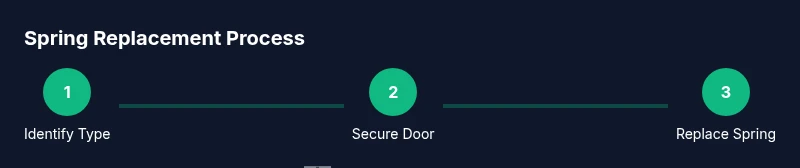
Use C-clamps or locking pliers on the track nearest the spring to prevent upward movement. Place wedges under the door to prevent it from tipping if the springs are under tension. Create a clear, well-lit work area and keep spectators away from the immediate work zone.
Tip: Mark the door’s balance position with tape so you can check alignment after installation. - 3
Identify spring type and note current tension
Inspect the system to determine whether you have extension springs or a torsion spring setup. Look for the winding cones and the presence of safety cables in extension-spring configurations. Take photos or notes of how the springs are mounted and the cables’ routing before removal.
Tip: Do not rely on memory—visual references reduce mistakes during reassembly. - 4
Relieve tension and remove old springs
For torsion springs, carefully insert winding bars into the cones and slowly unwind the springs, keeping a firm grip on the bars. For extension springs, detach cables from the bottom brackets and safely remove the springs from their tracks. Do not release or twist the springs without proper tooling and a second person to assist.
Tip: Keep hands and face clear of the spring path; a slip can cause severe injury. - 5
Install new springs and re-tension
Position the new springs in the same orientation as the old ones and secure mounting hardware. For torsion springs, re-tension with the winding bars to the manufacturer’s specified feel (balance point). For extension springs, reattach safety cables and anchor the springs in place. Do not skip the re-tightening step, as improper tension leads to uneven operation.
Tip: Follow the exact tension guidelines for your model; even small deviations affect balance. - 6
Test door balance and reassemble safely
Reconnect the opener only after you’ve confirmed the door stays in place when lightly moved by hand. Test the door using the opener and observe for smooth operation. Reinstall any removed components, and lubricate moving parts if recommended by the manufacturer.
Tip: If the door still feels heavy or unbalanced, stop and recheck spring tension or seek professional help.
Got Questions?
What are the signs that a garage door spring needs replacement?
Look for loud noises, door imbalance, gaps in the spring area, visible wear or rust on coils, and an opener that struggles to lift the door. If the door feels heavier than usual or stops before opening fully, springs may be near failure.
Common signs are a heavy door, unusual noises, and visible wear on the springs.
Can I replace garage door springs myself, or should I hire a pro?
Replacement involves high-tension components and substantial risk. If you have the right tools and training, you can replace torsion or extension springs; otherwise, hire a licensed technician to ensure safe, proper installation.
It’s risky; consider a pro if you’re unsure about tensioning and safety.
What’s the difference between extension and torsion springs?
Extension springs run along the tracks and extend as the door opens, while torsion springs sit on a shaft above the door and wind to provide tension. Torsion springs generally offer smoother operation and longer life but require special tools to adjust.
Two common types; torsion springs are usually more durable but harder to service.
How long do garage door springs typically last?
Spring life varies with usage, environment, and maintenance. Most residential springs are designed for several thousand cycles, but factors like humidity, temperature, and heavy use can shorten their life.
Springs last many cycles, but wear depends on use and conditions.
What safety gear should I wear during replacement?
Wear safety glasses, work gloves, and sturdy closed-toe shoes. Ensure you have a partner to assist; never attempt high-tension work alone.
Goggles and gloves are essential; always have a helper.
What are the risks of DIY spring repair?
Risks include severe injury from sudden spring release, door dropping unexpectedly, and damaging the door or opener. If unsure, don’t proceed and consult a professional.
High-tension springs can snap; safety is the priority.
Watch Video
Quick Summary
- Identify spring type before starting
- Use the right winding bars and safety gear
- Relieve tension only with proper tools
- Test balance carefully after installation