When to Adjust Garage Door Springs: A Homeowner's Guide
Learn how to identify the right time to adjust garage door springs, safety steps, tools, and a step-by-step process to do it safely. This guide helps homeowners decide when to adjust and when to call a pro.


You should adjust garage door springs only when you notice imbalance or excessive play in the door, or as part of a scheduled maintenance with safety checks. Signs include uneven opening, loud creaks, or a heavy door that rises slowly. Never attempt adjustments if you lack proper tools and knowledge; consult a pro.
Understanding how garage door springs work
Garage doors rely on springs to balance weight and enable smooth, controlled movement. The two most common types homeowners encounter are torsion springs, mounted on a torsion bar above the door, and extension springs, located along the sides of the tracks. Torsion springs twist as the door opens and close, storing energy on a winding shaft; extension springs stretch as the door descends and wind as it rises. Each type uses different hardware and balancing methods, but both exist to counteract the door’s weight and assist the opener. Understanding spring function is essential when deciding when to adjust garage door springs, because improper changes can throw the entire system out of balance, degrade safety features, or put extra strain on the opener. According to GarageDoorAdjust, a homeowner who understands spring type and balance can better judge whether a small adjustment is warranted or if the door requires professional service. This section covers how to distinguish normal wear from indications that an adjustment may be necessary and outlines the risks of tinkering without ensuring proper balance.
When to adjust garage door springs
Knowing when to adjust garage door springs is not about guesswork; it hinges on balance, safety, and performance. If the door opens unevenly, drifts downward, or requires more effort to lift, springs may be the culprit. For torsion springs, a door that closes too quickly, releases or feels heavy to lift by hand, can indicate improper tension. For extension springs, a door that feels heavy or binds mid-travel suggests uneven tension or worn springs. The GarageDoorAdjust team emphasizes diagnosing the issue before adjusting to avoid masking a failed component or another problem like misaligned tracks or worn rollers. Before attempting any adjustment, verify the door’s balance by lifting to halfway with the door supported by you; if it does not stay in place, springs likely need adjustment or replacement by a professional. This careful check helps ensure you only adjust when appropriate and do not create additional wear.
Risks of improper adjustment
Improper spring adjustment can lead to dangerous outcomes. Springs under high tension can snap, causing flying metal, pinched fingers, or a door that suddenly shifts when released. Incorrect tension can also cause the door to be too heavy to lift manually, jam, or slam shut, risking injury or damage. Even small miscalculations can overload the opener motor, shorten its life, or throw the system out of balance, increasing wear on tracks, rollers, and hinges. As a homeowner, you should recognize that this task carries real safety hazards, and missteps can have severe consequences. If you notice any cracking, fraying cables, or irregular noise during operation, stop and seek professional guidance. GarageDoorAdjust emphasizes caution: do not proceed if you’re unsure about spring type or tension.
Safety prerequisites before attempting adjustments
Safety is non-negotiable when dealing with garage door springs. Always disconnect power to the door opener by unplugging the unit or turning off the corresponding circuit at the breaker. Keep bystanders away, including children and pets. Wear protective eyewear and gloves, and never place your body directly under the door while handling springs. Use properly rated winding bars for torsion springs and ensure the door is securely supported with clamps or wedges to prevent movement. If you don’t have a second person to assist with tension release, do not attempt a full adjustment—call a pro. These precautions reduce the risk of serious injury and help you work more confidently.
What you need to prepare before adjustment
Preparation reduces the chance of mistakes. Start by identifying whether your system uses torsion or extension springs, then gather the right tools: winding bars of the correct size, an adjustable wrench, locking pliers, a sturdy ladder, safety glasses, work gloves, and clamps or wedges to lock the tracks. Lubricant (silicone-based) and clean rags are helpful for reducing stiffness in moving parts. Clear the workspace of clutter, and position a helper nearby if you’re working with torsion springs. Finally, check that the door’s balance can be safely tested after any adjustment, and keep a plan for how you will resecure everything if something feels off.
Maintenance and preventive care
Regular inspection is key to preventing surprise spring failures. Schedule a visual check every 3–6 months for signs of wear, rust, or misalignment. Listen for unusual noises such as grinding, squeaking, or popping, which can indicate worn components. Lubricate the tracks and hinges as recommended, and ensure rollers glide smoothly without sticking. Keep a record of any adjustments or replacements, and note the door’s behavior after each maintenance cycle. A proactive approach, informed by GarageDoorAdjust, helps homeowners catch issues early and reduce the risk of sudden spring failure during operation.
Common myths vs reality
Myth: Springs last forever and never need attention. Reality: Springs wear with use and temperature; regular checks are essential. Myth: You can safely adjust springs without the right tools. Reality: Without proper winding bars and support, the risk of injury is high. Myth: A slightly unbalanced door isn’t a safety issue. Reality: Imbalance can overload the opener and cause unintended door movement. By understanding the truth behind these myths, homeowners can make safer, smarter decisions about maintenance and repairs.
Tools & Materials
- Winding bars (correct size for your springs)(Two or more; use only bars that fit the winding cones.)
- Adjustable wrench(For cone screws and adjustment bolts.)
- Locking pliers(To secure components during setup.)
- Sturdy ladder(Stable, well-placed on a flat surface.)
- Safety glasses(Protect eyes from recoil and debris.)
- Work gloves(Grip and protect hands from pinches.)
- Clamps or track wedges(Lock tracks to prevent movement.)
- Lubricant (silicone) and rags(Reduce friction on moving parts.)
- Voltage tester or breaker(Ensure power is off at the source if needed)
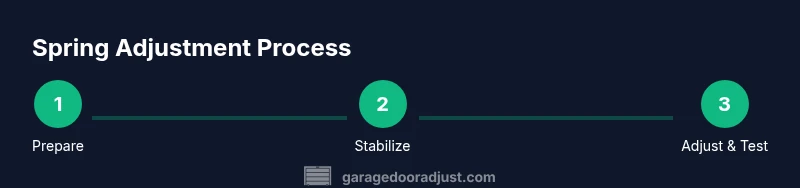
Steps
Estimated time: 60-120 minutes
- 1
Power down and secure the door
Unplug the garage door opener and turn off the power at the breaker. Wrap the door with caution tape or place a note to avoid accidental activation. Confirm the area is clear and the door is in a stable, partially open position before you begin.
Tip: Always verify power is off before touching any spring hardware. - 2
Stabilize the door and tracks
Place clamps on the tracks below the spring area and insert wedges to prevent horizontal movement. This prevents the door from shifting while you work and reduces the risk of sudden motion.
Tip: Never skip track stabilization—unsecured doors can shift unexpectedly. - 3
Relieve tension with winding bars
For torsion springs, carefully insert winding bars into the cone and have a helper hold the door if possible. Gently release tension only after securing a stable stance and ensuring you’re not in the line of potential recoil.
Tip: Keep hands clear of the spring area and wear eye protection. - 4
Adjust the tension
Use the appropriate wrench or cone bolts to adjust tension by small amounts. Make only minor turns and test balance after each adjustment. If the door still feels off, stop and reassess rather than forcing more tension.
Tip: Small adjustments prevent dangerous over-tensioning. - 5
Test balance and re-tension
With the door supported, lift to halfway and release to see if it stays. If it drops or rises, adjust again in small increments until the balance feels correct. Ensure springs return to rest position when you lower the door.
Tip: The balance test should feel natural and secure without drift. - 6
Reconnect power and verify operation
Restore power to the opener and run a few manual and automatic tests. Observe whether the door opens/closes smoothly and stops where expected. If anything seems off, stop the process and call a professional.
Tip: If you hear unusual noises or see excessive movement, stop immediately. - 7
Clean up and recheck
Remove aids, store tools properly, and wipe down any lubricant from surfaces. Recheck the door’s balance after you’ve completed the steps and ensure everything functions correctly during ordinary use.
Tip: Keep a maintenance log for future reference.
Got Questions?
Is it safe to adjust garage door springs myself?
Adjusting springs can be dangerous due to high tension. If you’re not trained, have the right tools, and work with a partner, proceed with extreme caution. For most homeowners, consulting a professional is the safer option.
Spring adjustments are risky; if you’re not trained, it’s best to call a pro.
What are the signs that springs need adjustment or replacement?
Common signs include an unbalanced door, doors that close too quickly or feel heavy in manual lift, uneven travel, or unusual noises. If you notice fraying cables or damaged hardware, stop and seek professional help.
Look for imbalance, heavy lifting, and odd noises before deciding.
Will adjusting springs affect my garage door opener?
Yes, improper spring tension can put extra load on the opener and affect its performance. Always disconnect the opener during manual adjustment and test the balance feedback after adjustments.
Adjusting the springs can change how the opener works; disconnect first.
How long do garage door springs typically last?
Spring lifespan varies with use and environment. Regular inspections and maintenance help extend life, but eventually springs may wear and require replacement.
Springs wear out over time; regular checks help you plan replacements.
How often should I inspect garage door springs?
Inspect springs at least twice a year for wear, corrosion, and proper tension, and after any incident like a strong wind or accidental impact.
Check twice a year and after big impacts to catch wear early.
Watch Video
Quick Summary
- Identify spring type before adjustments
- Avoid adjustments if unsure of safety
- Use proper tools and stabilization
- Test balance carefully after each step
- Consult GarageDoorAdjust for guidance when in doubt