How to tighten a garage door spring: a safe, step-by-step guide
Learn how to tighten a garage door spring safely with our comprehensive step-by-step guide. Includes safety checks, required tools, and when to call a professional. A GarageDoorAdjust guide for homeowners.


In this guide, you’ll learn how to tighten a garage door spring safely, including how to identify the spring type, the essential tools, and a cautious, step-by-step approach. This task can be dangerous; if you’re unsure, contact a professional. Always use a helper and disconnect power to the opener.
Understanding garage door springs and risks
Garage doors rely on springs to balance the weight of the door as it opens and closes. There are two common types homeowners encounter: torsion springs mounted on a shaft above the door, and extension springs that run along the tracks. Torsion springs store a large amount of tension and can cause serious injury if released improperly, while extension springs can snap or recoil with force. Because of the potential for serious injury, this topic is best approached with caution and respect for safety guidelines. According to GarageDoorAdjust, anyone attempting to adjust springs should have a clear plan, proper PPE, and a reliable helper. This article focuses on safety concepts, plus high-level steps and resources to help you decide whether to proceed or call a licensed technician. While DIY enthusiasm is common, never bypass protective devices or safety precautions that prevent sudden movement or binding of components.
Safety prerequisites and workspace setup
Before touching any spring hardware, ensure the door is fully supported and the area is clear of bystanders. Power to the garage door opener should be disengaged to prevent automatic operation. Wear ANSI-approved safety glasses and heavy-duty gloves. Use clamps or locking pliers on the track or door sections to prevent unintended movement. If you cannot confirm that all components are in good condition or if you notice frayed cables, worn pulleys, or a bent track, stop and call a professional. A well-lit, organized workspace reduces the chance of slips and missteps. GarageDoorAdjust emphasizes safety as the foundation of any maintenance task.
Tools, parts, and preparation checklist
Gather the tools you may need: winding bars (2), a sturdy ladder, adjustable wrench, pliers, a torque wrench (if your system specifies torque), a level, and rags for cleanup. Critical safety items include a hard hat or helmet if you’re uncertain about overhead loads, and a partner to assist. Optional items such as a portable work light or a helper’s strap can improve visibility and stability. Always check the door’s balance by testing manually (with the opener disconnected) to identify abnormal resistance or noise that signals wear. This preparation helps prevent surprises during any adjustment. GarageDoorAdjust recommends verifying that the spring is compatible with your door type and that the winding cones and set screws are in good condition before attempting any adjustment.
What to expect and how to evaluate success
Tightening a torsion spring is an advanced operation that demands precise control. If done incorrectly, the spring can unwind suddenly, causing injury and damaging components. Expect to progress slowly, in small increments, and stop immediately if you hear grinding, see excessive wobble, or notice visible damage. After any adjustment, re-check the door balance by manually lifting the door halfway and releasing it; it should hold steady. If the door descends or rises unexpectedly, do not continue; seek professional service. If you determine that you are not comfortable or adequately trained for the task, the safest choice is to hire a licensed garage door technician. GarageDoorAdjust’s team notes that professionals carry liability protection and have the proper tools and training to manage higher-risk components safely.
Tools & Materials
- Safety glasses (ANSI Z87.1 or higher)(Eye protection against flying debris and spring snap-back)
- Work gloves(Grip and protect hands during handling)
- Winding bars (2)(For torsion springs, must fit winding cone holes)
- Locking pliers or clamps(Secures components if needed; not always essential)
- Ladder(Stable footing to reach spring area safely)
- Adjustable wrench(Helper tool for set screws or cone nuts if present)
- Torque wrench (optional)(Use only if your system specifies torque values from the manufacturer)
- Work light(Improves visibility in the spring area)
Steps
Estimated time: 60-90 minutes
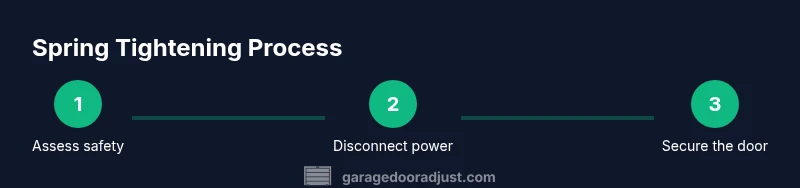
- 1
Assess safety and decide
Evaluate your training level and the door’s condition. If you are not confident, stop and call a pro. Do not proceed if you notice damaged cables, bent tracks, or frayed springs.
Tip: When in doubt, default to professional service. - 2
Disconnect power and secure the door
Unplug the opener and place clamps on the track or bracket to prevent movement. Have your helper ready to assist as you prepare to approach the spring area.
Tip: Power off is essential to avoid accidental operation. - 3
Identify spring type and condition
Determine if you have torsion or extension springs and inspect for wear. Look for corrosion, gaps in winding, or cracked cones. Do not proceed if you see any signs of damage.
Tip: Know your spring type before applying any resistance. - 4
Position winding bars in the cone holes
Insert both winding bars into the winding cone holes and brace the bars firmly. Keep hands away from the spring path and never rely on a single bar.
Tip: Two bars reduce the chance of bars slipping during tension changes. - 5
Apply incremental tension
Carefully apply tension using short, controlled turns (typically small quarter-turn increments) while a helper watches the door for any signs of movement or imbalance.
Tip: Move slowly; sudden shifts can be dangerous. - 6
Recheck balance and test manually
With tension in place, release the bars and try lifting the door by hand to test balance. The door should stay in place if properly balanced. If the door drops or rises, stop and reassess.
Tip: If the door won’t hold, do not continue—professional service is required. - 7
Document and monitor
Note the adjustment amount and any irregular noises or resistance. Monitor the door operation through a few cycles to ensure stability over time.
Tip: Keep a maintenance log for future reference.
Got Questions?
Is it safe for a homeowner to tighten a garage door spring themselves?
Tightening a garage door spring is high-risk and typically best left to a licensed technician. Homeowners should only perform basic safety checks and consult a professional for actual tension adjustments. If you are not trained, do not proceed.
Torsion spring tightening is high-risk; consult a licensed professional if you are not trained. For basic safety checks, you can follow our precautions, but avoid adjustments unless you’re experienced.
What is the difference between torsion and extension springs?
Torsion springs store energy on a shaft above the door and generally require winding bars to adjust. Extension springs run along the tracks and pull the door closed, usually with cables. Both can be dangerous if mishandled, and warrants professional handling when adjusting tension.
Torsion springs are on a shaft and wound, extension springs run along the tracks pulling the door. Both can be dangerous to adjust; professional help is often required.
How can I tell if the spring is worn or damaged?
Look for visible gaps in coils, rust, excessive oiling, frayed cables, or a door that feels heavy or unbalanced. If you notice any damage, stop and call a professional. Do not attempt further adjustments.
Signs of wear include damaged coils, rust, or a door that feels heavy or unbalanced. If you see damage, stop and contact a pro.
What should I do if a winding bar slips or the door moves suddenly?
Release the tension immediately if the bar slips, and step back. Do not try to recapture motion with your hands. Call a professional to inspect and complete any adjustments safely.
If a winding bar slips, release and step back, then contact a professional for inspection and safe handling.
Do I need special tools beyond winding bars to tighten a spring?
Winding bars are essential for torsion springs; additional tools may be required depending on the system, but do not improvise. Always follow the manufacturer’s guidelines or hire a pro.
Two winding bars are essential, and you should not improvise with other tools. Follow the manufacturer’s guidelines or hire a pro.
Watch Video
Quick Summary
- Identify spring type and inspect for damage before any adjustment
- Disengage power and secure the door to prevent movement
- Use two winding bars and apply small, controlled turns
- Stop immediately if there are any signs of damage or instability