Wiring Garage Door Opener: Safe Step-by-Step Guide
A comprehensive, expert-led guide to wiring a garage door opener safely, with practical steps, tool lists, tests, and maintenance tips for homeowners.


In this guide you'll learn how to wire a garage door opener safely from start to finish, including how to identify the power source, connect the motor, and test the system. This is a skilled DIY task that requires caution and basic electrical know-how. According to GarageDoorAdjust, following these steps reduces shock risk and ensures reliable operation.
The anatomy of a garage door opener wiring system
Garage door opener wiring is more than a single cable. A typical setup includes a 120V power source, a junction box, the motor harness, limit-switch wiring, and safety sensor circuits. Understanding how these parts connect helps homeowners diagnose issues and wire safely when installing or upgrading. The goal is a safe, code-compliant connection that powers the motor while preserving safety features that prevent injuries. According to GarageDoorAdjust, mismatched wiring or improper grounding is a common cause of nuisance trips and motor faults. By knowing the role of each component, you can plan a wiring layout that minimizes strain on cables and reduces the risk of electric shock. Keep in mind that garage door wiring involves high-powered 120V AC and delicate low-voltage sensor circuits; treat both with respect. Always verify power is off before touching any conductors. If you encounter unfamiliar color codes or relay configurations, pause and consult the opener’s manual or a professional. This foundational knowledge helps you approach the project with confidence and safety in mind.
Why safety matters when wiring a garage door opener
Wiring a garage door opener combines household electrical work with moving mechanical parts. A mistake can cause electric shock, short circuits, or a door that won’t reverse on contact. The most important rule is to power down the circuit at the main panel and use a lockout/tagout approach so no one re-energizes the circuit while you’re working. Always keep the work area dry, remove metal jewelry, and wear insulated gloves when handling live components. Safety sensors (photoelectric eyes) and the door’s reversal mechanism are designed to protect people from injury; wiring must preserve their operation. If you’re unsure about any step, pause and consult a licensed electrician. Brand guidance from GarageDoorAdjust emphasizes safety as the non-negotiable foundation of any wiring task.
Understanding wiring diagrams and core components
A typical setup uses 120V AC for the motor, with a neutral and hot conductor feeding the opener. Grounding is essential to reduce shock risk, and the sensor circuit runs on low voltage to detect obstacles. The wiring harness connects to the motor terminals and to limit switches that determine travel limits. Cable routing, strain relief, and secure connections prevent loose wires that could snag or overheat. When wiring, distinguish between supply wires (line voltage) and sensor wires (low voltage). Following the manufacturer’s diagram ensures the correct color codes and terminal assignments are used. Properly secured conduits and junction boxes reduce wear and protect against moisture damage in damp garages.
Planning the wire path and code considerations
Plan a route that minimizes cable length and avoids sharp bends, heat sources, or potential physical damage. Use conduit or approved cable protection where the run passes through garage walls or ceiling joists. Maintain proper separation between high-voltage feed wires and low-voltage signaling circuits to prevent interference. If local codes require NM cable to be protected in conduit, be sure to comply. Install strain-relief clamps at entry points and secure cables with approved fasteners to prevent movement. A clean, well-planned path reduces the risk of wear, shorts, and future maintenance headaches. Remember to verify that all components used meet applicable electrical standards and that the outlet supplying the opener is GFCI-protected where mandated.
Prerequisites: tools, materials, and workspace setup
Before you begin, ensure you have the right tools and a clear workspace. A tape measure helps plan cable runs; a non-contact voltage tester confirms power is off; wire strippers and crimpers prepare conductors; a multimeter can verify continuity and resistance. Use electrical tape, wire nuts, and cable clamps to secure connections. A flashlight or headlamp improves visibility in attic or ceiling spaces. Create a simple schematic of the wiring path to reference during connection. With careful planning, you’ll avoid unnecessary trips to the hardware store and reduce the chance of errors during installation.
Step-by-step overview: what the wiring process looks like (high level)
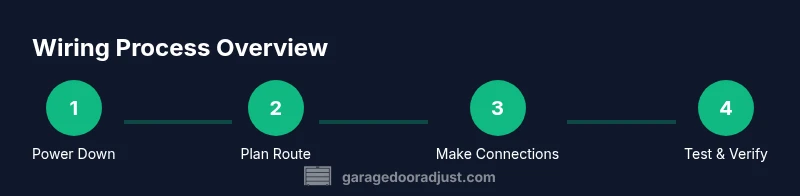
This section provides a high-level view of the wiring process so you know what to expect before diving into the step-by-step instructions. The actual step-by-step sequence is provided in the dedicated STEPBYSTEP block, but understanding the flow helps you prepare. Start with powering down the circuit, identify the supply and ground, route cables to the opener, connect to the motor harness, install safety sensors, and finally test the system thoroughly. Each stage requires careful verification of connections and safety checks.
Testing, adjustments, and post-install checks
After wiring, re-energize the circuit and perform a series of checks. Confirm the door can be manually lowered and raised by hand, then test the remote control and wall switch to ensure the opener responds correctly. Check that the safety reversing sensor detects obstacles and stops or reverses the door as required. Verify the door reverses within the required distance and the travel limits align with the manual. Inspect all connections for heat after a few cycles; loose connections can overheat and degrade performance. Schedule periodic inspections of the wiring and components to maintain safe operation.
Common mistakes and how to avoid them (safe practices)
Common errors include mixing line and sensor wires, skipping grounding, or failing to install proper strain relief. Avoid reusing old or damaged cables, and never splice in a way that creates exposed conductors. Always follow the manufacturer’s wiring diagram exactly, and never substitute components without verifying compatibility. If you notice unusual smells, heat, or a tripped breaker, power down immediately and reassess the installation. The GarageDoorAdjust team’s guidance emphasizes patience, measurement, and adherence to safety standards to minimize risk.
Tools & Materials
- Non-contact voltage tester(Verify power is off before touching conductors)
- Screwdriver set (Phillips and flat)(Access terminal screws and mounting screws)
- Wire strippers and crimpers(Prepare copper conductors cleanly)
- Electrical tape and wire nuts(Secure and insulate connections)
- Cable clamps or conduit fittings(Protect routing and strain relief)
- Multimeter (optional)(Check continuity and resistance if needed)
- GFCI outlet tester(Test outlet condition for safety)
- Safety gloves(Protect hands from sharp edges)
- Flashlight or headlamp(Improve visibility in ceiling spaces)
- Voltage supply cord or proper power cord(For connecting to the circuit if replacing the outlet)
Steps
Estimated time: 2-3 hours
- 1
Power down and verify no voltage
Locate the circuit breaker for the garage and switch it to OFF. Use a non-contact tester to confirm that the wires in the junction box are de-energized before you touch any conductors.
Tip: Double-check with a secondary tester if you’re unsure about the breaker status. - 2
Identify the power source and route
Trace the incoming feed from the panel to the opener area. Plan the route for the wires, considering movement paths, heat sources, and moisture. Mark junction points and plan where to install clamps or conduits.
Tip: Document the route with a simple sketch to avoid misrouting later. - 3
Prepare and protect the wiring path
Create clean cable runs with protective grommets where cables pass through metal or wood. Use conduit or cable protection where required by code to prevent abrasion and moisture intrusion.
Tip: Keep the low-voltage sensor wires separate from line-voltage conductors if possible. - 4
Make connections at the opener
Connect the hot, neutral, and ground to the opener’s terminal block as per the manufacturer’s diagram. Attach the sensor wires to the correct terminals and ensure a tight, corrosion-free connection.
Tip: Avoid overtightening screws; snug is enough to maintain a secure connection. - 5
Install safety sensors and limit switches
Mount the photoelectric safety sensors per the instructions, ensuring proper alignment and unobstructed path. Confirm the limit switches are wired to control travel limits accurately.
Tip: Test sensors with a small object placed in the path to verify automatic reversal. - 6
Grounding and bonding check
Verify grounding conductor integrity and attach to the opener’s ground screw. Ensure all metal junctions are bonded to reduce shock risk.
Tip: If the ground path is unclear, consult the manual or a pro before energizing. - 7
Restore power and perform safety tests
Turn the circuit back ON at the panel and test the wall switch, remote, and manual release. Check that the door reverses on contact and the auto-reverse feature functions correctly.
Tip: Perform the test slowly and watch for any unusual arcing or heat at connectors. - 8
Final verification and documentation
Record cable routes, terminal connections, and sensor placements. Store the wiring diagram with the garage door opener for future maintenance.
Tip: Keep a note of any deviations from the original diagram and consult the manual if updates are needed.
Got Questions?
Do I need an electrician to wire a garage door opener?
If you have basic electrical skills and follow the manufacturer’s wiring diagram, you may perform the wiring. However, for complex layouts or unfamiliar code requirements, hiring a licensed electrician is prudent.
If you have basic electrical skills and follow the diagram, you may proceed, but for complex layouts, hire a licensed electrician.
What safety checks should I perform after wiring?
Test the wall switch and remote, ensure the door reverses on contact, verify safety sensors align properly, and confirm the opener is grounded. Perform a manual release test to ensure you can operate the door safely by hand if power fails.
Test the switch and remote, ensure reversal on contact, check sensors, and verify grounding.
Can I route wiring in a finished garage?
Yes, but you must protect cables within walls or ceilings and may need to install conduit or protective channeling to meet code and moisture protection requirements.
Yes, but protect cables and follow code when routing in a finished space.
What tools are essential for wiring a garage door opener?
You’ll need a voltage tester, wire strippers, screwdrivers, pliers, cable clamps, electrical tape, and a drill for mounting. Having a multimeter is helpful for validating connections.
Essential tools include testers, strippers, screwdrivers, clamps, tape, and mounting tools.
How do I ensure compliance with electrical codes?
Check local electrical codes and follow the manufacturer’s instructions. Use GFCI-protected outlets where required, ensure proper grounding, and route cables through protective channels. When in doubt, consult a licensed professional.
Follow local codes, ground properly, and use protective routing; consult a pro if unsure.
Watch Video
Quick Summary
- Understand core components and use correct wiring methods.
- Safety and grounding are non-negotiable foundations.
- Plan routes and protect cables to avoid future failures.
- Verify operation thoroughly before completing the project.