Garage Door Opener Installation: A Complete How-To Guide
Learn how to install a garage door opener safely and efficiently with our expert, step-by-step guide. Covers compatibility, mounting, wiring, programming, and testing for reliable operation.


According to GarageDoorAdjust, by following this guide you will safely install a garage door opener with installation that fits your door and opens smoothly. You’ll verify compatibility, assemble the mounting hardware, set the rail and belt/chain, connect the power supply, program remotes and safety sensors, and test balance and reversing safety. The process emphasizes safety, proper alignment, and calibration for reliable operation and long-term performance.
Compatibility and pre-installation assessment
Before you start an installation, it’s essential to confirm that your door and garage space are compatible with a modern garage door opener. The GarageDoorAdjust team emphasizes planning up front to prevent common fit issues. Start by measuring the door height, width, and any obstructions in the ceiling that could block mounting brackets or rails. Verify that the door weight is within the opener’s rated range; for most homes a 1/2 to 1-1/2 HP unit is suitable, but heavier doors may require a higher horsepower model. If your garage uses torsion springs, you’ll need specific mounting clearances and possibly a different opener type, such as a jackshaft, to avoid interference with the spring system. Finally, check the ceiling height and available headroom; insufficient space can necessitate alternative mounting strategies. A careful pre-assessment reduces trial-and-error during installation and helps ensure long-term performance.
Safety prerequisites and environmental checks
Safety is non-negotiable when installing a garage door opener. Begin by unplugging the existing unit or turning off the circuit at the breaker to eliminate the risk of electric shock. Clear the garage floor of tools and keep children and pets away during the process. Inspect the door balance by manually lifting the door; if it is heavy or creaks, address spring or track issues before installing the opener. Ensure the ceiling area is dry and free of dust, and verify there are no exposed wires that could be damaged during mounting. Lighting should be adequate, and a stable ladder or scaffold should be used. These precautions protect you and set the stage for a safe, reliable installation.
Choosing the right opener and power requirements
Selecting the correct garage door opener with installation depends on door size, frequency of use, and space constraints. Most homeowners opt for a 1/2 to 1-1/2 HP chain or belt drive with a standard rail length. Consider drive type (chain, belt, or screw) for noise level, maintenance, and performance; belt drives are typically quieter and preferred for finished garages. If your garage has limited headroom, a jackshaft opener might be the best fit; it mounts on the wall beside the door, eliminating ceiling clearance issues. Review safety features offered by the model—auto-reverse, obstacle detection, and manual release—and ensure compatibility with your door and the existing wiring. While many kits simplify installation, some configurations, like doors with unusual tracks or heavy springs, may require professional assistance. Remember to select a kit that includes mounting brackets, rails, and rail connectors designed for your door height and track type. For anyone shopping now, consider a model that supports future upgrades such as smart home integration and remote management for convenient operation.
Tools, mounting hardware, and materials overview
A successful installation relies on having the right tools and hardware on hand. The list below represents common essentials, organized by category:
- Tools: cordless drill, socket/wrench set, tape measure, level, pencil/marker, in a ladder, safety glasses, and a utility knife. A stud finder can help locate solid mounting points for ceiling brackets.
- Hardware: mounting brackets, ceiling track or rail kit, trolley/ carriage, screws and anchors appropriate for your ceiling material, track bolts, and power cord strain relief.
- Materials: wiring (as required by your model), safety sensors with brackets, remote controls or keypad, and a lubrication kit for moving parts after installation.
Having these items ready before you begin minimizes interruptions and keeps the project on track. If you’re unsure about a specific mounting surface or rail length, consult the installation manual for your model and plan for an extra set of hands for heavy lifting and wiring.
Step-by-step installation overview: key phases
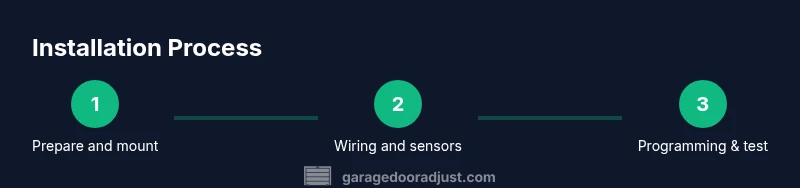
The following sections outline the core phases of a typical installation. Each phase contains essential actions and practical checks to keep you safe and on schedule. Use the included STEP-BY-STEP block for detailed actions and precise steps, and refer back to this overview to understand how each phase fits into the whole project.
Wiring, sensors, programming, and calibration
Wiring involves connecting the motor unit to a power source and integrating safety sensors along the door’s sides. You’ll route wires neatly along joists or brackets, avoiding pinch points. After wiring, install the safety reversing sensor about 6 inches off the floor and aimed at the door edge so the beam is interrupted when the door opens or closes. Programming remotes, keypads, and any smart-home integrations comes next; follow the manufacturer’s instructions for pairing and security codes. Calibration tasks include setting travel limits, force settings, and ensuring the door moves smoothly without binding. If your opener supports battery-backed remotes, replace batteries as recommended.
Final checks, testing, and maintenance
With the system wired, mounted, and programmed, perform a comprehensive test. Manually operate the door to confirm smooth movement and balance; listen for unusual noises and adjust brackets or rollers if needed. Test the auto-reverse function by gently placing an object under the door’s path; the opener should reverse immediately. Check all sensors for alignment and proper clearance, and verify the wall control and remote range. Finally, apply a light lubricant to track rollers and hinges if recommended by the manufacturer, and store your user manuals in a known place for future reference. Regular maintenance—such as periodic lubrication, sensor cleaning, and battery checks—extends the life of your opener and maintains optimal performance.
Tools & Materials
- Cordless drill(with #2 Phillips bit)
- Socket/wrench set(assorted sizes for mounting bolts)
- Tape measure(to verify door and rail lengths)
- Level(to ensure brackets are plumb)
- Safety glasses
- Stepladder(3-4 steps or taller)
- Pencil or marker
- Wire strippers/crimper(optional for sensor wiring)
- Voltage tester(confirm power is off before wiring)
- Garage door lubricant(for final maintenance)
Steps
Estimated time: 60-90 minutes
- 1
Disconnect power and secure area
Unplug the garage door opener circuit or switch off the breaker. Verify there is no power at the outlet before touching wiring. Clear the workspace and keep children and pets away during the installation.
Tip: Always wear safety glasses and use a temporary wooden block to prevent door movement during power-off testing. - 2
Remove existing opener and hardware
Carefully detach the old opener from its mounting brackets and remove any outdated rails or torsion components. Label wires if you plan to reuse control wiring, and document how things were connected for reference.
Tip: Take photos during disassembly to guide reassembly and ensure you don’t miss a connector. - 3
Install ceiling mounting bracket
Locate solid joists or structural beams and attach the ceiling mounting bracket per the manual. Use a level to verify the bracket is plumb and aligned with the door’s path.
Tip: If you don’t have solid mounting points, use longer screws and appropriate anchors for the ceiling material. - 4
Attach rail and trolley to door
Assemble the rail per the manufacturer’s instructions and secure it above the door. Ensure the trolley engages the door’s center track and slides freely without binding.
Tip: Double-check rail length to prevent the trolley from bottoming out on its travel. - 5
Mount motor unit to bracket
Lift the motor unit into place and secure it to the ceiling bracket. Check that all bolts are tight and that the assembly remains level after tightening.
Tip: A helper makes this step safer and faster, especially when aligning the motor with the rail. - 6
Route wiring and connect sensors
Run power and control wires according to the diagram, securing wires with fasteners to avoid snagging. Install safety sensors on each side of the door track, aligned and aimed toward the door edge.
Tip: Keep sensor wires away from moving parts and avoid pinching wires during door travel. - 7
Program remotes and keypad
Use the opener’s programming sequence to pair remotes and any keypad or smart-home hub. Label each remote for different family members and set a secure code.
Tip: If your opener supports rolling codes, enable this feature for improved security. - 8
Set limits and test cycle
Set the door’s travel limits in the opener’s control module. Run several cycles to confirm smooth operation and verify the door stops and reverses as intended.
Tip: If the door won’t reverse on contact, adjust the auto-reverse safety setting in small increments. - 9
Final checks and lubrication
Inspect all mounting hardware and track alignment. Lubricate moving parts per the manual and tidy up wiring.
Tip: Keep a maintenance log to track lubrication dates and sensor tests.
Got Questions?
Can I install a garage door opener by myself?
Yes, for straightforward doors and standard kits, but complex springs or heavy doors may require professional help. Always follow the manufacturer’s safety instructions and disconnect power before starting.
DIY installation is possible for simple setups, but consult a pro for heavy doors or unusual springs.
What safety checks should I perform after installation?
Test the auto-reverse mechanism, verify sensor alignment, and confirm the door is balanced. Ensure the door reverses when an object is detected under its path and that the wall control operates reliably.
Test auto-reverse and sensors, and check the wall control before daily use.
Do I need a specific horsepower for my door?
Most residential doors operate well with 1/2 to 1-1/2 HP openers. Heavier doors may require higher power; verify the opener’s rating matches your door’s weight.
Most homes use 1/2 to 1-1/2 HP; heavy doors may need more.
Can I install with extension springs?
Yes, but follow the manufacturer’s mounting guidelines to avoid interference with the springs and ensure safe operation. If there’s any doubt, consider a professional assessment.
Yes, but check compatibility and follow the manual.
How long does installation take?
A straightforward installation typically takes about one to two hours, depending on door design and mounting space. Complex setups can take longer.
Most installs take about an hour or two.
What maintenance is needed after installation?
Lubricate moving parts as recommended, test safety sensors monthly, and replace remote batteries annually. Keep the user manual accessible for ongoing care.
Lubricate, test safety sensors, and check batteries yearly.
Watch Video
Quick Summary
- Verify compatibility before mounting.
- Follow safety checks to prevent injury.
- Test safety features and auto-reverse after installation.
- GarageDoorAdjust recommends selecting a compatible model and using the step-by-step guide for best results.