Install a Garage Door Opener: Step-by-Step Guide
A homeowner-friendly guide to installing a garage door opener safely, covering tools, mounting, wiring, sensors, and testing.


You will install a garage door opener by mounting the rail, attaching the trolley, wiring the opener, and setting safety sensors. Ensure the door is balanced and the ceiling joists can support the unit. This DIY guide covers tools, step-by-step actions, safety checks, and testing. If you’re unsure, contact a pro for support.
Safety-first planning for installing a garage door opener
Before you mount a new opener, verify the door itself is balanced and tracks are clean and aligned. An installer without balanced doors can put extra strain on the opener, shorten its life, or cause safety reversers to misread obstructions. According to GarageDoorAdjust, performing a quick structural check and preparing a safe workspace reduces errors and injuries. Ensure you have a stable ladder, a second person to assist, and all power tools within reach. This groundwork also helps you determine the right motor capacity for your door weight and spring system, which varies between single-car and double-car models. In this phase, you’ll identify the rider condition, confirm that the header is solid, and map the ceiling space for mounting. The goal is a clear plan that minimizes surprises during the install and provides a safety baseline you can rely on for years.
How to choose the right opener for your garage
There are three common residential configurations: belt-drive, chain-drive, and jackshaft. Belt-drive models are typically quieter and suited for finished garages, while chain-drive units offer robust performance for heavier doors. Jackshaft openers save ceiling space but require mounting space near the torsion springs. Match opener weight ratings to your door and verify compatibility with rail angles and mounting hardware. Consider battery backup for power outages, smart-home compatibility, and safety features like automatic reversal and wireless status indicators. GarageDoorAdjust stresses aligning the model choice with door height, track type, and ceiling clearance to avoid installation challenges later.
Prep space, wiring readiness, and safety planning
Clear the garage of clutter and set up a dedicated workspace that keeps tools organized and accessible to joists. Confirm you have a grounded outlet within reach, or plan to install a permanent outlet per local code. Extension cords are not a suitable substitute for permanent installations. Check lighting and ensure no obstructions will block the rail path or sensor beams. Preparing a tidy, well-lit area saves time during assembly and reduces the risk of misplacing hardware. You’ll also want to review the opener manual to understand specific fastener torque requirements and wiring colors before you begin.
Rail layout and header alignment principles
Precisely measuring rail placement is critical to avoid binding and uneven wear. Start by measuring door width, track length, and opening height, then mark anchor points on the ceiling that align with joists. Use a level to ensure brackets sit square to the wall and door. A misaligned rail can cause the trolley to bind or mis-engage the door’s lifting point, leading to premature wear or safety issues. Plan for cable routing that keeps wires away from moving parts and keeps the overall wire loom tidy. A clean layout also simplifies testing and future maintenance.
Installing rails, brackets, and initial mounting checks
Attach ceiling brackets to sturdy joists and mount the rail per the manufacturer’s instructions. Tighten all fasteners to the specified torque and verify brackets are square. The rail should extend from the motor toward the door with enough length to connect to the trolley without tension. If misalignment occurs, recheck joist positions and ensure the track sits level across its entire length. Dry-fit the carriage and bracket before wiring to visualize final geometry and prevent binding or interference with the door hardware. This step reduces rework and ensures a snug, robust install.
Ceiling-mounting the motor unit and aligning components
Lift the motor unit into position and secure it to the ceiling brackets. If the unit is heavy, enlist a helper or use a lifting device designed for ceiling installs. Align the rail with the door bracket so the trolley will engage the lifting arm smoothly. Install any drive system (belt or chain) according to your model, checking for proper tension without over-tightening. For jackshaft configurations, ensure the shaft sits at the correct height and does not interfere with lighting or sprinklers. Precise alignment minimizes noise, wear, and potential derailment.
Wiring, sensors, and safety integration
With power off, connect the opener to the house supply following the color-coded wires in the manual. Install photoelectric safety sensors on opposite sides of the door track and verify an unobstructed beam path. The sensor beams should reverse the door if interrupted; adjust as needed to pass a simple beam test. Attach the manual release rope in a reachable location, and secure all wiring with proper cable clamps and caps. Use wire nuts and electrical tape to secure connections. A neat, code-compliant wiring layout reduces risk and simplifies future service.
Programming limits, force, remotes, and app setup
Power up the opener and program travel limits so the door stops at fully open and fully closed positions. Adjust force settings so the opener can move the door but reverses promptly if encountering an obstruction. Pair remotes and configure any smart-home integration or keypad. Follow the on-screen prompts or the manual's sequence for successful pairing. This setup ensures safe operation, reliable control, and predictable door response in daily use.
Final checks, testing, and routine maintenance
Perform a manual balance test by lifting the door halfway; it should hold if balanced, otherwise adjust springs or seek professional help. Run the door through multiple cycles using wall control, remotes, and apps to confirm consistent operation. Validate the safety reversing mechanism with a small test object on the floor to ensure proper reversal. Label the power switch, store the manual, and establish a simple maintenance routine for lubrication, track alignment, and sensor cleaning. Regular checks prevent surprises and extend the life of your opener.
Tools & Materials
- Garage door opener kit (motor unit, rail, trolley)(Includes rails, mounting hardware, and trolley)
- Steel angle brackets and mounting screws(Use hardware rated for ceiling joists)
- Power drill with assorted bits(Phillips and drill bits for wood/metal)
- Wrench set(Common sizes for bolts and brackets)
- Screwdrivers (Phillips & flathead)(For fasteners and mounting plates)
- Tape measure and marker(Accurate layout and alignment)
- Level and square(Keep rails and brackets square)
- Ladder or scaffold(Safe ceiling access)
- Stud finder(Helps locate joists for anchors)
- Electrical tape and wire nuts(Secure and insulate wiring)
- Safety glasses(Eye protection during drilling)
- Gloves(Grip and protection)
- Voltage tester(Verify power off before work)
Steps
Estimated time: 2-4 hours
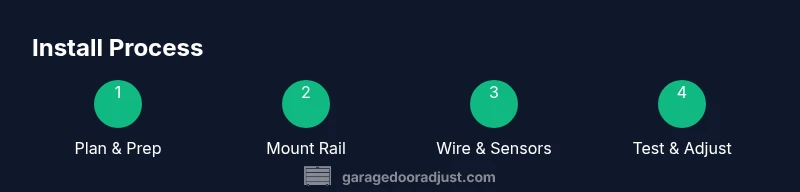
- 1
Prepare workspace and safety checks
Clear the workspace, gather tools, and confirm safety procedures with a helper. Inspect the door tracks and balance because an unbalanced door adds strain to the opener.
Tip: Have a helper on standby and wear eye protection. - 2
Power down the circuit
Switch off the circuit or unplug the existing opener if applicable. Confirm there is no power to the door system before handling wiring or mounting.
Tip: Test with a voltage tester to verify power is off. - 3
Remove old hardware
Detach any old brackets, brackets, or torsion hardware that will interfere with the new rail and motor mounting.
Tip: Label items for reuse if compatible and keep track of small parts. - 4
Plan rail layout and anchor points
Measure the ceiling and door to map rail placement; mark anchor points aligned with joists for strongest support.
Tip: Double-check measurements with a level before drilling. - 5
Mount ceiling brackets and rail
Attach brackets to joists and secure the rail in position. Ensure brackets are square and rail is straight.
Tip: Tighten fasteners to the manufacturer’s torque specification. - 6
Mount the opener to the ceiling
Lift and secure the motor unit to the ceiling brackets. Align rail end with the door’s lifting point.
Tip: Ask a helper to assist with lifting and positioning. - 7
Connect the trolley to the door and drive system
Attach the trolley to the door arm and connect the belt or chain drive per guidelines. Check tension and alignment.
Tip: Ensure the trolley moves smoothly along the rail without binding. - 8
Wire sensors and safety features
Connect the safety sensors and power wires per the manual. Verify beams are unobstructed and test auto-reverse at low speed.
Tip: Use proper cable clamps and avoid loose wires near moving parts. - 9
Program limits, test remotes, and finalize
Program travel limits, force, and pair remotes or apps. Run multiple cycles to confirm safe, reliable operation.
Tip: Document settings for future maintenance.
Got Questions?
Do I need a professional to install a garage door opener?
A skilled DIYer with basic electrical knowledge and door balance can install a standard opener. If the door is unbalanced, or if you’re uncomfortable with wiring and ceiling mounting, hire a pro. Safety is the priority when working with high-tension doors.
If you’re comfortable with basic electrical work and door balance, you can install it yourself. If not, consider hiring a professional for safety.
What opener types are best for a residential garage?
Belt-drive offers quiet operation for finished garages, chain-drive provides robust performance for heavier doors, and jackshaft saves ceiling space but requires proper mounting. Choose based on noise tolerance, door weight, and ceiling clearance.
For most homes, belt-drive is quietest, while chain-drive is robust for heavy doors; jackshaft is great when ceiling space is limited.
Is it safe to install a garage door opener myself?
DIY can be safe with proper precautions: disconnect power, use the right hardware, and follow the manual. If you’re unsure about electrical work or door balance, consult a professional.
Yes, it can be safe if you follow the manual and take precautions. If you’re unsure, get a pro.
What maintenance is needed after installation?
Lubricate moving parts, test safety sensors monthly, check for loose hardware, and keep the track clean. Periodic balance checks and sensor calibration help prevent failures.
Keep up with lubrication, sensor tests, and checks for loose parts.
How long does installation take?
Most homeowners plan 2-4 hours for a standard install, depending on ceiling height and mounting conditions. Complex layouts can take longer.
Typically around two to four hours, depending on your setup.
Do I need to install safety sensors?
Yes. Safety sensors (photoelectric eyes) are essential to prevent injury by stopping the door if an obstruction is detected. They should be positioned on each side of the door track.
Safety sensors are essential for safe operation and are required in most installs.
Watch Video
Quick Summary
- Plan, measure, and level before drilling.
- Match opener type to door weight and ceiling space.
- Test safety sensors thoroughly before regular use.
- Keep wiring neat and code-compliant for serviceability.