Garage Door Force Adjustment: A Homeowner's Step-by-Step Guide
Learn how to safely adjust garage door force to improve balance and safety. This homeowner-friendly guide covers diagnosis, required tools, step-by-step actions, safety tips, and when to call a pro.


By following these steps, you will safely complete a garage door force adjustment and improve door balance and opener performance. This guide covers essential safety gear, the basic physics of spring tension, and a clear, step-by-step procedure. You will learn how to test balance, adjust springs, and verify safe operation before re-connecting power.
Why proper garage door force adjustment matters
A garage door force adjustment is not just about making the door lighter to lift. It’s a safety and longevity issue for every homeowner. If the force is too high, springs wear faster, the opener works harder, and you risk sudden door movement that can injure hands or toes. If the force is too low, the door can bind, bind or slip from tracks, causing damage to cables and rollers. Understanding how force interacts with springs, cables, tracks, and the opener helps you diagnose problems before they escalate. According to GarageDoorAdjust, correct force levels balance tension across components, reduce wear, and improve overall performance. This section lays the groundwork for a practical, safe approach to diagnosis and adjustment, with a focus on prevention rather than reaction.
Key concepts you’ll apply include preserving proper spring tension, recognizing signs of imbalance, and respecting the dangers of high-tension hardware. You’ll also learn why a precise force setting matters for the safety of children, pets, and visitors. The goal is a door that opens smoothly, stops where you expect, and doesn’t slam shut or drift upward. Remember: the procedure is safe when you follow best practices and pause if anything feels uncertain.
How force interacts with springs, cables, and opener
The force on your garage door is primarily produced by the torsion springs (or extension springs in older setups). Those springs store elevated energy and release it to balance the door’s weight as you raise or lower it. The opener reads this balance and uses limit switches to stop movement at the right height. If force is misconfigured, the opener may struggle to move the door, reverse unexpectedly, or fail to hold the door in place when resting. Cables, tracks, and rollers all contribute to how evenly this force is transmitted, so a faulty track or worn roller will mimic a spring problem. In practice, adjust for the door’s weight and the door’s balance tests rather than chasing a number. A balanced system reduces strain on the opener’s motor and prolongs the life of springs and cables. GarageDoorAdjust’s approach emphasizes verifying balance through controlled tests and incremental adjustments, not guessing.
Two common misconceptions are that higher force always means better operation, and that you should adjust until the door “feels right.” Reality is more nuanced: the goal is the exact balance that keeps the door stable at rest and moves cleanly without resistance. When you adjust force correctly, you’ll also improve safety by minimizing unexpected door movements and the risk of pinch injuries near tracks and hinges.
Safety first: risks of incorrect force adjustments
Attempting to adjust garage door force without proper precautions is dangerous. High-torce springs hold hundreds of pounds of stored energy, and a misstep can cause serious injury. Never stand under a door when adjusting springs. Always unplug the opener, lock the door in place with clamps or locking pliers, and wear safety glasses and gloves. If you hear grinding, see a visible crack, or notice the spring hardware is rusted or damaged, stop and call a pro. These indicators of wear often signal that the problem is beyond simple adjustments and require professional evaluation. garage door force adjustment should be performed with the right tools and a tested plan. The goal is to prevent sudden releases and to ensure that the door remains controlled through each movement. GarageDoorAdjust emphasizes that safety should precede any adjustment attempt, and that adequate lighting, a stable ladder, and a clear area around the door are essential prerequisites.
Tools and safety gear you’ll need (before you start)
A practical adjustment session starts with the right tools and PPE. Gather winding bars, a sturdy ladder, protective eyewear, work gloves, an adjustable wrench, a socket set, locking pliers, and a tape measure. A helper is highly recommended to keep the door aligned and to monitor components that might shift during the procedure. Clear the area of pets and children, and disable the remote or unplug the opener to prevent accidental activation. If you’re unsure about your spring type or the parts you need, consult the manufacturer’s guide or contact a professional for a preliminary inspection. The right tools help you work confidently while minimizing the risk of spring slippage or track misalignment. Remember to store tools within easy reach so you don’t move the door by hand while adjusting components.
Safety-tested steps to test balance before making changes
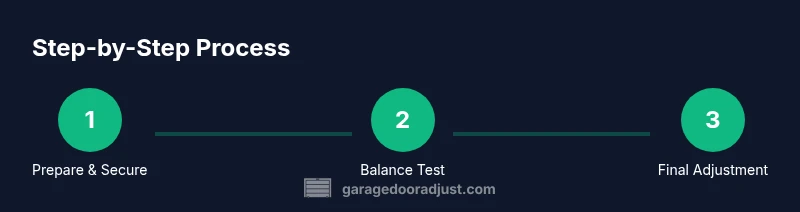
Before any adjustment, test the door balance with the opener disconnected. Lift the door about halfway; it should stay where you leave it without continuing to rise or fall. If it drops or rises, the springs are out of balance and require attention. Mark the current alignment, re-check after any change, and repeat the test to confirm you’ve achieved the intended balance. This ensures the door isn’t relying too heavily on the opener motor or on the spring tension alone. The test is your baseline: if the door fails this simple balance check, stop and reassess, rather than continuing with adjustments that could worsen the problem.
Tools & Materials
- Winding bars (two solid metal bars)(Use bars sized for your torsion system; ensure secure grip)
- Adjustable wrench(For mounting hardware and set screws)
- Socket set(For cone bolts on torsion springs)
- Locking pliers (vise grips)(To hold hardware during adjustments)
- Ladder(Stable platform for reach and safe stance)
- Safety glasses(Protect eyes from spring movement)
- Work gloves(Grip and protect hands)
- Measuring tape(Optional for precise setup)
- Pen and notebook(Record settings and turns)
Steps
Estimated time: 60-120 minutes
- 1
Prepare and disconnect the system
Power down the opener and unplug it from the wall. Close the door and secure it in place with clamps or locking pliers to prevent movement during adjustments. Confirm no one will inadvertently operate the door while you work.
Tip: Double-check that the door cannot move before you begin; a single slip can cause serious injury. - 2
Position the door and secure it
Set the door on a balanced path using the tracks. Ensure the door is seated and the rollers move freely. Keep your body clear of the path when loosening or tightening components; never stand in the door’s line of motion.
Tip: If the door binds at any point, stop and re-check track alignment before proceeding. - 3
Inspect components for wear
Look for worn cables, frayed springs, rusted hardware, or damaged tracks. Any sign of wear means you should not proceed with aggressive adjustments. Document findings so you know what to replace if required.
Tip: Worn parts are the leading cause of misadjusted force and unsafe operation. - 4
Test door balance with the opener disconnected
Lift the door halfway. It should stay in place. If it moves, springs or balance components need adjustment or replacement before proceeding with force changes.
Tip: Document the observed balance to guide future adjustments. - 5
Adjust torsion springs with winding bars
Using the winding bars, engage the torsion springs and apply small, careful adjustments to increase or decrease tension. Make incremental changes and re-test balance after each step to avoid overshoot.
Tip: Never use a screwdriver or any tool other than the winding bars to contact the spring cones. - 6
Adjust extension springs if used
If your system uses extension springs, adjust the lower mounting hardware or use the manufacturer’s recommended procedure to restore balance. This step should be done with equal caution and testing.
Tip: Follow the exact sequence your hardware requires to maintain tension symmetry. - 7
Reconnect power and test the opener limits
Plug the opener back in and run a short cycle test. Watch for smooth movement, listen for unusual sounds, and confirm the door stops at the intended points without binding or slipping.
Tip: If the door overshoots or fails to stop, revisit the balance and adjust accordingly. - 8
Finalize and document settings
Record the approximate turns or current balance readings and the door’s resting position. Store this information for future maintenance and schedule a recheck if you notice any drift.
Tip: Document dates and results to track wear and the need for future maintenance.
Got Questions?
What is force in a garage door system?
Force refers to the tension in the springs and the resistance the opener must overcome to move the door. Proper adjustment balances this tension to keep the door stable.
Force is the spring tension and resistance the opener must overcome to move the door, balanced for safe operation.
Can I safely adjust force myself?
Yes, with proper procedure: disconnect power, use the right tools, and follow manufacturer guidelines. If anything feels uncertain, stop and call a professional.
Yes, you can do it yourself, but follow safety steps and use the correct tools.
What are warning signs of incorrect force?
The door binds, moves unevenly, or the opener strains. These are signs that the force or balance is off and needs investigation or professional help.
Binding, uneven movement, or straining noises indicate incorrect force.
How long does the adjustment take?
Typically 45-90 minutes for inspection, adjustment, and testing. Complex setups may require more time or professional assistance.
Most adjustments take under two hours, depending on the system.
When should I call a pro?
If you hear grinding, see damaged springs, or can’t safely access the torsion assembly, stop and hire a professional.
Call a pro if you hear grinding or see damaged parts.
Watch Video
Quick Summary
- Test balance before changes
- Use winding bars for springs
- Disconnect power before starting
- Adjust in small, incremental steps
- Document settings for future maintenance