Why Do Garage Door Openers Stop Working? A Practical Troubleshooting Guide
Diagnose and fix why garage door openers stop working with a practical, safety-first guide. From power checks to sensor alignment and track issues, follow our step-by-step troubleshooting strategy.


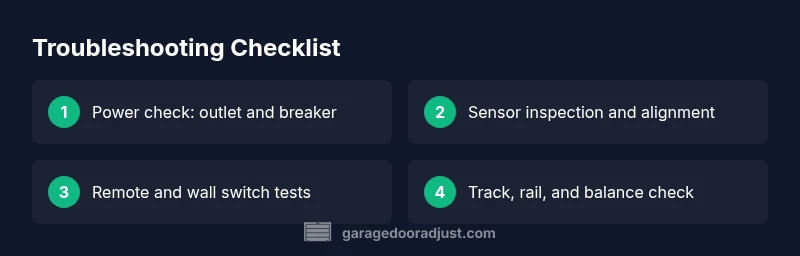
The most common cause is a simple power or safety-reverse issue. Start by checking the outlet and the receiver’s power, then inspect the photoelectric beam and safety sensors. If the door won’t move, test the wall switch and remotes, then reset the opener. If this doesn’t fix it, consult a professional to avoid injury.
Why this happens
According to GarageDoorAdjust, when homeowners ask why do garage door openers stop working, the answer is usually straightforward: power delivery or safety-sensor problems. A door that won’t move or stops mid-travel is often caused by tripped circuits, a dead outlet, or a misaligned photoelectric beam. This isn't a mysterious defect; it's almost always a solvable setup issue. In this section, we break down the most common culprits and give you quick, practical checks you can perform without specialized tools. Remember, if you identify a non-safety issue such as a damaged spring, bent track, or broken cable, do not attempt a DIY repair and call a professional right away. A small amount of time spent diagnosing now can prevent bigger, costlier problems later.
For the phrase why do garage door openers stop working, start with the easiest checks—the ones that don’t require removing parts or disassembling a lot of hardware. A quick power test, a sensor clean, and a remote reset can often restore normal operation. If you’re unsure or uncomfortable at any point, pause and contact a licensed technician. This approach aligns with GarageDoorAdjust’s guidance on safe, incremental troubleshooting.
Safety sensors and their role in opener failures
The safety beam, located near the floor on both sides of the doorway, is designed to prevent the door from closing on a person or object. If the beam is misaligned, blocked, or dirty, the opener may refuse to close or even fail to operate. Check both sensors for obstructions (dust, leaves, or spider webs), ensure their lenses are clean, and confirm the mounting brackets are straight. A small tilt can cause a failure to engage. After cleaning or realigning, perform a test by waving an object in front of the beam and watching the sensor indicators. If the lights don’t behave as expected, re-align or replace the sensors as needed. In some models you will hear a short click or see a flashing light indicating a sensor fault. If sensor faults persist, call a professional to avoid misalignment risks and ensure proper safety compliance.
Steps
Estimated time: 30-60 minutes
- 1
Check power and outlet
Begin by verifying the opener is receiving power. Check the wall outlet, power strip, and any circuit breakers. If the outlet is dead, reset the breaker or replace the fuse, and plug the opener into a known-good outlet to confirm power. If no light on the unit, the issue may be a lack of power to the receiver.
Tip: Use a separate lamp on the same outlet to confirm power delivery before moving on. - 2
Test remotes and wall switch
Test the remote batteries and re-pair them with the opener if needed. Try the wall control as a baseline; if the wall switch works but the remote doesn’t, the issue is likely in the remote or receiver. Reprogram remotes following the model’s manual.
Tip: Keep a spare remote handy and label it for quick troubleshooting. - 3
Inspect safety sensors
Look for misalignment or obstructions in the safety sensors near the floor on both sides. Clean the lenses gently and ensure the brackets are straight. After adjustments, test by placing an object in the door path and verifying the auto-reverse or sensor indicators respond.
Tip: Never spray cleaners directly on the sensor lenses; use a soft cloth and dry wipe. - 4
Check tracks, rollers, and door balance
Manually disconnect the door from the opener and raise it halfway to test balance. If it’s hard to lift or drags, the springs, track alignment, or rollers may be worn. Clear any debris from tracks and ensure they run smoothly without wobble.
Tip: If the door is heavy or binding, stop and call a professional—springs are under high tension. - 5
Reset and recalibrate
Unplug the opener for at least 60 seconds, then plug back in and run a test cycle. Reprogram any remotes and, if available, reset travel limits and force settings as per the manufacturer’s instructions. This step clears minor receiver glitches and re-establishes safe operation.
Tip: Follow the manual precisely for limit and force settings; incorrect values can damage the opener. - 6
Retest operation
With safety in mind, test door operation again using both wall control and remote. Confirm normal opening, stopping, and reversing behavior. If the door still won’t operate or behaves unpredictably, the issue likely lies beyond simple adjustments.
Tip: Keep hands clear of the track area and ensure children and pets are away during testing. - 7
Know when to call a pro
If you’ve gone through power, sensors, and mechanical checks without a fix, contact a licensed technician. High-tension springs, damaged cables, or misaligned balance can create safety hazards that require professional tools and expertise.
Tip: Document what you tried and any unusual sounds; this helps the technician diagnose faster.
Diagnosis: Garage door opener stops working or door won’t move
Possible Causes
- highPower supply failure (outlet, circuit breaker, or transformer)
- highPhotoelectric safety sensor misalignment or obstruction
- mediumRemote or wall switch failure, or receiver issue
- lowMechanical issue with tracks, springs, or door balance
Fixes
- easyCheck outlet and circuit breaker; restore power if tripped or blown
- easyClean and realign safety beam; remove obstructions and test indicators
- easyTest and replace remote batteries; re-pair remotes; reset opener
- hardInspect tracks, rollers for damage; do not attempt spring repair; call a pro if needed
Got Questions?
Why won't my garage door opener respond to the remote?
A common cause is dead batteries or failed pairing with the opener. Start by replacing the batteries and re-pairing the remote. If the wall switch works but the remote doesn’t, the issue is likely with the remote receiver or the remote itself.
Check the batteries and re-pair the remote. If the wall switch works but the remote doesn't, the receiver or remote may be faulty.
Why is my opener opening only partway or stopping mid-travel?
Partial travel often signals a problem with travel limits, door balance, or a misaligned track. Resetting the opener and recalibrating limits can fix many cases. If the door still stalls, inspect tracks and springs for wear and call a professional if needed.
If the door stops mid-travel, check the travel limits and balance. Reset and calibrate, and inspect tracks for damage; seek a pro if it persists.
How do I reset a malfunctioning opener?
Reset procedures vary by model, but a common method is to unplug the unit for a minute, then plug back in and reprogram remotes. Always follow the manufacturer’s instructions to avoid damage.
Unplug the opener, wait a minute, plug back in, then reprogram remotes following the manual.
What should I check first if the door won’t move?
Verify power, test the wall control, and inspect safety sensors for obstructions or misalignment. If these basic checks fail, move on to track and balance inspection and consider resetting the system.
Check power, wall control, and safety sensors first; then inspect tracks and balance if needed.
Are safety sensors required for operation?
Yes. Safety sensors prevent the door from closing on people or objects. If the sensors are blocked or misaligned, the opener may refuse to close or operate. Clean, align, and test them regularly.
Safety sensors are required. Keep them clean and aligned so the door operates safely.
When should I replace my garage door opener?
If the opener is frequently failing, making odd noises, or failing to reverse after safety tests, replacement may be more cost-effective than extensive repairs. Consult a professional for a thorough assessment.
If repairs are frequent or you hear strange noises, consider replacement after a pro evaluation.
Watch Video
Quick Summary
- Start with power and safety sensor checks
- Test remotes and wall switch before deeper repairs
- Inspect tracks and balance for mechanical issues
- Reset and recalibrate before replacing parts
- Call a pro for springs or severe misalignment