Treat Rust on Garage Door: A Step-by-Step Repair Guide
Learn how to diagnose, treat, and prevent rust on a garage door with a complete step-by-step approach, including prep, rust removal, priming, painting, and ongoing maintenance.


By following this guide, you will diagnose and treat rust on a garage door, restore its function, and extend its life. You’ll learn safe prep, rust removal options, primer and paint choices, and ongoing maintenance to prevent future corrosion. Whether you’re dealing with surface rust or deeper pitting, this guide keeps you in control.
Understanding rust on garage doors
Rust forms when iron or steel reacts with moisture and oxygen, creating iron oxide that expands and weakens metal. On many residential garage doors, surfaces near seams, fasteners, brackets, and bottom rails are most vulnerable because water tends to collect there. The GarageDoorAdjust team found that small rust spots typically start as surface rust, but left untreated can progress into pitting and structural damage. Early action is cheaper and faster than full door replacement. This guide uses the phrase treat rust on garage door throughout to emphasize that rust isn't a fatal flaw; with proper steps and the right coatings, you can rehabilitate the door’s appearance and function. Plan for best results by selecting exterior-grade, rust-inhibiting primers and paints designed for continuous exposure to weather. Keep in mind that even stainless or galvanized doors can rust at welded seams or damaged coatings if protective layers are compromised.
Assessing rust damage: repair vs replacement
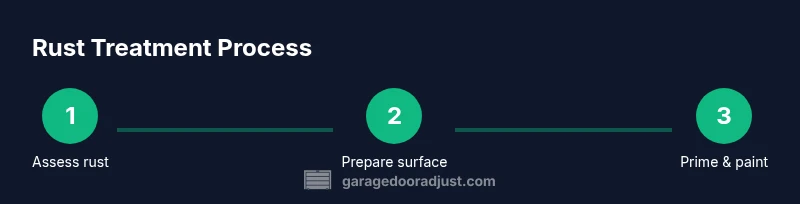
Not all rust shows the same level of danger. Start by inspecting the door surface for the extent of corrosion and by checking for bubbling paint, flaking coating, deep pits, or rust that has reached structural components like rails or hinges. If rust is confined to surface areas and has not penetrated through the metal, a repair and refinishing approach can restore integrity and appearance. If you can feel holes, see significant pitting, or if the door flexes abnormally, replacement is typically the safer, longer-lasting option. GarageDoorAdjust analysis (2026) indicates that addressing surface rust early can extend door life, but once corrosion compromises load-bearing areas, replacement becomes more cost-effective in the long run. Document corners and edges before you start, and photograph rust progression to track improvements.
Safety first: PPE and setup
Working on a garage door can involve tools that throw debris or fumes. Always wear safety glasses, chemical-resistant gloves, and a suitable respirator or mask when sanding, grinding, or applying chemical rust converters. Disconnect the garage door opener’s power before you begin any hands-on work near moving parts to prevent unexpected door movement. Ventilate the workspace well and protect surrounding surfaces with drop cloths. If you need to climb a ladder, ensure stable footing and never lean over the door while it is in operation. Safety isn’t optional here—rust work involves sharp edges, solvents, and potential pinch points.
Surface preparation and cleaning
Begin with a clean, dry surface to improve adhesion of coatings. Scrub the door with a degreasing cleaner or mild detergent, rinse, and dry thoroughly. Remove loose paint, loose rust, and flaking material with a stiff wire brush or a sanding block. For stubborn rust, use medium-grit sandpaper (120–180) to create a smooth, etch-ready base. Pay attention to edges, corners, and weld seams where moisture tends to accumulate. After cleaning, wipe the surface with a rag dampened with mineral spirits to remove dust and oils. A clean, dry surface is essential for long-lasting rust treatment and paint adhesion.
Rust removal options: mechanical vs chemical
You have two broad paths for treating rust: mechanical removal and chemical conversion. Mechanical removal relies on sanding, grinding, or wire brushing to physically remove rust and create a clean, sound substrate. Chemical converters react with rust to form a stable, inert layer that can be painted over, often requiring less manual effort but still needing proper ventilation. For light surface rust, mechanical removal plus a rust-inhibiting primer is usually sufficient. For moderate to heavy rust, a converter can stabilize the remaining metal before priming. Always follow product instructions and test a small area first to confirm adhesion and color compatibility. Remember: the goal is a sound, rust-free base for primer and paint.
Primers and paints for metal doors
Choose exterior-grade, rust-inhibiting primers designed for metal surfaces, preferably epoxy-based or solvent-free options that cure hard and resist moisture. After primer, apply a durable topcoat designed for outdoor metal use; direct-to-metal (DTM) paints or enamel finishes provide strong adhesion and weather resistance. For best results, apply at least two coats with proper drying time between coats—this builds a robust barrier against future moisture ingress. If your door has heated or sun-exposed areas, consider high UV resistance paints and a light, reflective color to reduce heat buildup that worsens expansion and contraction.
Finishing touches and protective coatings
Finish with a protective topcoat or sealant that reduces abrasion and inhibits moisture intrusion. Some homeowners pair a clear rust-inhibiting sealer with a mid-tone color for added depth, but ensure compatibility with your underlying paint system. Reinstall all hardware and re-test the door’s operation after each coat dries. Keep weatherstripping in good condition to prevent water intrusion that accelerates rust. A subtle but important step is to inspect the door’s bottom edge and seams annually and address any new rust spots promptly to extend the door’s life.
Maintenance plan to prevent future rust
Preventing rust is easier than eliminating it after it forms. Schedule annual inspections of the door’s surface and fasteners, and clean the door with a mild detergent to remove dirt and salts that hold moisture. Reapply primer and topcoat as soon as you notice dulling or minor rust spots reappearing. Address any moisture sources around the door frame, and ensure proper drainage away from the threshold. If you live in a coastal or salted environment, more frequent checks are advisable. The goal is to keep the metal surface dry, clean, and well-protected.
Troubleshooting common issues and next steps
If rust reappears after painting, re-sand the affected area, reseal with primer and an epoxy topcoat, and inspect for hidden corrosion under the coating. Peeling paint often indicates poor surface prep or moisture entrapment; re-strip the area, clean thoroughly, and re-prime. If rust is pervasive or structural, seek professional assessment. Treat rust on garage door early and consistently to avoid higher repair costs later. With regular care, a properly treated door remains functional and visually appealing for years.
Tools & Materials
- Stiff wire brush(Use to remove loose rust and paint from flat surfaces)
- Coarse sanding block or 80–120 grit sandpaper(Initial rust removal and surface feathering)
- Medium sanding paper (120–180 grit)(Smooths surface after heavy rust removal)
- Rust converter (phosphoric acid-based or similar)(Stabilizes remaining rust before priming)
- Exterior rust-inhibiting metal primer(Epoxy or enamel primer for metal surfaces)
- Exterior enamel or direct-to-metal paint(Durable, weather-resistant topcoat)
- Degreaser or mild detergent(For initial cleaning of oil and grease)
- Mineral spirits or paint thinner(For finishing wipe-downs and degreasing)
- Painter's tape and drop cloths(Protect adjacent areas during painting)
- Rags or lint-free cloths(For cleaning and wiping surfaces)
- Protective gloves, safety goggles, and respirator(PPE for chemical use and sanding)
- Drop cloths or plastic sheeting(Keep floors and nearby surfaces clean)
- Paint tray and brush/roller kit(Apply primer and paint evenly)
- Drying rack or calm, ventilated area(Allow ample cure time between coats)
Steps
Estimated time: 2-6 hours
- 1
Assess rust severity and gather materials
Inspect the door for thin rust spots, heavy pits, and structural damage. Photograph areas for reference and assemble all tools and materials before you start to avoid delays.
Tip: Create a small test patch to ensure adhesion after cleaning. - 2
Disconnect power and prepare the workspace
Unplug the garage door opener and secure the door in a raised position if possible. Cover nearby floors and wear PPE to protect against dust and chemicals.
Tip: Never work under a door that could move unexpectedly. - 3
Clean the surface thoroughly
Wash with a degreaser, rinse, and dry completely. Remove all oils, dirt, and salts that can interfere with primer adhesion.
Tip: Drying time should be thorough to prevent coating issues. - 4
Remove loose rust and paint
Use a stiff wire brush and coarse sandpaper to remove loose rust. Feather edges to smooth transitions between bare metal and painted areas.
Tip: Work in small sections to maintain control and safety. - 5
Apply rust converter or treat persistent rust
If using a converter, follow the product directions and apply to remaining corrosion. Allow the converter to cure before priming.
Tip: Do not over-apply; uneven layers can cause uneven paint adhesion. - 6
Mask and prep edges
Mask surrounding areas and ensure seams and edges are clean. Use drop cloths to protect the ground and nearby surfaces.
Tip: A precise edge prevents paint bleed. - 7
Prime the door
Apply a rust-inhibiting primer designed for metal and exterior use. Follow label drying times and avoid heavy coats that trap moisture.
Tip: Two thin coats yield better adhesion than one thick coat. - 8
Paint the door
Apply at least two coats of exterior enamel or DTM paint. Allow full curing between coats and between primer and first coat of paint.
Tip: Choose a finish with UV resistance if your door is sun-exposed. - 9
Seal and finish
Optionally apply a clear sealer for added moisture resistance. Reinstall hardware and perform a final inspection for missed rust spots.
Tip: Document the areas you touched for future maintenance.
Got Questions?
What causes rust on a garage door?
Rust forms when moisture meets iron or steel, initiating corrosion at exposed areas such as seams and edges. Over time, rust can progress from surface spots to deeper pits that weaken the metal. Addressing rust early helps preserve strength and appearance.
Rust happens when moisture meets metal. Address rust early to protect strength and look.
Can rust be removed from galvanized or painted doors?
Galvanized surfaces resist rust better but can still corrode at damaged spots. Painted doors require proper cleaning, rust removal, and a rust-inhibiting primer before repainting. Deep pits or compromised metal may require replacement.
Galvanized doors resist rust but damage allows corrosion; repainting requires primer and proper prep.
Is rust converter safe on painted doors?
Rust converters can be used on rust to stabilize it before priming, but they must be compatible with the final paint system. Always follow the product’s instructions and test a small area first.
Converters stabilize rust when used as directed and before priming.
How long does primer dry before painting?
Drying times vary by product and weather. Always follow the primer label for cure times and ensure the surface is dry and dust-free before applying the paint.
Dry time depends on the product; follow the label for best results.
Should I replace the door if rust covers large areas?
If rust has penetrated deeply and weakened structural elements, replacement is usually advisable. A professional assessment can determine whether the door can be repaired cost-effectively or should be replaced.
Large-area rust often signals replacement may be the safer option.
How often should I inspect and repaint to prevent rust?
Inspect annually and touch up rust spots as soon as they appear. Repaint when coating shows dullness, cracking, or new rust appears to maintain a protective barrier.
Check yearly and repaint when you see new rust or coating wear.
Watch Video
Quick Summary
- Identify rust severity before repairing.
- Use rust-inhibiting primer and durable topcoat for best protection.
- Follow proper drying times between coats to maximize adhesion.
- Regular maintenance reduces future rust and extends door life.