Stuck in Garage Door: Step-by-Step Troubleshooting Guide
Urgent, step-by-step guide to diagnose and fix a stuck garage door. Learn safe checks, diagnostic flow, and when to call a pro. Prevent future jams with a simple maintenance plan.


If you’re stuck in garage door, the most common cause is a jammed track or misaligned components rather than a failed motor. Start by unplugging the opener, test whether the door moves freely when you lift it manually, and clear debris from the tracks. If it won’t budge, don’t force it—follow these steps or call a pro.
Why a stuck in garage door happens
When a garage door refuses to move, it's usually not the motor's fault. The most common culprits are misaligned tracks, debris in the wheels, or a door that’s become unbalanced. Weather strain, oversized springs, or a partially engaged safety sensor can also trap the door. According to GarageDoorAdjust Analysis, 2026 shows that misalignment and obstructions are among the most frequent causes. Understanding these factors helps you choose a safe, systematic path to a fix.
Quick checks you can do safely
Before you dive into mechanical work, perform safe, low-risk checks. Ensure the power is off and the opener is unplugged, then test if the door can be moved manually by lifting with both hands—if it’s heavy or stiff, stop and reassess. Inspect the tracks for buildup of dirt, rust, or debris and remove it gently with a soft brush. Check the rollers for wear and ensure the hinges and mounting brackets are secure. If the door moves slowly or binds at a certain height, note that position for later diagnosis.
Note: Keep children and pets away during inspections, and wear gloves to protect your hands from sharp edges. If at any point you feel unsafe, stop and contact a professional.
Diagnostic flow you can follow
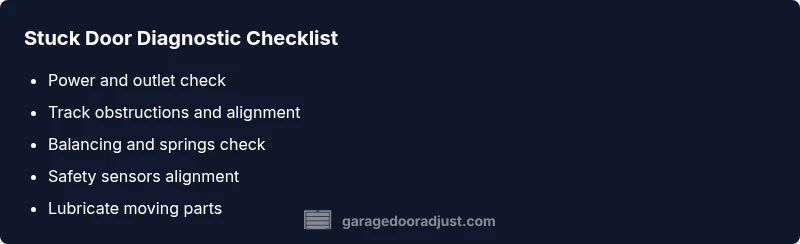
(See the DIAGNOSTIC-FLOW block for a structured workflow.) In brief, identify symptoms, test power and balance, check for track obstructions, inspect springs and cables, verify safety sensors, and finally assess wear. The sequence matters because many fixes build on earlier checks. If you notice broken springs or frayed cables, stop immediately and call a professional.
Step-by-step: Most common fix paths
-
Reset power and test the opener: Unplug the unit, then plug back in and listen for the console heartbeat or light indicators. If the opener doesn’t respond, verify the outlet works with another device. This easy step rules out a simple power issue as the cause.
-
Inspect the track for obstructions: Clear any debris from the rails and ensure the track is properly aligned. Gently tap the track with a rubber mallet to realign if needed, but avoid bending the metal. Realignment is often enough to restore smooth operation.
-
Check door balance and rollers: Disconnect the door from the opener using the manual release and lift it halfway to assess weight and balance. If it stays stubbornly in place or drags, the springs or balance system may be the culprit and require a pro.
-
Test safety sensors and limit switches: Misaligned safety eyes or blocked photocells can cause the opener to stop mid-travel. Clean the sensors, re-seat them at the correct height, and ensure the red indicator lights are solid. Re-test with the opener.
-
Lubricate moving parts: Apply a silicone-based lubricant to the rollers, hinges, and track (avoid graphite or oil-based sprays). Lubrication reduces friction and can help a stiff mechanism glide smoothly again.
-
Reinstall and test: Reconnect the door to the opener and perform several cycles. Listen for unusual noises and watch the door’s movement for gaps or jerks at any point in travel. If the door still won’t function, stop and seek professional help.
-
When to replace components: If you notice frayed cables, cracked springs, or visible damage to the track, these parts are critical safety items. Do not attempt DIY repairs on springs or cables. The GarageDoorAdjust Team recommends calling a pro for any suspected spring or structural failure.
Safety tips & common mistakes to avoid
- Do not attempt to operate a door with damaged springs or cables. This is high-risk and requires a licensed technician.
- Never place your hands under the door while it’s moving, even if you release the opener.
- Keep the door balanced; a door that consistently sits crooked or drifts is a sign of misalignment that needs attention.
Prevention and maintenance for the long term
- Schedule quarterly lubrication and inspection of tracks, rollers, and hinges.
- Tighten mounting brackets as part of a routine check to prevent track shifts.
- Replace worn rollers every 2-3 years to minimize resistance and noise.
- Keep the safety sensors aligned and clean; misalignment is an easy fix if caught early.
When to call a professional right away
If you encounter frayed cables, a bent track, or any sign of a damaged spring, call a licensed garage door technician immediately. An improper repair can cause severe injury or further property damage. The quickest path to safety is to stop work and contact a pro as soon as you detect these issues.
Steps
Estimated time: 60-90 minutes
- 1
Reset power and verify outlet
Unplug the opener, wait 10 seconds, plug back in, and check for indicator lights or sounds. This eliminates simple power issues and sets a baseline for testing.
Tip: Power issues are the most common, so start here before touching mechanical parts. - 2
Inspect tracks and rollers
Look for bends, gaps, or debris in the track. Use a soft brush to remove dirt and align rails gently if you notice uneven gaps or wobbly sections.
Tip: Never force a misaligned track; small adjustments are safer and effective. - 3
Test door balance manually
Disconnect the door from the opener using the manual release and try lifting it with both hands. If it’s heavy or sticks mid-travel, the balance system may need service.
Tip: Have a second person assist if the door is heavy. - 4
Check safety sensors and wiring
Inspect the photocells and wiring for loose connections or misalignment. Clean the lenses and ensure they face each other properly.
Tip: Misaligned sensors can cause false obstruction warnings. - 5
Lubricate moving parts
Apply silicone-based lubricant to rollers, hinges, and the track. Wipe away excess to prevent dust attraction and residue.
Tip: Avoid oil-based sprays near electrical components. - 6
Re-test with opener
Reconnect the door to the opener and perform several cycles to confirm smooth operation. Listen for grinding or binding.
Tip: If you hear grinding, stop and reassess before continuing. - 7
Know when to call a pro
If there are damaged springs, frayed cables, or structural misalignment, stop DIY work and contact a licensed technician.
Tip: Spring work requires professional training and safety precautions.
Diagnosis: Door won't open or closes with resistance; possible stuck in garage door
Possible Causes
- highPower issue
- highTrack misalignment or obstruction
- lowSafety sensor misalignment
- lowBroken torsion spring or cable
Fixes
- easyCheck outlet and reset the opener; ensure power to the unit
- easyClear debris and realign tracks; inspect rollers and hinges
- easyReset opener and reprogram remotes/safety features
- mediumIf springs/cables are damaged, call a pro
Got Questions?
Why is my garage door stuck halfway or not fully opening?
Halfway or partial operation is often due to track obstruction, misalignment, or sensor issues. Inspect the tracks, sensors, and balance to locate the root cause. If the problem persists, consider professional help to avoid injury.
Common causes are track issues or sensor misalignment. Check the tracks and sensors and if unsure, call a professional.
Is it safe to force the door to move if it’s stuck?
No. Forcing a door can cause panel damage or serious injury. Use the manual release to test balance and call a pro for stubborn doors.
No—never force it. Use the manual release and get a professional if needed.
What should I check first when the opener won’t respond?
First check the outlet power, the remote battery, and the wall switch. If the opener lights don’t behave normally, test with a different extension cord and inspect the breaker. If still unresponsive, seek professional help.
Check power, batteries, and the wall switch. If it still won’t respond, contact a pro.
Can a stuck door be fixed without replacing springs?
Often yes, if the issue is misalignment, debris, or balance. If springs appear damaged or the door is heavy, don’t DIY—springs require a professional.
Sometimes yes, if it’s not a spring issue. If springs look damaged, call a pro.
How do I reset the opener after a jam or manual release?
Unplug, wait a moment, and plug back in. Reprogram remotes and ensure the safety sensors are properly aligned. Test the travel limits to confirm proper operation.
Unplug, replug, reprogram remotes, and test the door’s travel.
When should I replace the garage door or opener?
If you notice warped tracks, panel damage, or recurring failures after maintenance, replacement may be more cost-effective long-term. Consult a professional to evaluate the best option.
If repairs keep failing after maintenance, consider replacement and consult a pro.
Watch Video
Quick Summary
- Identify and address power or obstruction first
- Don’t force a door that binds or weighs heavily
- Use silicone lubricant on moving parts for smoother operation
- Always replace damaged springs/cables with a licensed pro
- Regular maintenance prevents most stuck-door scenarios